
Galaxy A16 Vs iPhone 16

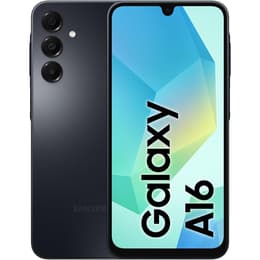
Galaxy A16
Galaxy A16
Starting at

Refurbished price:134.00

Versus €250.00 new

See options
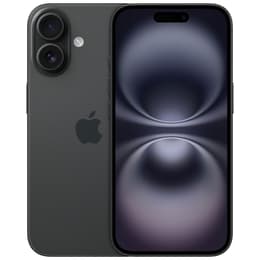
iPhone 16
iPhone 16
Starting at

Refurbished price:548.00

Versus €879.00 new

See options

Ratings

The Samsung Galaxy A16 and the iPhone 16 represent distinct approaches to smartphone design and functionality, catering to different user priorities. The Galaxy A16, released in late 2024, is an Android-based device positioned within Samsung's popular mid-range A-series. The iPhone 16, launched in September 2024, is Apple's standard flagship model, running on iOS. While both offer modern smartphone experiences, they diverge significantly in their operating systems, hardware capabilities, and overall user ecosystems.

Scores

Durability

The longevity of a smartphone is influenced by its physical durability and the duration of software support it receives.

  • Software Updates: The iPhone 16, running iOS 18 at launch, is expected to receive major iOS updates for approximately five to seven years, with security updates extending even longer. This consistent support helps maintain device functionality and security over an extended period. The Samsung Galaxy A16, launching with Android 14 and One UI 6.1, is notable for Samsung's commitment to providing six generations of OS upgrades and six years of security updates, ensuring support until October 2030.
  • Physical Durability: The iPhone 16 features a Ceramic Shield front cover and an aluminum design, contributing to its resistance against drops and scratches. It also carries an IP68 rating for water and dust resistance, allowing submersion up to 6 meters for 30 minutes. The Galaxy A16 features a slimmer design and an IP54 rating, offering protection against dust and splashes.
  • Repairability: While both devices are designed with modern construction techniques, the Galaxy A-series generally features adhesive-heavy construction, making at-home repairs challenging without specialized tools. Common repairs for the A-series include screen and battery replacements, with modular components for charging ports and buttons. Apple provides repair guides for its devices, and the iPhone 16 features an improved thermal design.

Year of Release

2024

2024

Foldable

No

No

Performance

Performance in smartphones is determined by the efficiency of their internal components, impacting how smoothly applications run and how effectively the device handles demanding tasks.

  • Processing Power: The iPhone 16 is equipped with a current-generation chip, featuring a 6-core CPU, a 5-core GPU, and a 16-core Neural Engine. This configuration allows for smooth multitasking, rapid app loading, and efficient handling of graphics-intensive applications and games. The Galaxy A16 is powered by an octa-core processor, either a MediaTek Dimensity 6300 or an Exynos 1330 for the 5G variants, or a MediaTek Helio G99 for the 4G variant. This hardware provides capable performance for everyday tasks, web browsing, and casual gaming.
  • Multitasking and Storage: The iPhone 16 comes with 8GB of RAM and offers storage options up to 512GB, providing ample space for applications and media, and supporting efficient background processes. The Galaxy A16 offers RAM configurations of 4GB, 6GB, or 8GB, and storage options of 128GB or 256GB, with the added flexibility of expandable storage via a microSDXC card slot.
  • Battery Performance: The iPhone 16 features a 3561 mAh battery, offering up to 22 hours of video playback, with improvements in battery life over its predecessor. The Galaxy A16 is equipped with a larger 5000 mAh battery and supports 25W fast charging, providing extended usage times, with up to 15-16 hours of active online usage.

Memory (GB)

4 GB

8 GB

Screen quality

The display is a primary interface for user interaction, and its quality significantly impacts the visual experience.

  • Display Technology and Clarity: The iPhone 16 features a 6.1-inch Super Retina XDR OLED display with a resolution of 2556x1179 pixels, resulting in a pixel density of 460 ppi. This OLED technology delivers deep blacks and vibrant colors. The Galaxy A16 sports a larger 6.7-inch Super AMOLED display with a 1080x2340 pixel resolution, offering a pixel density of approximately 396 ppi. This Super AMOLED panel also provides rich colors and good contrast.
  • Brightness and Refresh Rate: The iPhone 16 offers a typical maximum brightness of 1000 nits, with peak HDR brightness reaching 1600 nits and outdoor peak brightness up to 2000 nits, ensuring good visibility in various lighting conditions. Its display operates at a standard 60Hz refresh rate. The Galaxy A16 features a 90Hz refresh rate, providing a smoother scrolling experience, and a high brightness mode of 800 nits.
  • Design Elements: The iPhone 16 incorporates the Dynamic Island, a versatile area at the top of the display that adapts to show alerts and activities. Both devices feature an edge-to-edge display design with slim bezels, maximizing screen real estate.

Resolution

1080x2340

1179 x 2556

Screen type

Super AMOLED

Super Retina XDR OLED

Audiovisual

Camera capabilities are a significant factor for many users, influencing the quality of photos and videos captured.

  • Rear Camera System: The iPhone 16 is equipped with an advanced dual-camera system, including a 48MP Fusion Main camera with sensor-shift optical image stabilization and a 12MP Ultra Wide camera. The Fusion Main camera can also enable 2x telephoto shots through cropping. The Galaxy A16 features a triple camera setup, comprising a 50MP wide main camera, a 5MP ultrawide lens, and a 2MP macro camera, offering versatility for different types of shots.
  • Photography Features: The iPhone 16 supports super-high-resolution photos, features a Camera Control button for quick access to camera functions, and offers advanced computational photography features like Photonic Engine and Smart HDR 5. It also supports spatial photos and videos. The Galaxy A16's camera system is designed to capture everyday moments with detail, and its ultrawide and macro lenses provide options for different perspectives.
  • Video Recording and Front Camera: Both devices offer capable video recording. The iPhone 16 can record 4K video at 60 frames per second and features a 12MP front camera with a f/1.9 aperture. The Galaxy A16 records Full HD video at 30 frames per second and has a 13MP front camera.

Miscellaneous

Beyond core features, several practical elements contribute to the overall user experience and device utility.

  • Connectivity and Ports: The iPhone 16 supports Wi-Fi 7, Bluetooth 5.3, 5G cellular connectivity, and features a USB-C port for charging and data transfer. The Galaxy A16 also offers 5G connectivity (on 5G variants), Wi-Fi 802.11 a/b/g/n/ac, Bluetooth 5.3, NFC, and a USB Type-C 2.0 port.
  • Biometric Security and Design: The iPhone 16 utilizes Face ID for secure facial recognition. The Galaxy A16 typically includes a fingerprint scanner for biometric authentication. In terms of physical design, the iPhone 16 has an aluminum frame with a color-infused glass back and a Ceramic Shield front, weighing around 170 grams. The Galaxy A16 features a slim 7.9mm form factor.
  • Additional Features: The iPhone 16 includes a customizable Action button and a new Camera Control button, enhancing user interaction and photography. The Galaxy A16 offers expandable storage via microSD, a feature not present on the iPhone. Both devices integrate advanced security features, with the iPhone 16 supporting Apple Intelligence and the Galaxy A16 featuring Samsung Knox Vault.

Weight

200 g

170 g

Screen size (in)

6.7

6.1

Network

4G

5G

SIM card

Physical SIM

eSIM

Carrier compatibility

Unlocked

Unlocked

Connector

USB-C

USB-C (USB 2)

Users often praise the iPhone 16 for its consistent performance, the seamless integration of its software and hardware, and its advanced camera capabilities, particularly the new Camera Control button and improved low-light performance. The extended software support and the robust ecosystem are frequently highlighted as strong points. Some users, however, note the 60Hz refresh rate as a point of comparison with other devices in its category.

The Samsung Galaxy A16 receives positive feedback for its vibrant Super AMOLED display with a 90Hz refresh rate, its long-lasting battery, and the flexibility of expandable storage. The commitment to six years of OS and security updates is also a significant advantage for users seeking long-term usability from an Android device. Criticisms sometimes focus on the processing power for very demanding applications compared to higher-end devices, and the video recording capabilities.

Users prioritizing a highly integrated ecosystem, consistent software updates over many years, and advanced computational photography features may find the iPhone 16 well-suited to their needs. Its performance for demanding tasks and premium build materials also appeal to those seeking a flagship experience. Conversely, users who value a larger, smoother display with a higher refresh rate, extensive battery life, and the flexibility of expandable storage, along with a strong commitment to software support in the Android ecosystem, may lean towards the Galaxy A16. Both devices offer compelling features for their respective audiences, and considering a quality-assured refurbished option for either model can be an eco-friendly alternative for making an informed choice.


See all articles

Our recent comparisons






