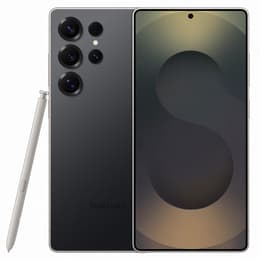
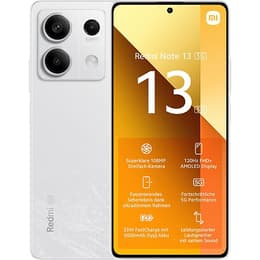


Galaxy S25 Ultra Vs Xiaomi Redmi Note 13

Galaxy S25 Ultra
Galaxy S25 Ultra
Starting at

Refurbished price:735.00

Versus €1,408.78 new

See options
Xiaomi Redmi Note 13
Starting at

Refurbished price:137.00

Versus €340.00 new

See options

Ratings

The Samsung Galaxy S25 Ultra (2025) and the Xiaomi Redmi Note 13 (2024) represent distinct offerings within the smartphone market, catering to different user priorities. While the Galaxy S25 Ultra is positioned as a high-end device with advanced features and robust performance, the Redmi Note 13 focuses on delivering a comprehensive smartphone experience for everyday use. Both devices operate on the Android platform, though they feature different versions and custom user interfaces, influencing their software experience and long-term support.

Scores

Durability

The expected practical lifespan of a smartphone is influenced by its release timeline, software support, and physical durability features.

  • Release and Software Support: The Samsung Galaxy S25 Ultra, released in early 2025, benefits from a longer support window, with Samsung committing to up to seven years of major Android OS updates and security patches. This extended support ensures the device remains current with the latest features and security enhancements for a considerable period. The Xiaomi Redmi Note 13, launched in early 2024, typically receives fewer major Android version updates and security patches compared to flagship devices, potentially limiting its software longevity.
  • Physical Durability: The Galaxy S25 Ultra features a titanium frame and is protected by Corning Gorilla Armor 2 on both the front and back, contributing to its overall resilience. It also carries an IP68 rating for dust and water resistance, indicating protection against immersion in water. In contrast, the Redmi Note 13 utilizes Gorilla Glass 3 for screen protection and has an IP54 rating, offering resistance against splashes and dust.
  • Repairability: While specific repairability scores can vary, devices with more modular designs and readily available parts generally offer a more straightforward repair process. The Galaxy S25 Ultra's premium construction might involve more complex repair procedures, whereas the Redmi Note 13's design may offer a different approach to servicing.

Year of Release

2025

2024

Compatible with latest Update

Yes

Yes

OS

Android

Android

Foldable

No

No

Performance

Performance in smartphones is determined by the interplay of processing power, memory, and storage, impacting how smoothly applications run and how efficiently the device handles multitasking.

  • Processing Capabilities: The Galaxy S25 Ultra is equipped with a current-generation flagship processor, designed to handle demanding applications, intensive gaming, and complex AI tasks with considerable speed and efficiency. Users can expect fluid navigation and rapid app loading times. The Redmi Note 13 features a mid-range processor, which provides reliable performance for daily activities such as web browsing, social media, and light gaming. While capable for general use, it may exhibit slower response times with more resource-intensive applications or heavy multitasking.
  • Memory and Storage: The Galaxy S25 Ultra typically comes with 12GB of RAM, ensuring smooth multitasking and efficient management of numerous open applications. Its storage options range from 256GB to 1TB, utilizing UFS 4.0 technology for fast data access, though it does not offer expandable storage. The Redmi Note 13 is available with various RAM configurations, including 6GB, 8GB, or 12GB, which is sufficient for most users' multitasking needs. It offers 128GB or 256GB of internal storage, using UFS 2.2, and includes a microSD card slot for storage expansion up to 1TB.
  • Battery Behavior: Both devices are equipped with a 5000 mAh battery capacity. The Galaxy S25 Ultra, despite its powerful components, is reported by users to offer good battery endurance, often lasting through a full day of heavy use and sometimes extending to 1.5 days with moderate usage. The Redmi Note 13 also provides a full day of use for most users. The Galaxy S25 Ultra supports 45W wired charging, while the Redmi Note 13 supports 33W wired charging.

Memory (GB)

12 GB

8 GB

Screen quality

The display is a primary interface for smartphone interaction, with technology, resolution, and brightness significantly influencing the visual experience.

  • Display Technology and Clarity: The Samsung Galaxy S25 Ultra features a 6.9-inch Dynamic LTPO AMOLED 2X display with a resolution of 1440 x 3120 pixels, resulting in a high pixel density for exceptionally sharp and detailed visuals. This technology delivers deep blacks, vibrant colors, and excellent contrast. The Xiaomi Redmi Note 13 has a 6.67-inch AMOLED display with a resolution of 1080 x 2400 pixels, providing clear and colorful images suitable for media consumption and daily tasks.
  • Brightness and Refresh Rate: The Galaxy S25 Ultra offers a peak brightness of 2600 nits, ensuring excellent visibility even in bright outdoor conditions. Its 120Hz adaptive refresh rate provides smooth scrolling and responsive interactions. The Redmi Note 13 reaches a peak brightness of 1000 nits (with some variants reaching 1800 nits), which is adequate for most indoor and outdoor environments. It also features a 120Hz refresh rate, contributing to a fluid user experience.
  • Viewing Experience: The larger screen size and higher resolution of the Galaxy S25 Ultra offer a more expansive and immersive viewing experience, particularly beneficial for detailed content creation, gaming, and multimedia. The Redmi Note 13's display provides a good viewing experience for its class, with its AMOLED panel offering rich colors for everyday content.

Resolution

1080 x 2340 pixels

1080 x 2400

Audiovisual

Camera systems are crucial for capturing moments, with differences in sensor capabilities, lens configurations, and software processing affecting image and video quality.

  • Rear Camera System: The Galaxy S25 Ultra boasts a versatile quad-camera setup, including a 200 MP wide-angle main sensor, a 50 MP ultra-wide lens, a 10 MP telephoto lens with 3x optical zoom, and a 50 MP periscope telephoto lens offering 5x optical zoom. This configuration provides extensive flexibility for various photographic scenarios, from wide landscapes to distant subjects. The Redmi Note 13 features a triple-camera system with a 108 MP main sensor, an 8 MP ultra-wide lens, and a 2 MP macro lens. This setup is capable of capturing good photos in well-lit conditions.
  • Photography Performance: The Galaxy S25 Ultra's advanced sensors and image processing deliver high levels of detail, dynamic range, and color accuracy across various lighting conditions, including improved low-light performance. Its multiple telephoto lenses allow for high-quality zoomed-in shots. The Redmi Note 13's main camera performs well in good lighting, producing detailed images, but its performance in low-light conditions and the capabilities of its secondary lenses are more modest.
  • Video Recording and Audio: The Galaxy S25 Ultra supports 8K video recording at 30 frames per second, offering high-resolution video capture with advanced stabilization features. It also features stereo speakers for an enhanced audio experience. The Redmi Note 13 records video at Full HD (1080p) at 30 frames per second. It includes a single downward-firing speaker, with some variants using the earpiece as a secondary speaker, providing adequate audio output for media consumption.

Front camera

8K@24/30fps

16 megapixels

Miscellaneous

Beyond core specifications, practical features like connectivity, ports, and design elements contribute to the overall user experience and device utility.

  • Connectivity and Ports: The Samsung Galaxy S25 Ultra supports the latest connectivity standards, including 5G and Wi-Fi 7, ensuring fast and reliable wireless communication. It features a USB-C port for charging and data transfer. The Xiaomi Redmi Note 13 also offers 5G connectivity in some variants and supports Wi-Fi 5. It includes a USB-C port for charging and data, and notably retains a 3.5mm headphone jack, which is absent on the Galaxy S25 Ultra.
  • Biometrics and Sensors: The Galaxy S25 Ultra incorporates an ultrasonic in-display fingerprint sensor for secure unlocking and includes a comprehensive suite of sensors for various functionalities. The Redmi Note 13 features a side-mounted fingerprint sensor (or an in-display optical sensor on the 4G variant) and includes an IR blaster, allowing it to function as a universal remote control for compatible home appliances.
  • Design and Handling: The Galaxy S25 Ultra has dimensions of 162.8 x 77.6 x 8.2 mm and weighs 218g, featuring a premium titanium frame and a refined design with slightly rounded corners. It also integrates an S Pen stylus for enhanced productivity and creative tasks. The Redmi Note 13 measures 162.24 x 75.55 x 7.97 mm and weighs 188.5g, offering a lighter build with a sleek, minimalist aesthetic.

Weight

2 g

175 g

Screen size (in)

6.9

6.67

Network

5G

5G

SIM card

Physical SIM + eSIM

Dual Physical SIM

Carrier compatibility

Unlocked

Unlocked

Connector

USB-C

USB-C

The Samsung Galaxy S25 Ultra and the Xiaomi Redmi Note 13 cater to distinct user needs, with each device excelling in different areas. Users frequently praise the Galaxy S25 Ultra for its exceptional display quality, powerful performance, and highly versatile camera system, often highlighting its ability to handle any task with ease and capture professional-grade photos and videos. Its long-term software support is also a significant advantage, ensuring the device remains relevant and secure for many years. Some users, however, note its larger size and weight, which might impact one-handed use, and the absence of a traditional headphone jack.

The Xiaomi Redmi Note 13 is often commended for its vibrant AMOLED display and reliable battery life, providing a solid experience for everyday smartphone functions. Its inclusion of a 3.5mm headphone jack and an IR blaster are practical features appreciated by many. Criticisms sometimes revolve around its performance for demanding applications, which can be less fluid compared to higher-end devices, and its software update policy, which offers less longevity. The build materials, while functional, are also noted as being less premium than flagship alternatives.

Users prioritizing cutting-edge performance, advanced camera capabilities, and a premium, durable build with extensive software support will find the Samsung Galaxy S25 Ultra well-suited to their needs. Its integrated S Pen further enhances productivity for specific workflows. Conversely, users seeking a dependable smartphone for daily tasks, media consumption, and general photography, who value features like a headphone jack and expandable storage, may lean towards the Xiaomi Redmi Note 13. Both devices offer a quality-assured refurbished option, providing an eco-friendly alternative for consumers looking to make a sustainable choice.


See all articles

Our recent comparisons