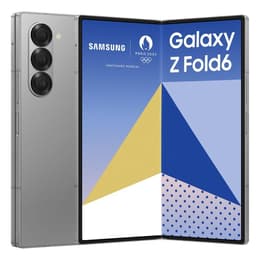
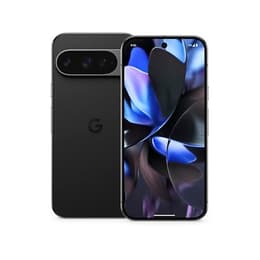


Galaxy Z Fold6 Vs Google Pixel 9 Pro

Galaxy Z Fold6
Galaxy Z Fold6
Starting at

Refurbished price:750.00

Versus €1,973.53 new

See options
Google Pixel 9 Pro
Google Pixel 9 Pro
Starting at

Refurbished price:475.00

Versus €1,299.00 new

See options

Ratings

The Samsung Galaxy Z Fold6 and the Google Pixel 9 Pro, both released in 2024, represent distinct approaches to the modern smartphone experience. The Galaxy Z Fold6 offers a unique foldable design, transforming from a traditional smartphone into a larger tablet-like display, while the Google Pixel 9 Pro maintains a conventional slab form factor, focusing on advanced computational photography and integrated artificial intelligence. Both devices operate on the Android platform, with Samsung's One UI offering extensive customization and multitasking features, and Google's Pixel experience emphasizing a clean interface and deep AI integration.

Scores

Durability

When considering the long-term usability of these devices, both the Galaxy Z Fold6 and the Pixel 9 Pro offer substantial software support and varying degrees of physical resilience.

  • Software Longevity: Both the Galaxy Z Fold6 and the Google Pixel 9 Pro are committed to providing seven years of software updates, including major Android version upgrades and security patches. This extended support ensures that users of either device will receive new features and security enhancements for a considerable period, contributing to a longer practical lifespan.
  • Physical Durability: The Galaxy Z Fold6 features an IP48 rating, indicating resistance to dust and water, a notable improvement for foldable devices. Its cover screen and back panel are protected by Gorilla Glass Victus 2, while the inner foldable display, made of ultra-thin glass and plastic layers, is more susceptible to scratches. The Pixel 9 Pro, with its traditional design, boasts an IP68 rating, offering a higher level of dust and water immersion protection. It also utilizes Gorilla Glass Victus 2 on both its front and back surfaces for scratch and drop resistance.
  • Repairability Considerations: The foldable nature of the Z Fold6 introduces complexities in repair, particularly concerning the inner display and hinge mechanism, though Samsung offers programs like 'Galaxy Z Assurance' for screen protector replacements and discounted repairs. The Pixel 9 Pro, while generally robust, has a more conventional internal structure, which can sometimes simplify repairs for common components.

Year of Release

2024

2024

Compatible with latest Update

Yes

Yes

OS

Android

Android

Foldable

Yes

No

Performance

The performance of both smartphones is designed to handle demanding applications and multitasking, though they achieve this with different underlying architectures and memory configurations.

  • Processing Power: The Galaxy Z Fold6 is equipped with a processor optimized for Samsung's Galaxy devices, delivering smooth operation for everyday tasks, intensive gaming, and complex productivity workflows. The Pixel 9 Pro features Google's custom-designed processor, which is engineered to excel in AI-driven tasks, computational photography, and a responsive user experience across its clean Android interface.
  • Multitasking and Responsiveness: The Galaxy Z Fold6 typically comes with 12GB of RAM, which facilitates efficient multitasking, especially when utilizing its large inner display for multiple applications simultaneously. The Pixel 9 Pro offers 16GB of RAM, providing ample headroom for running numerous applications, managing complex AI processes, and ensuring a fluid experience even under heavy load.
  • Battery Behavior: The Galaxy Z Fold6 houses a 4400mAh battery, generally providing all-day power for typical usage, though heavy use of the large inner screen can lead to more frequent charging. The Pixel 9 Pro is equipped with a 4700mAh battery, and user reports indicate strong battery life, often lasting through a full day of varied use, including extensive camera usage.

Memory (GB)

12 GB

16 GB

Screen quality

The display experience is a primary differentiator between these two devices, with the Galaxy Z Fold6 offering a dual-screen setup and the Pixel 9 Pro providing a single, high-quality traditional display.

  • Display Technology and Clarity: The Galaxy Z Fold6 features a 7.6-inch foldable Dynamic AMOLED 2X main display and a 6.3-inch Dynamic AMOLED 2X cover display. Both offer vibrant colors, deep blacks, and a resolution that provides sharp visuals for content consumption and productivity. The Pixel 9 Pro sports a 6.3-inch LTPO OLED display with a high resolution, delivering excellent clarity and color accuracy.
  • Brightness and Refresh Rate: Both the main and cover displays of the Galaxy Z Fold6 achieve a peak brightness of 2600 nits, ensuring good visibility even in bright outdoor conditions. They also feature an adaptive refresh rate of up to 120Hz for smooth scrolling and responsive interactions. The Pixel 9 Pro's display offers a peak brightness of 3000 nits and an adaptive refresh rate that can scale from 1Hz to 120Hz, contributing to both smooth visuals and power efficiency.
  • Viewing Experience: The Galaxy Z Fold6's larger, almost square inner display provides an immersive experience for media, gaming, and multitasking with multiple apps open side-by-side. Its wider cover screen also offers a more conventional smartphone feel when folded. The Pixel 9 Pro's display, while not foldable, offers a consistently high-quality viewing experience in a more compact form factor, ideal for one-handed use and traditional smartphone interactions.

Resolution

1856 x 2160

1280 x 2856

Audiovisual

Both devices offer advanced camera systems, but they approach photography with different strengths, reflecting their manufacturers' philosophies.

  • Rear Camera Systems: The Galaxy Z Fold6 features a triple-camera setup with a 50MP main sensor, a 12MP ultrawide lens, and a 10MP telephoto lens offering 3x optical zoom. It includes optical image stabilization on the main and telephoto lenses. The Pixel 9 Pro also has a triple-camera system, comprising a 50MP main sensor, a 48MP ultrawide, and a 48MP telephoto lens with 5x optical zoom.
  • Photography Performance: The Galaxy Z Fold6 captures detailed and vibrant images in good lighting, with its AI-based ProVisual Engine enhancing photo quality. While competent, some reviews suggest its camera performance, particularly in low light and extended zoom, may not match Samsung's dedicated S-series flagships. The Pixel 9 Pro is renowned for its computational photography, delivering excellent image quality across various conditions, including challenging low-light scenarios. Its 5x optical zoom and AI features like 'Add Me' contribute to versatile and high-quality results.
  • Video and Selfie Capabilities: Both phones support 4K video recording at 60fps, with the Z Fold6 also capable of 8K at 30fps from its main camera. The Z Fold6 has a 10MP cover camera and a 4MP under-display camera on the main screen. The Pixel 9 Pro features a 42MP front-facing camera with autofocus, known for producing clear and flattering selfies.

Front camera

4 megapixels

42 megapixels

Miscellaneous

Beyond core features, several practical elements contribute to the overall user experience and differentiate these two devices.

  • Connectivity and Ports: Both the Galaxy Z Fold6 and the Pixel 9 Pro support 5G connectivity, the latest Wi-Fi standards (Wi-Fi 6E or newer), and Bluetooth 5.3 or newer, ensuring fast and reliable wireless connections. Both devices utilize a USB-C port for charging and data transfer and omit a traditional 3.5mm headphone jack.
  • Biometrics and Sensors: The Galaxy Z Fold6 incorporates a side-mounted fingerprint sensor for secure unlocking. The Pixel 9 Pro features an under-display fingerprint sensor. Both devices include a suite of sensors such as accelerometers, gyroscopes, and barometers, and support Ultra Wideband (UWB) for enhanced spatial awareness and device finding.
  • Design and Handling: The Galaxy Z Fold6 weighs 239 grams and has distinct dimensions when folded (153.5 x 68.1 x 12.1 mm) and unfolded (153.5 x 132.6 x 5.6 mm). Its design aims for a more balanced feel in both modes, with a wider cover screen for improved usability. The Pixel 9 Pro, as a traditional smartphone, offers a more compact and consistent form factor, generally lighter than the foldable, making it comfortable for one-handed use. The Z Fold6 also supports Samsung DeX for a desktop-like experience and S Pen input (though without a built-in slot).

Weight

239 g

280 g

Screen size (in)

7.6

6.8

Network

5G

5G

SIM card

Physical SIM + eSIM

Physical SIM + eSIM

Carrier compatibility

Unlocked

Unlocked

Connector

USB-C

USB-C

The Samsung Galaxy Z Fold6 and the Google Pixel 9 Pro cater to different user preferences, each excelling in its own domain. Users frequently praise the Galaxy Z Fold6 for its innovative foldable display, which offers unparalleled screen real estate for productivity and media consumption. The wider cover screen on this generation is also a common point of appreciation, making the device more usable when folded. Some criticisms, however, often revolve around the durability of the inner screen and the camera performance, which, while good, may not always match the absolute best traditional slab phones.

The Google Pixel 9 Pro consistently receives acclaim for its exceptional camera capabilities, particularly its computational photography and AI-driven enhancements that produce impressive results in various lighting conditions. Its long-lasting battery life and the clean, AI-integrated Android experience are also frequently highlighted as strong points. Some users might find its design less innovative compared to foldables, and while its performance is robust, raw benchmark scores might not always lead the pack.

Users prioritizing a versatile device that can transform from a compact smartphone to a large-screen tablet for multitasking and immersive content will find the Galaxy Z Fold6 well-suited to their needs. Conversely, individuals who value a top-tier camera experience, consistent performance, and a streamlined Android interface with advanced AI features in a traditional form factor may lean towards the Google Pixel 9 Pro. Both devices offer a premium smartphone experience, and for those looking for an eco-friendly alternative, quality-assured refurbished options are available, providing a sustainable choice without compromising on functionality.


See all articles

Our recent comparisons






