
iPhone 16 Vs iPhone 16 Plus

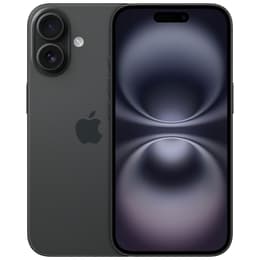
iPhone 16
iPhone 16
Starting at

Refurbished price:548.00

Versus €879.00 new

See options
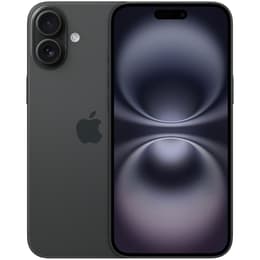
iPhone 16 Plus
iPhone 16 Plus
Starting at

Refurbished price:559.00

Versus €979.00 new

See options

Ratings

The iPhone 16 and iPhone 16 Plus, both released in September 2024, represent Apple's standard smartphone offerings for that generation. While sharing the same core operating system and many internal components, the primary distinctions between these two models lie in their physical dimensions, display size, and battery capacity. Both devices operate on iOS, providing a consistent user experience across the ecosystem.

Scores

Durability

Both the iPhone 16 and iPhone 16 Plus, having been released on September 20, 2024, benefit from Apple's consistent software support, running on iOS 18 initially and updated to iOS 26.4 as of March 2026.

  • Software Longevity: Users can expect several years of major iOS updates for both models, ensuring access to new features and security enhancements for an extended period.
  • Physical Durability: Both devices feature a Ceramic Shield front cover, designed to offer enhanced protection against drops and scratches. They also carry an IP68 rating for water and dust resistance, allowing submersion up to 6 meters for 30 minutes.
  • Repairability: The iPhone 16 Plus has received a repairability score of seven out of ten from specialists, indicating a reasonable ease of repair for common components.

Year of Release

2024

2024

Compatible with latest Update

Yes

Yes

Foldable

No

No

Performance

The iPhone 16 and iPhone 16 Plus are equipped with the same internal processing capabilities, ensuring a consistent performance experience across both models.

  • Processing Power: Both devices feature the A18 chip, which is optimized for running generative artificial intelligence tasks and includes a Neural Engine designed for enhanced performance. This allows for smooth operation of demanding applications and efficient multitasking.
  • Memory and Storage: Each model comes with 8GB of RAM, contributing to fluid app switching and overall system responsiveness. Storage options are available in 128GB, 256GB, and 512GB configurations.
  • Real-world Usage: User feedback suggests that both phones handle graphic-intensive games effectively, with the larger iPhone 16 Plus showing minimal heat generation and battery drain during such activities. The performance is generally described as fast and capable for everyday use.

Memory (GB)

8 GB

8 GB

Screen quality

The display experience on the iPhone 16 and iPhone 16 Plus is largely similar in terms of technology and visual fidelity, with the primary difference being the physical size of the screen.

  • Display Technology: Both models utilize a Super Retina XDR OLED display, offering deep blacks, vibrant colors, and a high contrast ratio of 2,000,000:1. They also support HDR, True Tone, and wide color (P3) for an accurate viewing experience.
  • Size and Resolution: The iPhone 16 features a 6.1-inch display with a resolution of 2556x1179 pixels, resulting in a pixel density of 460 pixels per inch (ppi). The iPhone 16 Plus offers a larger 6.7-inch display with a resolution of 2796x1290 pixels, maintaining the same 460 ppi density.
  • Brightness and Refresh Rate: Both displays achieve a typical maximum brightness of 1000 nits, a peak HDR brightness of 1600 nits, and a peak outdoor brightness of 2000 nits, ensuring good visibility in various lighting conditions. However, both models feature a standard 60Hz refresh rate, which some users note is less fluid compared to devices with higher refresh rates.

Resolution

1179 x 2556

1290 x 2796

Screen type

Super Retina XDR OLED

Super Retina XDR OLED

Audiovisual

The camera systems on the iPhone 16 and iPhone 16 Plus are identical, offering advanced photographic and videographic capabilities.

  • Dual Camera System: Both devices are equipped with an advanced dual-camera system, featuring a 48-megapixel Fusion main camera with an f/1.6 aperture and a 12-megapixel ultrawide camera with an f/2.2 aperture and a 120-degree field of view. The main camera supports super-high-resolution photos (24MP and 48MP) and offers 2x optical-quality telephoto zoom.
  • Photography Features: The cameras include features like sensor-shift optical image stabilization, 100% Focus Pixels, Photonic Engine, Deep Fusion, and Smart HDR 5 for enhanced image quality. A new Camera Control button on the side of the device allows for quick access to camera functions, such as opening the camera app, switching controls, and taking photos or videos.
  • Video Capabilities: Both models support 4K Dolby Vision video recording at various frame rates, including 24, 25, 30, or 60 frames per second. They also offer cinematic mode up to 4K Dolby Vision at 30 fps and spatial video recording at 1080p at 30 fps. The front-facing TrueDepth camera is 12MP with an f/1.9 aperture and autofocus.

Main camera

48 megapixels

48 megapixels

Front camera

12 megapixels

12 megapixels

Miscellaneous

Beyond their core functions, the iPhone 16 and iPhone 16 Plus incorporate several practical features that enhance user interaction and connectivity.

  • Connectivity and Ports: Both devices support modern connectivity standards, including Wi-Fi 7 and Bluetooth 5.3. They feature a USB-C port for charging and data transfer.
  • Physical Controls and Sensors: A notable addition to both models is the Action button, which can be customized to perform various functions, and the new Camera Control button, designed for more tactile camera operation. For security, both rely on Face ID for facial recognition.
  • Dimensions and Handling: The iPhone 16 measures 147.6 x 71.6 x 7.8 mm and weighs 170 grams, offering a more compact and lighter experience. The iPhone 16 Plus is larger at 160.9 x 77.8 x 7.8 mm and weighs 199 grams, providing a more expansive screen but a heavier feel. Both models support MagSafe and Qi2 wireless charging.

Weight

170 g

199 g

Screen size (in)

6.1

6.7

Network

5G

5G

SIM card

eSIM

eSIM

Carrier compatibility

Unlocked

Unlocked

Connector

USB-C (USB 2)

USB-C (USB 2)

User feedback for the iPhone 16 and iPhone 16 Plus highlights distinct preferences based on individual needs. The iPhone 16 Plus is frequently praised for its extended battery life, with many users reporting it easily lasts into a second day of use. Its larger screen is also a significant draw for media consumption and productivity. Conversely, some users of the standard iPhone 16 have expressed disappointment with its battery life, occasionally requiring multiple charges within a day, particularly with heavy usage. The 60Hz refresh rate on both models is a common point of discussion, with some users finding it outdated compared to other smartphones.

The new Camera Control button has received mixed reactions; while some find it a useful addition for quick camera adjustments, others report it can be a hindrance in certain situations. The overall performance of both devices is generally well-regarded, with the A18 chip handling demanding tasks smoothly.

For users who prioritize a larger display and exceptional battery longevity, the iPhone 16 Plus is well-suited. Its size makes it ideal for consuming content, extended browsing, and managing multiple tasks throughout the day without frequent recharging. Users who prefer a more compact and lighter device for easier one-handed use and portability may find the standard iPhone 16 to be a better fit. Both models offer a robust feature set and strong performance, making the choice largely dependent on preferred device size and battery endurance. Considering a quality-assured refurbished option for either model can be an eco-friendly alternative.


See all articles

Our recent comparisons






