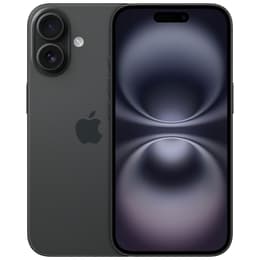


iPhone 13 Vs iPhone 16

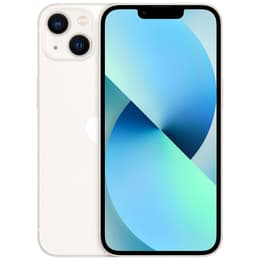
iPhone 13
iPhone 13
Starting at
€277.00
€769.00 new
See options
iPhone 16
iPhone 16
Starting at
€569.00
€879.00 new
See options

Ratings

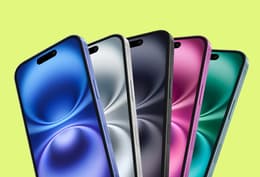
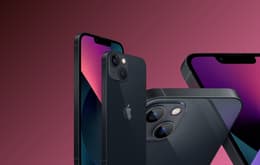
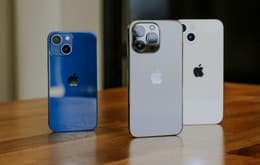
The iPhone 13, released in September 2021, and the iPhone 16, launched in September 2024, represent different generations within Apple's smartphone lineup. While both operate on iOS, the iPhone 16 introduces substantial advancements in processing power, camera technology, display features, and overall longevity, reflecting three years of technological evolution.

Both devices run on Apple's iOS ecosystem, ensuring a consistent user experience with app availability and security updates.

Scores

Durability

The iPhone 16 offers a considerably longer practical lifespan due to its newer release and extended software support.

  • Release Timeline and Software Support: The iPhone 13 was released in September 2021 and launched with iOS 15, supporting updates up to the current iOS 26.1. The iPhone 16, released in September 2024, launched with iOS 18 and also supports iOS 26.1, indicating it will receive major OS updates for approximately three years longer than the iPhone 13.
  • Durability and Build Materials: Both models feature an IP68 rating for dust and water resistance. The iPhone 16 incorporates a second-generation Ceramic Shield front cover, noted to be 50% tougher than the Ceramic Shield used in prior models, alongside a frame made from 85% recycled aluminum. The iPhone 13 also includes Ceramic Shield, but the iPhone 16 offers enhanced protection.
  • Repairability: The iPhone 13 received a repairability score of 5/10 from iFixit, with some functionality loss reported when components are replaced outside of authorized channels. While specific scores for the iPhone 16 are emerging, Apple has shown a trend towards improved repairability in newer models.

Year of Release

2021

2024

Compatible with latest Update

Yes

Yes

Foldable

No

No

Performance

The iPhone 16 delivers a significant leap in performance, offering enhanced speed and efficiency for demanding tasks and everyday use.

  • Processor Capabilities: The iPhone 13 is powered by the A15 Bionic chip, which provides robust performance for daily applications and smooth multitasking. The iPhone 16 features the Apple A18 chip, a two-generation jump that is notably faster and more power-efficient. It offers approximately a 30% faster CPU and 40% faster GPU compared to the A16 chip used in the iPhone 15, resulting in a much snappier experience for intensive gaming and complex applications.
  • RAM and Responsiveness: The iPhone 13 comes with 4GB of RAM, efficiently managing iOS applications. The iPhone 16 doubles this to 8GB of RAM, providing more headroom for extensive multitasking and allowing applications to remain in memory longer, contributing to a smoother overall system responsiveness.
  • Storage Options: Both devices offer identical storage configurations of 128GB, 256GB, and 512GB, providing ample space for most users' applications, photos, and media.

Memory

4 GB

8 GB

Screen quality

Both iPhones offer vibrant OLED displays, but the iPhone 16 introduces improvements in brightness, resolution, and overall viewing experience.

  • Display Technology and Clarity: Both the iPhone 13 and iPhone 16 feature 6.1-inch Super Retina XDR OLED displays, known for deep blacks and vibrant colors. The iPhone 16, however, boasts a slightly higher resolution of 2556x1179 pixels compared to the iPhone 13's 2532x1170 pixels, contributing to marginally sharper visuals.
  • Brightness Levels: The iPhone 13 offers a typical maximum brightness of 800 nits and a peak HDR brightness of 1200 nits. The iPhone 16 significantly enhances this with 1000 nits typical brightness, 1600 nits peak HDR brightness, and an impressive 2000 nits peak brightness for outdoor use, ensuring better visibility in bright sunlight. It also features a new 1 nit minimum brightness for comfortable low-light viewing.
  • Refresh Rate and Special Features: Both models maintain a standard 60Hz refresh rate. A notable addition to the iPhone 16 is the Dynamic Island, an interactive area around the front camera housing that dynamically displays alerts and background activities, enhancing user interaction. The iPhone 13 features a traditional notch.

Resolution

1170 x 2532

1179 x 2556

Screen type

Super Retina XDR OLED

Super Retina XDR OLED

Audiovisual

The iPhone 16 features a significantly upgraded camera system, particularly in main sensor resolution and new computational photography capabilities, compared to the iPhone 13.

  • Main Camera System: The iPhone 13 utilizes a dual 12MP camera system (Main ƒ/1.6, Ultra Wide ƒ/2.4) with sensor-shift optical image stabilization on the main lens. The iPhone 16 steps up to an advanced dual-camera system with a 48MP Fusion Main camera (ƒ/1.6, sensor-shift OIS, capable of 24MP and 48MP super-high-resolution photos) and an improved 12MP Ultra Wide camera (ƒ/2.2 with a wider aperture, autofocus, and 100% Focus Pixels).
  • Photography and Video Features: Both support Cinematic mode and HDR video recording up to 4K at 60fps. The iPhone 16 introduces vertical camera alignment to enable spatial video capture and features an enhanced Photographic Styles feature. It also includes Action mode for stabilized video up to 2.8K at 60fps, providing more versatile video recording options. The front cameras also see an upgrade, with the iPhone 16's 12MP ƒ/1.9 front camera gaining autofocus.
  • Low-Light Performance: While the iPhone 13 offered good low-light performance, the iPhone 16's larger main sensor and improved image processing, including the Photonic Engine and Smart HDR 5, lead to superior detail and reduced noise in challenging lighting conditions.

Main camera

12 megapixels

48 megapixels

Front camera

12 megapixels

12 megapixels

Miscellaneous

The iPhone 16 brings notable upgrades in connectivity, port technology, and user interaction features, enhancing daily usability.

  • Connectivity and Ports: Both devices support 5G connectivity. The iPhone 13 uses Wi-Fi 6 and features Apple's proprietary Lightning port. The iPhone 16 upgrades to Wi-Fi 7 for faster wireless speeds and adopts the universal USB-C port, offering broader compatibility with accessories and faster data transfer for some configurations.
  • Physical Design and User Input: The iPhone 13 has traditional volume and power buttons. The iPhone 16 introduces the Action Button, customizable for various functions, and a dedicated Camera Control button, providing a more tactile and versatile user interface. Both maintain a similar form factor, with the iPhone 16 being slightly lighter (170g vs 174g for iPhone 13).
  • Additional Sensors and Intelligence: Both feature Face ID for secure authentication. The iPhone 16 is designed to leverage Apple Intelligence features, available as an iOS 18 update, offering advanced on-device AI capabilities for improved user assistance, writing tools, and system interactions.

Weight

173 g

170 g

Screen size (in)

6.1

6.1

Network

5G

5G

SIM card

Physical SIM + eSIM

eSIM

Carrier compatibility

Unlocked

Unlocked

Connector

Lightning

USB-C (USB 2)

Based on user feedback and general reception, the iPhone 13 is praised for its reliable performance, solid camera capabilities (especially for its release era), and dependable battery life for its time. Users frequently highlight its enduring speed for everyday tasks and its consistent photo quality. Criticisms often point to its 60Hz display, which some find less fluid compared to competitors, and the lack of a telephoto lens in the base model. Its repairability score was also a concern at its launch.

The iPhone 16 has received positive feedback for its upgraded design, substantially faster A18 chip, and significantly improved battery life. Users appreciate the enhanced camera system with higher resolution and new features like spatial video, as well as the versatility of the Dynamic Island and Action Button. Some users note that while the display is bright and clear, the continued use of a 60Hz refresh rate on the base model is a point of contention for those accustomed to higher refresh rates on other devices.

For users prioritizing a cost-effective yet still capable device for general use, photography, and gaming, the iPhone 13 remains a viable option, particularly as a quality-assured refurbished product. Its processing power and camera system are still sufficient for most modern applications.

However, individuals seeking the latest technological advancements, including superior processing power for future-proof performance, a more versatile camera system, enhanced display brightness, longer software support, and the benefits of Apple Intelligence, will find the iPhone 16 to be the more suitable choice. It caters well to users who demand a device that will stay current and perform optimally for a longer duration, making it a sustainable choice as a quality-assured refurbished option. Choosing between these models ultimately depends on prioritizing immediate savings versus long-term performance and advanced features.