

Galaxy A14 5G Vs iPhone 16e

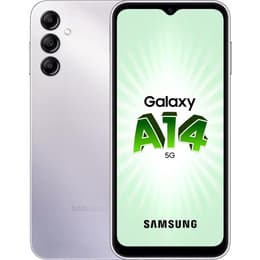
Galaxy A14 5G
Galaxy A14 5G
Starting at

Refurbished price:102.00

Versus €289.00 new

See options
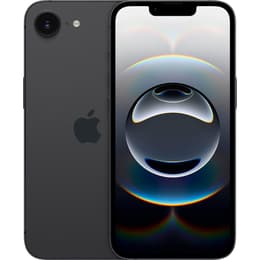
iPhone 16e
iPhone 16e
Starting at

Refurbished price:387.00

Versus €719.00 new

See options

Ratings

The Samsung Galaxy A14 5G, released in January 2023, and the Apple iPhone 16E, launched in February 2025, represent distinct approaches to smartphone design and functionality. While the Galaxy A14 5G operates on the Android platform, the iPhone 16E runs on Apple's iOS. These devices cater to different user preferences, with the Galaxy A14 5G offering a larger display and expandable storage, and the iPhone 16E focusing on a powerful processor and a streamlined user experience.

Scores

Durability

The longevity of a smartphone is influenced by its release timeline, software support, and physical resilience.

  • Release Timeline and Software Support: The Samsung Galaxy A14 5G, released in January 2023, launched with Android 13 and is expected to receive its final major OS update to Android 15 around June 2025, with security patches continuing until 2027. The iPhone 16E, released in February 2025, launched with iOS 18.3 and is anticipated to receive at least five years of major iOS updates, supporting up to iOS 26. This suggests a longer software support period for the iPhone 16E.
  • Physical Durability: The Galaxy A14 5G features a plastic frame and back with a glass front, and does not carry an official IP rating for water and dust resistance. In contrast, the iPhone 16E includes an IP68 rating for water and dust resistance, a Ceramic Shield front cover, and a durable glass back, indicating a higher degree of protection against environmental elements.
  • Practical Lifespan: Users of the Galaxy A14 5G can expect continued security updates for a few more years, but major feature updates will cease after Android 15. The iPhone 16E, despite its recent discontinuation in March 2026, offers a robust hardware and software foundation that would have supported a practical lifespan extending several years beyond its release, benefiting from Apple's consistent update policy.

Year of Release

2023

2025

OS

Android

iOS

Foldable

No

No

Performance

Performance in daily use is shaped by a device's internal components, affecting app responsiveness, multitasking, and battery efficiency.

  • Processor Capabilities: The Samsung Galaxy A14 5G is powered by a processor that delivers solid performance for everyday tasks and a satisfactory experience for launching applications, though some minor delays might be observed. The iPhone 16E features an A18 chip, which provides fast and smooth performance, designed to handle demanding applications and advanced features like Apple Intelligence with ease.
  • Storage and Multitasking: The Galaxy A14 5G offers various configurations, including 4GB, 6GB, or 8GB of RAM, and storage options of 64GB or 128GB, expandable via a microSD card up to 1TB. The iPhone 16E comes with 8GB of RAM and storage options of 128GB, 256GB, or 512GB, without expandable storage. The iPhone's higher base RAM and optimized software typically contribute to efficient multitasking.
  • Battery Behavior: The Galaxy A14 5G is equipped with a 5000 mAh battery, generally providing good battery life that can last through a full day of heavy use, with around 9 hours and 40 minutes of video playback. The iPhone 16E boasts a battery designed for extended use, offering up to 26 hours of video playback, positioning it as a strong performer for battery longevity among 6.1-inch iPhones.

Memory (GB)

4 GB

8 GB

Screen quality

The visual experience on a smartphone is largely determined by its display technology, resolution, and brightness levels.

  • Display Technology and Clarity: The Samsung Galaxy A14 5G features a 6.6-inch PLS LCD display with a resolution of 1080 x 2408 pixels, providing clear visuals for general use. The iPhone 16E incorporates a 6.1-inch Super Retina XDR OLED display with a resolution of 2532 x 1170 pixels, offering deep blacks, vibrant colors, and excellent contrast.
  • Brightness and Refresh Rate: The Galaxy A14 5G's display has a peak brightness of 500 nits, which can make outdoor visibility challenging in bright sunlight. It supports a 90Hz refresh rate for smoother scrolling. The iPhone 16E's OLED display reaches 800 nits typical brightness and 1200 nits peak brightness for HDR content, ensuring better visibility in varied lighting conditions. It operates at a standard 60Hz refresh rate.
  • Viewing Experience: The larger screen of the Galaxy A14 5G offers more expansive viewing for media consumption. The iPhone 16E's OLED technology provides a more immersive visual experience with superior color accuracy and contrast, despite its slightly smaller size.

Resolution

1080 x 2408

2532x1170

Audiovisual

Camera capabilities are a significant factor for many users, influencing the quality of photos and videos captured in various conditions.

  • Rear Camera System: The Samsung Galaxy A14 5G includes a triple rear camera setup with a 50 MP main sensor, a 2 MP macro lens, and a 2 MP depth sensor. It does not feature an ultrawide camera. The iPhone 16E is equipped with a 48MP Fusion Main camera that includes optical image stabilization and offers a 2x telephoto option through sensor cropping. It also lacks a dedicated ultrawide lens.
  • Photography Performance: The Galaxy A14 5G's main camera performs well in good lighting conditions, capturing decent images for its segment. The iPhone 16E's camera system, supported by its powerful processor and computational photography, is designed to produce high-resolution photos with good detail and color accuracy, even in challenging lighting, and includes features like Night mode and Smart HDR 5.
  • Video Recording and Front Camera: Both devices offer 1080p video recording at 30 frames per second for the Galaxy A14 5G. The iPhone 16E supports 4K Dolby Vision video recording at various frame rates. For selfies, the Galaxy A14 5G has a 13 MP front camera, while the iPhone 16E features a 12 MP front camera with autofocus.

Front camera

13 megapixels

TrueDepth 12MP

Miscellaneous

Beyond core features, practical elements like connectivity, ports, and physical design contribute to the overall user experience.

  • Connectivity and Ports: Both the Galaxy A14 5G and iPhone 16E support 5G cellular networks, ensuring fast mobile data speeds. The Galaxy A14 5G includes a USB-C 2.0 port and a 3.5mm headphone jack. The iPhone 16E has transitioned to a USB-C port, though it operates at USB 2.0 speeds, and does not include a headphone jack.
  • Biometrics and Additional Features: The Galaxy A14 5G uses a side-mounted fingerprint sensor for secure unlocking. The iPhone 16E utilizes Face ID for facial recognition and includes an Action Button, which can be customized for quick access to various functions. The iPhone 16E also offers satellite features for emergency communication.
  • Design and Handling: The Galaxy A14 5G measures 167.7 x 78 x 9.1 mm and weighs 202g, featuring a larger form factor. The iPhone 16E is more compact at 146.7 × 71.5 × 7.8 mm and weighs 167g, potentially offering easier one-handed use.

Weight

201 g

167 g

Screen size (in)

6.6

6.1

Network

5G

5G

SIM card

Dual Physical SIM

eSIM

Carrier compatibility

Unlocked

Unlocked

Connector

USB-C + Jack 3.5mm

USB-C

The Samsung Galaxy A14 5G and the iPhone 16E cater to different user priorities, each excelling in distinct areas. Users often praise the Galaxy A14 5G for its robust battery life, reliable 5G connectivity, and the capability of its main camera in well-lit environments. Common criticisms include its LCD display, which can struggle with brightness outdoors, and its average performance for more demanding applications. The absence of an ultrawide camera is also a frequent point of concern for some users.

Conversely, the iPhone 16E is frequently lauded for its powerful A18 chip, which enables smooth performance and advanced features like Apple Intelligence. Its camera system, particularly the 48MP main sensor, and its extended battery life are also significant advantages. However, some users express disappointment with its 60Hz display refresh rate, the lack of an ultrawide camera, and the USB-C port operating at USB 2.0 speeds.

Users prioritizing a large display, expandable storage, and a long-lasting battery for general use may find the Samsung Galaxy A14 5G well-suited to their needs. Those who value a powerful processor for demanding tasks, a high-quality OLED display, advanced camera features, and a more compact, durable design with extended software support will likely lean towards the iPhone 16E. Both devices offer a quality-assured refurbished option, providing an eco-friendly alternative for consumers seeking to make informed and sustainable choices.


See all articles

Our recent comparisons