

iPhone 16 Plus Vs iPhone 16e

iPhone 16 Plus
iPhone 16 Plus
Starting at

Refurbished price:559.00

Versus €979.00 new

See options
iPhone 16e
iPhone 16e
Starting at

Refurbished price:387.00

Versus €719.00 new

See options

Ratings

The iPhone 16 Plus and iPhone 16e, both released in 2024 and 2025 respectively, represent distinct offerings within Apple's smartphone lineup. While both devices integrate the latest software and a powerful processor, they cater to different user preferences primarily through variations in display size, camera capabilities, and advanced connectivity features. Both models run on the current iOS, ensuring access to the latest functionalities and security updates.

Scores

Durability

When considering the long-term usability of these devices, several factors contribute to their expected lifespan.

  • Software Support: Both the iPhone 16 Plus and iPhone 16e are expected to receive major iOS updates for approximately 5-7 years from their respective release dates, with security patches extending even further. This aligns with Apple's typical support policy, ensuring continued access to new features and essential security enhancements.
  • Repairability: The iPhone 16 series, which includes the iPhone 16 Plus, received a repairability score of 7 out of 10 from iFixit, indicating improved ease of repair compared to previous generations. While specific scores for the 16e are not detailed, it is part of the broader 16 series and benefits from similar design considerations.
  • Build Quality: Both models feature robust construction, with the iPhone 16e specifically noted for its metal right-angle frame and IP68 rating for dust and water resistance, contributing to its durability. The iPhone 16 Plus also incorporates durable materials and is designed to withstand daily use.

Year of Release

2024

2025

Foldable

No

No

Performance

Both devices offer capable performance for everyday tasks, though there are distinctions in their processing power and memory configurations.

  • Processor Capabilities: The iPhone 16 Plus is powered by the A18 chipset, while the iPhone 16e also features an A18 Bionic chip. However, the iPhone 16e's A18 chip has a 4-core GPU, whereas the iPhone 16 Plus's A18 chip includes a 5-core GPU, suggesting a slight difference in graphics processing power. This means the iPhone 16 Plus may handle graphically intensive applications and games with a bit more fluidity.
  • Multitasking and Responsiveness: Both models come with 8GB of RAM, which supports smooth multitasking and efficient handling of multiple applications simultaneously. This amount of memory ensures that both devices are well-equipped for current and future software demands, including Apple Intelligence features.
  • Storage Options: Both the iPhone 16 Plus and iPhone 16e are available with storage capacities of 128GB, 256GB, and 512GB, providing ample space for apps, photos, and media.

Memory (GB)

8 GB

8 GB

Screen quality

The visual experience on these two iPhones differs primarily in size and specific display technologies.

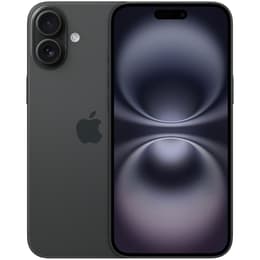
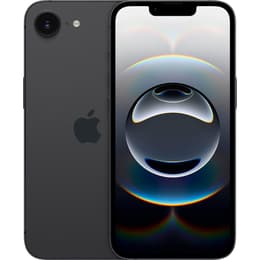
  • Display Technology and Size: The iPhone 16 Plus features a larger 6.7-inch Super Retina XDR OLED display, offering an expansive viewing area. In contrast, the iPhone 16e comes with a 6.1-inch Super Retina XDR OLED display, providing a more compact form factor. Both utilize OLED technology for deep blacks and vibrant colors.
  • Resolution and Brightness: The iPhone 16 Plus has a resolution of 2796 x 1290 pixels, while the iPhone 16e offers a resolution of 2532 x 1170 pixels with a pixel density of 460 PPI. Both displays support HDR and True Tone. The iPhone 16 Plus can reach a peak outdoor brightness of 2,000 nits, with 1,000 nits typical indoor brightness. The iPhone 16e offers 800 nits max brightness and 1200 nits peak HDR brightness.
  • Refresh Rate: Both the iPhone 16 Plus and iPhone 16e maintain a standard 60Hz refresh rate, which is suitable for most daily interactions.

Resolution

1290 x 2796

2532x1170

Audiovisual

The camera systems on the iPhone 16 Plus and iPhone 16e present a key distinction, particularly for users interested in advanced photography and videography features.

  • Rear Camera System: The iPhone 16 Plus is equipped with an advanced dual-camera system, featuring a 48MP main camera (referred to as the Fusion Camera) and a 12MP ultrawide camera with a 120° field of view. Its vertically aligned cameras enable Spatial Capture for 3D photos and videos. The iPhone 16e, on the other hand, features a single 48MP Fusion camera on the rear, which includes 2x in-sensor zoom capabilities. It lacks an ultrawide lens and therefore does not support Spatial Capture.
  • Photography Features: Both models support essential features like Night mode and Portrait mode, allowing for quality photos in various lighting conditions and with depth effects. The 16 Plus's ultrawide lens provides more versatility for landscape and group shots.
  • Front Camera and Video: Both devices feature a 12MP TrueDepth front camera for selfies and video calls. Both are capable of recording high-quality video, with the iPhone 16 Plus potentially offering more advanced video features due to its dual-camera setup.

Front camera

12 megapixels

TrueDepth 12MP

Miscellaneous

Beyond the core specifications, several practical elements differentiate the user experience between these two iPhone models.

  • Connectivity: The iPhone 16 Plus supports Wi-Fi 7 and 5G mmWave (in the US), offering faster wireless speeds and broader 5G coverage. The iPhone 16e utilizes an Apple-designed C1 modem, supporting Wi-Fi 6 and 6GHz 5G networks, but it does not include mmWave 5G support.
  • Physical Controls: Both devices feature the Action Button, which replaces the traditional mute switch and can be customized for various functions. The iPhone 16 Plus also introduces a new touch-sensitive Capture Button, designed to enhance the camera experience with functions like zoom control.
  • Battery Performance: The iPhone 16 Plus is equipped with a 4,674 mAh battery, providing extended usage, with many users reporting it can last into a second day. The iPhone 16e, with its 4,005 mAh battery, is noted for offering the longest battery life among 6.1-inch iPhone models, providing up to 26 hours of video playback.

Weight

199 g

167 g

Screen size (in)

6.7

6.1

Network

5G

5G

SIM card

eSIM

eSIM

Carrier compatibility

Unlocked

Unlocked

Connector

USB-C (USB 2)

USB-C

The iPhone 16 Plus and iPhone 16e cater to different user needs within the Apple ecosystem. Users frequently praise the iPhone 16 Plus for its expansive display and robust battery life, making it suitable for media consumption and extended use without frequent charging. Its more versatile dual-camera system, including Spatial Capture, is often highlighted by those who prioritize advanced photography and videography.

Conversely, the iPhone 16e receives commendation for bringing a powerful processor and Apple Intelligence features to a more compact form factor. Its single, high-resolution main camera is generally well-regarded for everyday photography, and its battery life is considered excellent for its size. Some users might note the absence of an ultrawide camera or mmWave 5G support on the 16e as a trade-off for its more streamlined design and feature set.

Users prioritizing a larger screen, a more comprehensive camera system with an ultrawide lens, and the latest in wireless connectivity (Wi-Fi 7, mmWave 5G) may find the iPhone 16 Plus better suited to their requirements. For those who prefer a more compact device with strong core performance, excellent battery life for its size, and access to Apple's latest software innovations, the iPhone 16e presents a compelling option. Both devices offer a quality-assured refurbished option, providing an eco-friendly alternative for consumers.


See all articles

Our recent comparisons







