

Galaxy Z Flip5 Vs Xiaomi Redmi Note 13 Pro

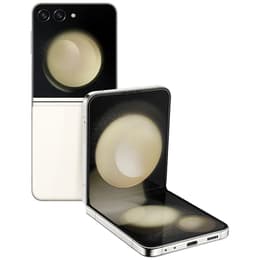
Galaxy Z Flip5
Galaxy Z Flip5
Starting at

Refurbished price:357.00

Versus €1,470.83 new

See options
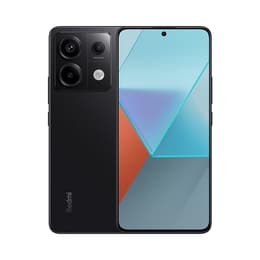
Xiaomi Redmi Note 13 Pro
Starting at

Refurbished price:179.00

Versus €349.00 new

See options

Ratings

The Samsung Galaxy Z Flip5, released in August 2023, and the Xiaomi Redmi Note 13 Pro 5G, which saw a global release in early 2024, represent distinct approaches to modern smartphone design. The Galaxy Z Flip5 stands out with its innovative foldable form factor and a highly capable processor, while the Redmi Note 13 Pro 5G offers a traditional slab design with a focus on a high-resolution camera and a vibrant display. Both devices operate on the Android platform, providing a familiar software experience with their respective manufacturer customizations.

Scores

Durability

When considering the long-term usability of these devices, their release timelines and software support are key factors.

  • Software Longevity: The Galaxy Z Flip5 benefits from Samsung's commitment to providing four generations of Android OS upgrades and five years of security updates, extending its software support well into the future. This means users can expect the device to receive updates up to Android 17. The Redmi Note 13 Pro 5G typically receives 2-3 years of Android OS updates and 4 years of security updates, which is standard for its segment, but less extensive than the Flip5's commitment.
  • Physical Durability: The Galaxy Z Flip5 features an IPX8 water resistance rating, indicating it can withstand submersion in water, and uses Gorilla Glass Victus 2 for enhanced scratch and drop protection on its exterior. Its new hinge design allows it to fold completely flat, reducing the gap seen in previous models. The Redmi Note 13 Pro 5G offers an IP54 rating, providing protection against dust and splashes, and incorporates Corning Gorilla Glass Victus for display protection.
  • Expected Practical Lifespan: Users prioritizing extended software support and higher water resistance may find the Galaxy Z Flip5 offers a longer practical lifespan in terms of feature updates and protection against liquid damage. The Redmi Note 13 Pro 5G, while durable for everyday use, may see its software support conclude sooner.

Year of Release

2023

2023

Compatible with latest Update

Yes

Yes

OS

Android

Android

Foldable

Yes

No

Performance

The performance capabilities of these smartphones cater to different user expectations, primarily driven by their internal components.

  • Processing Power: The Galaxy Z Flip5 is equipped with a high-end processor designed for demanding tasks, ensuring smooth operation for complex applications, intensive multitasking, and graphic-heavy gaming. Users will experience rapid app loading and fluid transitions. The Redmi Note 13 Pro 5G features a capable processor that handles everyday applications and moderate gaming effectively, providing a responsive experience for most users.
  • Multitasking and Storage: Both devices offer ample RAM configurations, with the Galaxy Z Flip5 typically featuring 8GB of RAM and the Redmi Note 13 Pro 5G available with 8GB or 12GB options. The Flip5 utilizes faster UFS 4.0 storage, contributing to quicker data access and app performance, while the Redmi Note 13 Pro 5G uses UFS 2.2 storage. Both offer various storage capacities, starting from 256GB for the Flip5 and 128GB for the Redmi Note 13 Pro 5G.
  • Overall Responsiveness: The Galaxy Z Flip5 delivers a consistently high level of responsiveness, making it suitable for power users who require top-tier performance. The Redmi Note 13 Pro 5G provides a smooth and reliable experience for general use, though it may not match the raw processing power of the Flip5 for the most intensive tasks.

Memory (GB)

8 GB

8 GB

Screen quality

The display experience on these two devices presents a clear distinction in both form and function.

  • Display Technology and Size: The Galaxy Z Flip5 features a 6.7-inch foldable Dynamic AMOLED 2X main display, offering deep blacks and vibrant colors, complemented by a 3.4-inch Super AMOLED cover screen that allows for more interaction when the phone is folded. The Redmi Note 13 Pro 5G boasts a larger, traditional 6.67-inch AMOLED display, providing an expansive viewing area.
  • Resolution and Clarity: The Flip5's main screen has an FHD+ resolution (1080x2640 pixels), delivering clear visuals. Its cover screen has a resolution of 720x748 pixels. The Redmi Note 13 Pro 5G offers a higher 1.5K resolution (1220x2712 pixels), resulting in a sharper image, particularly noticeable with fine details.
  • Brightness and Smoothness: Both devices feature a 120Hz refresh rate on their main displays for smooth scrolling and animations. The Galaxy Z Flip5 can reach a peak brightness of 1750 nits, while the Redmi Note 13 Pro 5G can achieve up to 1800 nits, ensuring good visibility in bright outdoor conditions.

Resolution

1080 x 2640

1220 x 2712

Screen type

Foldable Dynamic AMOLED 2X

AMOLED

Audiovisual

The camera systems on both smartphones offer distinct capabilities for capturing photos and videos.

  • Rear Camera Systems: The Galaxy Z Flip5 features a dual-camera setup on the rear, consisting of a 12MP wide-angle lens with optical image stabilization (OIS) and a 12MP ultra-wide lens. The Redmi Note 13 Pro 5G comes with a versatile triple-camera system, highlighted by a 200MP main sensor with OIS, an 8MP ultra-wide lens, and a 2MP macro lens.
  • Photography Performance: The Flip5 is noted for producing lively photos with pleasing colors and good dynamic range in daylight, and performs capably in low-light conditions. Its foldable design allows for unique hands-free shooting angles. The Redmi Note 13 Pro 5G's high-megapixel main camera is designed to capture highly detailed images, particularly in good lighting, and offers features like 4x lossless zoom.
  • Video and Selfie Capabilities: Both phones support 4K video recording at 30fps from their main rear cameras. For selfies, the Galaxy Z Flip5 has a 10MP front camera, but its cover screen allows users to utilize the higher-quality rear cameras for self-portraits. The Redmi Note 13 Pro 5G includes a 16MP front camera, capable of recording 1080p video at 60fps.

Main camera

12 megapixels

200 megapixels

Front camera

10 megapixels

16 megapixels

Miscellaneous

Beyond core specifications, several practical elements differentiate the user experience of these two devices.

  • Connectivity and Ports: Both smartphones support 5G connectivity, along with modern Wi-Fi standards and Bluetooth. The Galaxy Z Flip5 features a USB-C port but omits a traditional 3.5mm headphone jack. The Redmi Note 13 Pro 5G also includes a USB-C port and often retains a 3.5mm headphone jack, offering more flexibility for wired audio accessories.
  • Biometric Security and Handling: The Flip5 integrates a side-mounted fingerprint sensor for secure unlocking. Its folded dimensions (85.1 x 71.9 x 15.1mm) make it highly compact and pocketable, while unfolded it measures 165.1 x 71.9 x 6.9mm. The Redmi Note 13 Pro 5G features an in-screen fingerprint sensor and has dimensions of approximately 161.15 x 74.24 x 7.98mm, offering a larger, more traditional smartphone form factor. Both devices weigh around 187-188 grams.
  • Build Materials: The Galaxy Z Flip5 uses an Armor Aluminum frame and Gorilla Glass Victus 2 for its exterior, contributing to a premium feel. The Redmi Note 13 Pro 5G typically features a glass front (Gorilla Glass Victus), a plastic frame, and a glass back.

Weight

187 g

187 g

Screen size (in)

6.7

6.67

Network

5G

5G

SIM card

Physical SIM + eSIM

Dual Physical SIM

Carrier compatibility

Unlocked

Unlocked

User feedback for the Galaxy Z Flip5 often highlights its compact, pocketable design when folded and the enhanced utility of its larger cover screen for quick interactions without opening the device. Users appreciate its strong performance for daily tasks and gaming. Common criticisms sometimes point to its battery life, which, while improved, may not match traditional slab phones, and the visible crease on the main foldable display.

The Redmi Note 13 Pro 5G is frequently praised for its impressive camera capabilities, particularly the high-resolution main sensor, and its vibrant, high-refresh-rate display. Users also often commend its battery life and overall performance for its segment. Some users might note that the software experience, while functional, can be different from stock Android, and its performance, while good, is not at the flagship level of devices like the Flip5.

Users prioritizing a highly compact form factor, cutting-edge design, and top-tier processing power for demanding applications may find the Galaxy Z Flip5 well-suited to their needs. Its extended software support also offers a longer period of updated features and security. Conversely, users who value a large, high-resolution display, a versatile camera system with a focus on detail, and a generally robust performance for everyday use in a traditional smartphone design might lean towards the Redmi Note 13 Pro 5G. Both devices offer compelling features, and choosing between them often comes down to whether a foldable design and flagship performance are paramount, or if a strong camera and expansive display in a conventional form factor are preferred. Exploring quality-assured refurbished options for either model can provide an eco-friendly alternative for consumers.


See all articles

Our recent comparisons