

Compare models
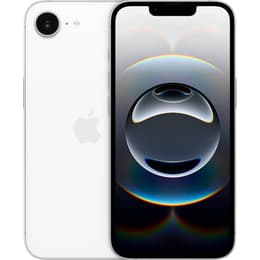
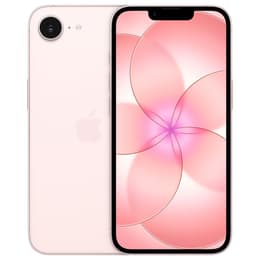
iPhone 16e Vs iPhone 17e
- 1-year minimum warranty
- Free delivery on all orders
- Free 30-day returns
Differences at a glance
The iPhone 16e (2025) and iPhone 17e (2026) represent consecutive generations of Apple's streamlined entry-level smartphone lineup. While both devices share a similar 6.1-inch form factor and core philosophy, the newer model introduces an updated processor and expanded baseline storage configurations to distinguish itself from its predecessor.
Both models run on Apple's mobile operating system ecosystem, offering long-term software support and modern interface customization options. Users evaluating these smartphones will find subtle generation-to-generation adjustments rather than radical redesigns.
Available Models
Colour
Storage (GB)
Scores
Durability
When evaluating structural longevity, both generations feature durable glass fronts protected by scratch-resistant material and robust water resistance ratings suitable for everyday mishaps.
- Release timeline and support: The iPhone 16e arrived in early 2025, while the iPhone 17e followed in early 2026, granting the newer model an extra year of expected software updates and security patches.
- Repairability and build: Both handsets utilize similar frame dimensions and internal layouts, maintaining comparable repair feasibility through official channels and independent repair networks.
- Expected lifespan: Thanks to identical memory allocations, both devices deliver equivalent multi-year operational longevity for routine daily tasks and software requirements.
Year of Release
2025
2026
OS
iOS
iOS
Foldable
No
No
Performance
System responsiveness and speed form a core differentiator between these two generations, directly impacting how demanding applications and background processes behave during heavy daily use.
- Storage configurations: The iPhone 16e starts at a baseline capacity with options scaling higher, whereas the iPhone 17e doubles the entry-level storage capacity out of the box for media-heavy users.
- Everyday processing: The iPhone 16e handles standard multitasking, web browsing, and casual gaming smoothly, while the iPhone 17e introduces a newer generation processor that manages heavy workloads and extended gaming sessions with improved thermal efficiency.
- Memory management: Both models include identical random access memory capacities, ensuring stable app switching and consistent background activity management across both platforms.
Screen quality
Visual output relies on identical display hardware across both generations, delivering consistent media consumption and readability experiences.
- Display technology: Both smartphones utilize a 6.1-inch organic light-emitting diode panel that yields deep black levels, high contrast ratios, and vivid color reproduction.
- Clarity and brightness: Each device features matching resolution and peak outdoor brightness levels, ensuring clear legibility under direct sunlight and sharp text rendering for reading.
- Refresh behavior: Both models maintain a standard refresh rate, offering smooth scrolling for typical user interfaces and standard multimedia playback.
Resolution
2532x1170
2532 x 1170
Audiovisual
Photography and media recording capabilities remain largely consistent across both generations, focusing on versatile single-lens capture systems.
- Main camera performance: Both phones feature a high-resolution primary sensor paired with advanced computational photography tools to capture detailed images in diverse lighting environments.
- Video and audio: Each model supports high-resolution video recording formats complete with stereo sound capture and effective stabilization for handheld moving shots.
- Front-facing optics: The selfie cameras on both devices deliver clear video calling performance and sharp portrait captures with software-based background blur effects.
Front camera
TrueDepth 12MP
12 megapixels
Miscellaneous
Practical physical characteristics and connectivity standards dictate how each device integrates into accessories and daily travel routines.
- Connectivity options: Both models support standard fifth-generation cellular networks, dual electronic SIM capabilities in select regions, and standard wireless pairing protocols.
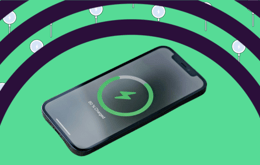
- Physical ports and charging: Both devices utilize universal type-C charging ports, though the newer model introduces faster wireless charging speeds and enhanced accessory magnetic alignment support.
- Dimensions and weight: Both smartphones share near-identical height, width, and thickness profiles, resulting in identical hand-holding comfort and pocketability. For buyers looking at sustainable purchasing choices, choosing a quality-assured refurbished option provides a reliable way to access these features while minimizing environmental impact.
Weight
167 g
169 g
Screen size (in)
6.1
6.1
Network
5G
5G
SIM card
eSIM
eSIM
Carrier compatibility
Unlocked
Unlocked
Connector
USB-C
USB-C (USB 2)
What the community thinks
User feedback across community platforms indicates that owners appreciate both devices for their reliable battery performance, clean software interface, and manageable physical sizes. Frequent discussions often center around the balance between baseline storage tiers and charging accessory compatibility, with many users noting that generation-to-generation changes are incremental rather than revolutionary.
Users prioritizing maximum storage capacity out of the box and faster wireless accessory charging may prefer the iPhone 17e, while users seeking a streamlined entry point into current-generation software features at a lower entry threshold will find the iPhone 16e well-suited to their needs. Reviewing a quality-assured refurbished option can also provide an eco-friendly alternative for consumers aiming to reduce electronic waste without compromising on daily functionality. Ultimately, the choice depends on individual storage requirements and accessory preferences rather than a drastic shift in core usability.