


Compare models

Google Pixel 9a Vs Xiaomi Redmi Note 13 Pro+

  • 1-year minimum warranty
  • Free delivery on all orders
  • Free 30-day returns
Google Pixel 9a
Starting at

Refurbished price:€361.00

Versus €586.09 new

See options
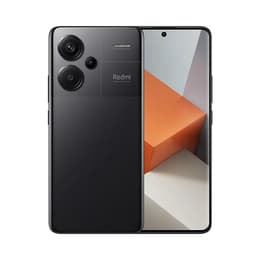
Xiaomi Redmi Note 13 Pro+
Starting at

Refurbished price:€258.00

Versus €449.00 new

See options

Differences at a glance

The Google Pixel 9a (2025) and the Xiaomi Redmi Note 13 Pro+ (2023) are contemporary smartphones designed to offer capable features and daily reliability. While both devices cater to users seeking balanced functionality without choosing the most expensive flagship models, they differ notably in software ecosystems, design approach, and hardware configuration.

The Google Pixel 9a runs a clean version of Android backed by extended software support, whereas the Xiaomi Redmi Note 13 Pro+ features a custom user interface built on top of an older Android version. These practical differences shape each device's long-term utility and everyday interaction style.

Available Models

Colour

Storage

Scores

Durability

When evaluating longevity, the Google Pixel 9a and Xiaomi Redmi Note 13 Pro+ differ significantly in release timelines, software maintenance schedules, and expected support lifespans.

  • Software support timeline: The Google Pixel 9a receives up to seven years of operating system and security updates from its release date, ensuring long-term software relevance. The Xiaomi Redmi Note 13 Pro+ offers a shorter major update window, typically spanning three to four years of total support.
  • Repairability and durability design: Both handsets incorporate durable front glass protection and sturdy frames, though standard repair availability varies by region. Users looking for extended software longevity will find the Google Pixel 9a better positioned for multi-year use.

Year of Release

2025

2023

Compatible with latest Update

Yes

Yes

OS

Android

Android

Foldable

No

No

Performance

Performance across both devices handles everyday tasks, web browsing, and multitasking smoothly, though they approach hardware configuration and battery behavior differently.

  • Processing and multitasking: The Google Pixel 9a handles demanding apps, AI-assisted tasks, and background processes seamlessly with current-generation hardware and optimized memory. The Xiaomi Redmi Note 13 Pro+ relies on a capable mid-range processor paired with generous storage options, running general apps and moderate gaming fluidly.
  • Battery behavior: Both devices easily navigate a full day of typical use on a single charge. The Google Pixel 9a features a large 5,100mAh battery paired with standard charging speeds, while the Xiaomi Redmi Note 13 Pro+ supports exceptionally rapid wired charging capabilities to minimize downtime.

Screen quality

Display characteristics on both smartphones deliver sharp visuals and smooth motion, though their panel sizes, peak brightness capacities, and physical footprints vary.

  • Display technology and clarity: The Google Pixel 9a features a vibrant 6.3-inch OLED display with deep blacks and high peak brightness levels for outdoor readability. The Xiaomi Redmi Note 13 Pro+ counters with a slightly larger 6.67-inch curved AMOLED display offering high resolution and vivid color reproduction.
  • Refresh rate and smoothness: Both models support a 120Hz variable refresh rate, ensuring fluid scrolling through menus, web pages, and supported applications.

Resolution

2424 x 1080

1220 x 2712

Audiovisual

Photography and media consumption capabilities differ notably between the two models in terms of sensor resolution, lens selection, and audio output.

  • Camera system capabilities: The Google Pixel 9a uses a dual rear camera setup focused on computational photography to deliver consistent, natural images in everyday conditions. The Xiaomi Redmi Note 13 Pro+ opts for a high-resolution 200MP main sensor accompanied by an ultra-wide lens, providing flexible framing options for detailed distant subjects or wide scenes.
  • Media and audio output: Both models feature stereo speakers suitable for casual video viewing, calls, and podcast playback, though neither includes a traditional headphone jack.

Front camera

13 megapixels

16 megapixels

Miscellaneous

Practical daily features such as connectivity, physical dimensions, and build materials shape the handling experience of each device.

  • Connectivity and ports: Both devices support 5G connectivity, modern Wi-Fi standards, and Bluetooth, utilizing USB Type-C ports for charging and data transfer.
  • Physical dimensions and handling: The Google Pixel 9a offers a compact, lightweight form factor with flat edges that sit comfortably in one hand. The Xiaomi Redmi Note 13 Pro+ features a slightly heavier, curved build profile that accommodates its larger screen real estate.

Weight

186 g

204 g

Screen size (in)

6.3

6.67

Network

5G

5G

SIM card

Physical SIM + eSIM

Dual Physical SIM

Carrier compatibility

Unlocked

Unlocked

What the community thinks

User feedback from online forums highlights distinct preferences for each device based on everyday priorities. Owners of the Google Pixel 9a frequently praise its clean software interface, reliable camera processing, and long-term update commitment, though some note that charging speeds are relatively modest. Conversely, users of the Xiaomi Redmi Note 13 Pro+ highlight its immersive curved display, rapid charging speeds, and high-resolution main camera as major advantages, while occasionally pointing out that custom software includes pre-installed application clutter.

Users prioritizing clean software, extended update longevity, and compact handling may prefer the Google Pixel 9a. Meanwhile, users prioritizing rapid charging speeds, larger screen real estate, and flexible camera hardware will find the Xiaomi Redmi Note 13 Pro+ well-suited to their needs. For those exploring sustainable purchasing routes, quality-assured refurbished options provide an eco-friendly alternative for both models without compromising on functional capability.










