
Galaxy Z Fold6 Vs iPhone 16

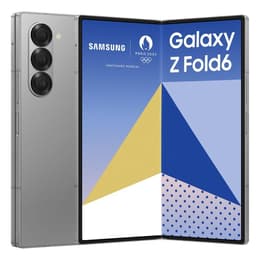
Galaxy Z Fold6
Galaxy Z Fold6
Starting at

Refurbished price:750.00

Versus €1,973.53 new

See options
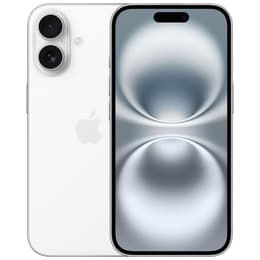
iPhone 16
iPhone 16
Starting at

Refurbished price:567.00

Versus €879.00 new

See options

Ratings

The Samsung Galaxy Z Fold6, released in July 2024, and the Apple iPhone 16, launched in September 2024, represent distinct approaches to modern smartphone design and functionality. While the Z Fold6 offers a unique foldable form factor that transforms from a traditional smartphone into a larger tablet-like display, the iPhone 16 maintains a classic slate design with a focus on refined performance and an integrated ecosystem. Both devices operate on their respective advanced operating systems, Android 16 for the Z Fold6 and iOS 18 for the iPhone 16, offering different user experiences and feature sets.

Scores

Durability

When considering the practical lifespan of these devices, several factors come into play, including software support, physical resilience, and repairability.

  • Software Longevity: The iPhone 16, running on iOS 18, is expected to receive major iOS updates for approximately five to six years from its release. The Galaxy Z Fold6, launching with Android 14 and now on Android 16, typically receives around four to five years of major Android OS updates, followed by security updates. This suggests the iPhone 16 may offer a slightly longer period of official software support.
  • Physical Durability: The iPhone 16 features a Ceramic Shield front cover and an aluminum frame, contributing to its scratch and bend resistance, with an IP68 rating for dust and water resistance. The Galaxy Z Fold6 utilizes an enhanced Armor Aluminum frame and an IP48 rating, offering protection against dust and water. However, the Z Fold6's foldable inner screen is noted to be more susceptible to scratches than traditional glass displays.
  • Repairability Considerations: While both devices are designed with modern repair techniques in mind, the complex folding mechanism of the Z Fold6 can introduce unique challenges for repairs, particularly concerning the inner display and hinge. The iPhone 16, with its more conventional design, may offer a more straightforward repair process for common components.

Year of Release

2024

2024

Compatible with latest Update

Yes

Yes

Foldable

Yes

No

Performance

Both the Galaxy Z Fold6 and the iPhone 16 deliver robust performance, though they achieve this through different hardware architectures tailored to their respective operating systems.

  • Processing Power: The Galaxy Z Fold6 is equipped with a current-generation processor designed for Galaxy devices, which provides substantial power for demanding applications, multitasking, and gaming. The iPhone 16 features Apple's A18 chip, which offers significant improvements in CPU and GPU performance compared to its predecessors, ensuring smooth operation across iOS applications and graphically intensive tasks.
  • Multitasking and Responsiveness: The Z Fold6 typically includes 12GB of RAM, facilitating extensive multitasking, especially when utilizing its large inner display for multiple applications simultaneously. The iPhone 16 comes with 8GB of RAM, which, combined with iOS's efficient memory management, provides a highly responsive user experience for app switching and general navigation.
  • Real-World Usage: Users of both devices can expect quick app loading times, fluid animations, and the ability to handle graphically intensive games and productivity suites without significant slowdowns. The Z Fold6's larger screen real estate, when unfolded, enhances the experience of running several apps side-by-side, while the iPhone 16 offers consistent, high-speed performance in a more compact form.

Memory (GB)

12 GB

8 GB

Screen quality

The display experience on the Galaxy Z Fold6 and the iPhone 16 differs significantly due to their fundamental design philosophies.

  • Display Technology and Clarity: The Galaxy Z Fold6 features two Dynamic AMOLED 2X displays: a 7.6-inch inner foldable screen and a 6.3-inch cover screen, both offering vibrant colors, deep blacks, and high resolution for sharp visuals. The iPhone 16 sports a 6.1-inch Super Retina XDR OLED display, known for its excellent color accuracy, contrast, and clarity.
  • Brightness and Refresh Rate: Both devices offer high peak brightness levels, with the Z Fold6 reaching up to 2600 nits and the iPhone 16 up to 2000 nits for outdoor visibility, ensuring content remains clear even in bright conditions. The Z Fold6's displays feature a 120Hz adaptive refresh rate, providing smooth scrolling and fluid animations. The iPhone 16, however, maintains a standard 60Hz refresh rate.
  • Viewing Experience: The Z Fold6's large, foldable inner screen offers an immersive viewing experience, akin to a small tablet, ideal for media consumption, reading, and productivity. The iPhone 16 provides a consistently high-quality viewing experience on its single, flat display, which is well-suited for everyday use and comfortable one-handed operation.

Resolution

1856 x 2160

1179 x 2556

Audiovisual

Both smartphones offer capable camera systems designed to capture high-quality images and videos, though with different configurations and features.

  • Rear Camera Systems: The Galaxy Z Fold6 is equipped with a versatile triple-camera setup, including a 50 MP wide-angle lens with optical image stabilization (OIS), a 12 MP ultra-wide lens, and a 10 MP telephoto lens with 3x optical zoom and OIS. The iPhone 16 features a dual-camera system, comprising a 48 MP wide-angle main lens with OIS and a 12 MP ultra-wide lens. The 48 MP main sensor can also capture 2x optical-quality photos.
  • Photography Performance: The Z Fold6's camera system is noted for good dynamic range and exposure in bright environments, with effective video stabilization. The iPhone 16's camera excels in capturing sharp, detailed photos with good color reproduction, and its Photonic Engine enhances low-light performance. Both devices offer features like Night mode for improved low-light photography.
  • Video Capabilities and Front Cameras: The Z Fold6 supports video recording up to 8K at 30fps from its primary camera and 4K at 60fps from all rear cameras. It includes a 10 MP cover screen camera and a 4 MP under-display camera on the main screen. The iPhone 16 records 4K Dolby Vision video at up to 60fps and features a 12 MP front-facing camera.

Front camera

4 megapixels

12 megapixels

Miscellaneous

Beyond core performance and display, several practical elements differentiate the user experience of these two devices.

  • Connectivity and Ports: Both the Galaxy Z Fold6 and iPhone 16 support 5G connectivity, Wi-Fi 7, and Bluetooth 5.3, ensuring fast wireless communication. The Z Fold6 typically uses a USB-C port for charging and data transfer. The iPhone 16 also features a USB-C port, though its data transfer speeds are consistent with USB 2.0.
  • Biometric Security: The Z Fold6 generally incorporates a side-mounted fingerprint sensor for secure unlocking. The iPhone 16 relies on Face ID, Apple's facial recognition system, for biometric authentication.
  • Design and Handling: The Z Fold6, with its foldable design, is thicker and heavier when folded (12.1 mm, 239 g) but offers a larger screen when unfolded. The iPhone 16 maintains a slimmer and lighter profile (7.8 mm, 170 g), making it more manageable for one-handed use. The Z Fold6's design allows for unique use cases, such as Flex Mode for hands-free viewing.

Weight

239 g

170 g

Screen size (in)

7.6

6.1

Network

5G

5G

SIM card

Physical SIM + eSIM

Physical SIM + eSIM

Carrier compatibility

Unlocked

Unlocked

Connector

USB-C

USB-C (USB 2)

The choice between the Samsung Galaxy Z Fold6 and the iPhone 16 largely depends on individual priorities and preferred usage scenarios. Users often praise the Galaxy Z Fold6 for its innovative foldable display, which offers a tablet-like experience for productivity and media consumption, and its robust multitasking capabilities. However, some users have noted concerns regarding the durability of the inner screen and the hinge's susceptibility to dust.

The iPhone 16 is frequently lauded for its consistent performance, high-quality camera system, and the seamless integration within the Apple ecosystem. Common criticisms have included its 60Hz display refresh rate, which some find less fluid than higher refresh rate screens on competing devices, and occasional software glitches or overheating reports, though many software issues are often addressed through updates.

Users prioritizing a large, adaptable screen for multitasking, content creation, or immersive media will find the Galaxy Z Fold6 well-suited to their needs. Conversely, users who value a compact, consistently high-performing device with a strong emphasis on photography, video, and a streamlined user experience may lean toward the iPhone 16. Both devices represent significant investments, and considering a quality-assured refurbished option can be a sustainable choice for either model, offering a way to access advanced technology while supporting environmental responsibility.


See all articles

Our recent comparisons






