


Compare models
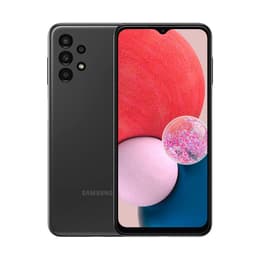
Galaxy A13 Vs Google Pixel 9a
- 1-year minimum warranty
- Free delivery on all orders
- Free 30-day returns
Differences at a glance
The Samsung Galaxy A13 (2022) and the Google Pixel 9a (2025) are Android smartphones built for different tiers of everyday mobile usage and feature significantly different generation timelines. While the Galaxy A13 serves as an entry-level device focused on fundamental connectivity, the Google Pixel 9a is a modern mid-range smartphone equipped with advanced hardware and comprehensive software support. These two models differ fundamentally in processing capability, display technology, and software longevity, making them suited for distinct user priorities.
Available Models
Colour
Storage (GB)
Scores
Durability
When examining hardware longevity and software support, the two devices approach long-term usage from contrasting timelines and support windows.
- Software Support Duration: The Google Pixel 9a benefits from an extended software update commitment spanning seven years from its release. In contrast, the Galaxy A13 features a shorter remaining update window aligned with its 2022 launch date.
- Expected Practical Lifespan: The Pixel 9a's current-generation internal hardware and robust update schedule provide greater long-term readiness for future software requirements. The Galaxy A13 suits users with simpler, shorter-term connectivity needs.
- Repairability: Both manufacturers provide structured repair frameworks, though parts availability and repair accessibility vary depending on local service options and independent repair networks.
Year of Release
2022
2025
Compatible with latest Update
No
Yes
OS
Android
Android
Foldable
No
No
Performance
Daily operation and multitasking capabilities differ substantially due to the generational gap between the two internal hardware configurations.
- App Loading and Multitasking: The Pixel 9a handles demanding applications, split-screen multitasking, and resource-heavy software smoothly thanks to its high-performance processor and generous RAM allocation. The Galaxy A13 manages basic messaging, web browsing, and lighter apps reliably, though heavier tasks cause noticeable loading pauses.
- Storage Configurations: The Pixel 9a generally starts with larger baseline internal storage paired with fast data-reading speeds, whereas the Galaxy A13 offers smaller initial storage tiers complemented by expandable card storage support.
- Battery Behavior: Both devices include large battery capacities capable of sustaining a full day of typical mixed use, though power management efficiency gives the Pixel 9a an advantage during intensive tasks.
Screen quality
Visual output and display responsiveness vary significantly, affecting media consumption and outdoor readability.
- Display Technology: The Pixel 9a features an advanced OLED display delivering deep contrast levels and rich colors. The Galaxy A13 utilizes a standard PLS LCD panel that meets basic viewing requirements with adequate clarity.
- Refresh Rate and Smoothness: The Pixel 9a supports a high refresh rate up to 120Hz for fluid scrolling and animations, while the Galaxy A13 operates at a standard 60Hz refresh rate.
- Outdoor Brightness: Peak brightness levels on the Pixel 9a allow for clear visibility under direct sunlight, whereas the Galaxy A13 requires shade for comfortable outdoor reading.
Resolution
1080 x 2408
2424 x 1080
Audiovisual
Photography and media recording capabilities reflect the distinct engineering focus of each device class.
- Camera System Capabilities: The Pixel 9a utilizes advanced computational photography algorithms paired with a high-resolution main sensor and dedicated ultra-wide lens to capture detailed images across varying light conditions. The Galaxy A13 features a multi-lens setup that handles daylight snapshots adequately.
- Low-Light Performance: Processing software on the Pixel 9a brightens dark scenes and reduces noise effectively in low-light environments. The Galaxy A13 struggles to retain fine detail when ambient light drops.
- Video and Audio Output: The Pixel 9a records stable video at high resolutions with clear microphone fidelity, while the Galaxy A13 provides basic video recording suited for casual sharing.
Front camera
8 megapixels
13 megapixels
Miscellaneous
Physical design attributes and connectivity standards shape the everyday handling and utility of both smartphones.
- Connectivity Standards: The Pixel 9a includes modern 5G connectivity and advanced Wi-Fi standards for fast data transfers. The Galaxy A13 is available in separate 4G and 5G variant lines depending on the specific regional model chosen.
- Build and Ergonomics: Both models utilize durable plastic composite backs, but the Pixel 9a incorporates a higher ingress protection rating for dust and water resistance alongside a more compact weight distribution.
- Security Sensors: The Pixel 9a features a responsive in-display fingerprint sensor, whereas the Galaxy A13 uses a physical side-mounted fingerprint scanner integrated into the power button.
Weight
195 g
186 g
Screen size (in)
6.6
6.3
Network
4G
5G
SIM card
Dual Physical SIM
Physical SIM + eSIM
Carrier compatibility
Unlocked
Unlocked
What the community thinks
User feedback from online communities highlights distinct patterns of praise and common criticisms for both devices. Owners of the Galaxy A13 frequently note its reliable battery longevity and the practical utility of expandable storage, though some users mention occasional interface stutter during intensive multitasking. Conversely, Pixel 9a users regularly praise the camera clarity, smooth display performance, and long-term software commitment, while noting that the device lacks expandable storage options.
Users prioritizing high-end display quality, advanced photography, and extended software updates will find the Google Pixel 9a well-suited to their needs. Meanwhile, users looking for a straightforward device focused on basic communication, everyday calling, and reliable battery capacity may prefer the Galaxy A13. Exploring a quality-assured refurbished option on Back Market provides an eco-friendly alternative for acquiring either model while reducing electronic waste. Ultimately, the choice depends on which feature set aligns more closely with your daily communication and media habits.