

Compare models
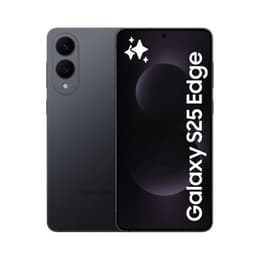
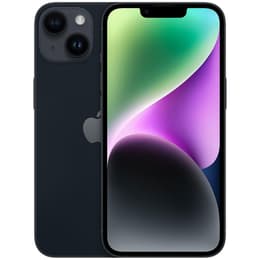
Galaxy S25 Edge Vs iPhone 14
- 1-year minimum warranty
- Free delivery on all orders
- Free 30-day returns
Differences at a glance
The Samsung Galaxy S25 Edge (2025) and the Apple iPhone 14 (2022) are prominent smartphones representing distinct hardware generations and operating ecosystems. While the Galaxy S25 Edge runs on Android with an emphasis on a slim profile and expansive screen space, the iPhone 14 relies on iOS and a compact, traditional form factor. Choosing between them involves balancing software preferences, physical dimensions, and generational feature upgrades.
Available Models
Colour
Storage (GB)
Scores
Durability
When evaluating longevity, these devices span different release years, which directly influences their remaining active software support window and structural materials.
- Software Support: The Galaxy S25 Edge benefits from a later release date, offering extended security patches and operating system updates compared to its counterpart.
- Build Materials: The Galaxy S25 Edge utilizes a titanium frame and durable glass construction, whereas the iPhone 14 features an aluminum frame combined with glass protection.
- Repairability: Both models maintain standard industry repair pathways, though component availability varies by region and service network.
Year of Release
2025
2022
OS
Android
iOS
Foldable
No
No
Performance
Under everyday workloads, both devices deliver swift application launching and reliable multitasking, though they approach resource management differently.
- Multitasking Capacity: The Galaxy S25 Edge provides ample system memory for running multiple demanding applications simultaneously, while the iPhone 14 manages background tasks efficiently through streamlined software optimization.
- Battery Behavior: The Galaxy S25 Edge houses a moderately larger battery capacity to support its expansive display, whereas the iPhone 14 relies on power-efficient hardware integration to sustain everyday usage patterns.
- Storage Options: The Galaxy S25 Edge starts with higher base storage capacity, while the iPhone 14 offers traditional tiers scaling from entry-level configurations upwards.
Screen quality
Visual output differs noticeably between the two models in terms of physical footprint, panel technology, and motion smoothness.
- Display Technology: Both models utilize advanced OLED panel technology that delivers deep contrast levels, rich colors, and high peak brightness for outdoor visibility.
- Screen Dimensions: The Galaxy S25 Edge offers a larger viewing area suited for media consumption, while the iPhone 14 provides a more compact display that is easier to handle with one hand.
- Refresh Rates: The Galaxy S25 Edge features a higher refresh rate for smoother scrolling animations, compared to the standard refresh rate found on the iPhone 14 display.
Resolution
1440x3120
1170 x 2532
Audiovisual
Photography and media recording capabilities vary across the two setups, offering distinct strengths for everyday capture and video production.
- Main Camera Resolution: The Galaxy S25 Edge incorporates a high-resolution main sensor designed to capture intricate detail, while the iPhone 14 focuses on computational photography enhancements to balance lighting in challenging environments.
- Video Recording: Both devices support high-definition video capture with stabilization features, though the iPhone series maintains a long-standing reputation for smooth cinematic transitions and audio clarity.
- Audio and Media: Stereo speaker setups on both models deliver clear sound output for casual listening, hands-free calls, and video playback.
Miscellaneous
Physical handling, security features, and connectivity standards dictate how each device fits into daily routines and accessory ecosystems.
- Security Biometrics: The Galaxy S25 Edge uses an in-display fingerprint scanner alongside facial recognition, whereas the iPhone 14 relies exclusively on a 3D facial recognition system.
- Port Type: The Galaxy S25 Edge utilizes a universal USB-C port for charging and data transfer, while the iPhone 14 employs Apple's proprietary Lightning connector.
- Physical Dimensions: The Galaxy S25 Edge features an exceptionally thin profile despite its large screen, whereas the iPhone 14 is shorter and thicker, resulting in a traditional pocketable feel.
Weight
163 g
172 g
Screen size (in)
6.7
6.1
Network
5G
5G
SIM card
Dual Physical SIM + eSIM
Physical SIM + eSIM
Carrier compatibility
Unlocked
Unlocked
Connector
USB-C
Lightning
What the community thinks
Online user discussions often highlight the Galaxy S25 Edge for its expansive display, modern slim design, and high-refresh-rate viewing experience, though some users note that its thin chassis requires careful handling. Conversely, the iPhone 14 receives frequent praise for its reliable ecosystem integration, pocket-friendly dimensions, and straightforward user interface, with occasional criticisms directed at its standard refresh rate and legacy port connection. Users prioritizing a larger workspace, faster display motion, and Android software flexibility may prefer the Galaxy S25 Edge. Meanwhile, users who value a compact footprint, iOS continuity, and straightforward daily operation will find the iPhone 14 well-suited to their needs. Exploring a quality-assured refurbished option provides a sustainable choice for acquiring either device while reducing electronic waste. Ultimately, the right choice depends on individual preferences regarding operating systems, physical dimensions, and everyday feature priorities.