

iPhone 13 Vs iPhone 14

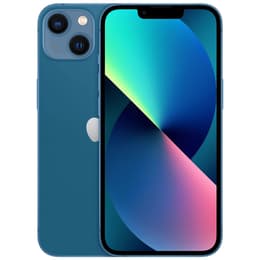
iPhone 13
iPhone 13
Starting at
€277.00
€769.00 new
See options
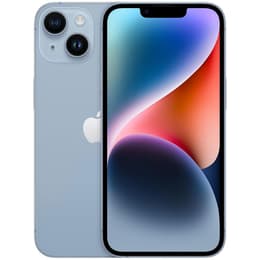
iPhone 14
iPhone 14
Starting at
€313.00
€759.00 new
See options

Ratings

The iPhone 13, released in September 2021, and the iPhone 14, released in September 2022, represent consecutive generations of Apple's core smartphone offerings. While both devices maintain a familiar design and operate on the iOS platform, the iPhone 14 introduces subtle enhancements in camera technology and internal components, offering an incremental evolution over its predecessor.

Scores

Durability

When evaluating longevity, the iPhone 13 and iPhone 14 offer similar software support expectations, though the newer model naturally extends this by a year.

  • Release Timeline and Software Updates: The iPhone 13 launched with iOS 15 and the iPhone 14 with iOS 16. Given Apple's typical update policy, the iPhone 14 is expected to receive major iOS updates for approximately one year longer than the iPhone 13, providing extended access to new features and security patches. Both are expected to receive updates up to iOS 26.2.
  • Repairability: Initially, the iPhone 14 received a higher repairability score due to its redesigned internal structure, making the back glass easier to replace. However, this score was later downgraded by iFixit to a '4 - not recommended' (from an initial 7) due to Apple's strict parts validation process, which often requires official Apple parts and software authentication for repairs, limiting independent repair options. The iPhone 13 also has a challenging repairability score, with iFixit initially giving it a 5/10, noting a loss of key features like Face ID if certain components are replaced by unauthorized parties.
  • Expected Practical Lifespan: Both devices are built with durable materials, featuring Ceramic Shield front covers and IP68 dust and water resistance. Users can anticipate several years of reliable performance from either model, with the iPhone 14 offering a slightly longer software support window due to its later release.

Year of Release

2021

2022

Compatible with latest Update

Yes

Yes

OS

iOS

iOS

Foldable

No

No

Performance

Both the iPhone 13 and iPhone 14 are powered by variants of the Apple A15 Bionic chip, but there are differences in GPU configuration and RAM that can influence performance.

  • Processor Capabilities and Responsiveness: The iPhone 13 uses the A15 Bionic chip with a 4-core GPU, while the iPhone 14 features the A15 Bionic with a 5-core GPU, similar to the chip found in the iPhone 13 Pro. This additional GPU core in the iPhone 14 provides enhanced graphics performance, which can lead to smoother visuals in demanding games and graphically intensive applications. In everyday tasks, both phones offer very fluid and responsive performance, handling multitasking and app launches with ease, though the iPhone 14 has a slight edge in graphically intensive scenarios.
  • RAM Implications for Multitasking: The iPhone 13 includes 4GB of RAM, whereas the iPhone 14 comes with 6GB of RAM. This increase in RAM on the iPhone 14 can improve multitasking capabilities, allowing more apps to remain active in the background without needing to reload, contributing to a smoother overall user experience when switching between applications.
  • Battery Behavior in Typical Use Cases: The iPhone 13 has a 3227 mAh battery and the iPhone 14 has a slightly larger 3279 mAh battery. Apple estimates the iPhone 14 offers up to 20 hours of video playback and 80 hours of audio playback, compared to the iPhone 13's 19 hours of video playback and 75 hours of audio playback. In real-world usage, the iPhone 14 generally offers marginally better battery life, with some tests indicating around an hour longer screen-on time for heavy users.

Memory

4 GB

6 GB

Screen quality

Both iPhones offer a high-quality visual experience, featuring similar display technology and specifications.

  • Display Technology and Resolution: Both the iPhone 13 and iPhone 14 feature a 6.1-inch Super Retina XDR OLED display with a resolution of 2532 x 1170 pixels and a pixel density of approximately 460 ppi. This OLED technology delivers deep blacks and vibrant colors, contributing to an engaging viewing experience for photos, videos, and general content.
  • Brightness Levels and Refresh Rate: Both models offer a typical max brightness of 800 nits and a peak HDR brightness of 1200 nits, ensuring good visibility in various lighting conditions. However, both devices maintain a standard 60Hz refresh rate. Users accustomed to higher refresh rates on other devices may notice a difference in scrolling smoothness, but the iOS animations are optimized to feel fluid on a 60Hz display.
  • Screen Size and Viewing Experience: With identical 6.1-inch screen sizes, the viewing experience for media consumption and daily tasks is largely consistent between the two phones. The displays support HDR10 and Dolby Vision for enhanced contrast and color reproduction.

Resolution

1170 x 2532

1170 x 2532

Screen type

Super Retina XDR OLED

Super Retina XDR OLED

Audiovisual

The camera systems on the iPhone 13 and iPhone 14 share many similarities, but the iPhone 14 introduces some notable upgrades for improved imaging.

  • Main Camera System: Both phones feature a dual 12MP camera system with Wide and Ultra Wide lenses. The iPhone 14's main wide-angle camera boasts a larger sensor and a faster f/1.5 aperture compared to the iPhone 13's f/1.6 aperture. This allows the iPhone 14 to capture more light, leading to improved performance in low-light conditions and better detail retention.
  • Low-Light and Everyday Photography: The iPhone 14 benefits from a new Photonic Engine, which is a computational photography enhancement that processes images earlier in the pipeline, resulting in better detail and color in challenging lighting, particularly in mid-to-low light scenarios. While the iPhone 13 already offers strong photographic capabilities, the iPhone 14 generally delivers superior low-light photos. For everyday photography, both phones produce excellent, consistent results with natural colors.
  • Video Recording Quality and Front Camera: Both models support 4K Dolby Vision HDR video recording up to 60 frames per second. The iPhone 14 introduces 'Action Mode,' a feature designed for enhanced video stabilization when recording while moving, which is a significant improvement for active users. The front-facing TrueDepth camera on the iPhone 14 also sees an upgrade with a faster f/1.9 aperture and autofocus, improving selfies and video calls, especially in dimmer environments.

Main camera

12 megapixels

12 megapixels

Front camera

12 megapixels

12 megapixels

Miscellaneous

Beyond core performance and camera, several practical elements distinguish these two iPhone models, impacting daily convenience and interaction.

  • Connectivity Options: Both devices offer 5G connectivity (sub-6 GHz and mmWave in some regions) and Wi-Fi 6 (802.11ax) with 2x2 MIMO. The iPhone 14 features Bluetooth 5.3, an upgrade from the iPhone 13's Bluetooth 5.0, offering potential improvements in wireless stability and efficiency with compatible accessories. The iPhone 14 also introduces Emergency SOS via satellite and Crash Detection, enhancing safety features.
  • Port Types and Sensors: Both the iPhone 13 and iPhone 14 continue to use the Lightning port for charging and data transfer. Neither model includes a traditional 3.5mm headphone jack. Both phones utilize Face ID for secure facial recognition and include a standard suite of sensors like an accelerometer, gyroscope, proximity sensor, ambient light sensor, barometer, and digital compass.
  • Weight, Dimensions, and Build Materials: The iPhone 13 measures 146.7 x 71.5 x 7.7 mm and weighs 174 grams. The iPhone 14 has almost identical dimensions at 146.7 x 71.5 x 7.8 mm, with a slightly lighter weight of 172 grams. Both devices share a premium build with an aerospace-grade aluminum frame and a Ceramic Shield front cover for enhanced durability.

Weight

173 g

172 g

Screen size (in)

6.1

6.1

Network

5G

5G

SIM card

Physical SIM + eSIM

Physical SIM + eSIM

Carrier compatibility

Unlocked

Unlocked

Connector

Lightning

Lightning

User feedback from forums like Reddit generally highlights both the iPhone 13 and iPhone 14 as reliable and capable smartphones. Many users found the iPhone 13 to be a strong performer, especially appreciating its battery life at the time of its release. Common praise for the iPhone 14 often centers on its improved camera features, particularly the low-light performance and the addition of Action Mode for video. Some users, however, noted that the performance uplift from the iPhone 13 to the iPhone 14 was not as significant as in previous generational jumps, especially since both utilize variants of the A15 Bionic chip. Battery life on the iPhone 14 is generally seen as good, often slightly surpassing the iPhone 13 in various tests.

For users prioritizing a solid and proven iPhone experience without needing the absolute latest camera innovations, the iPhone 13 remains a highly capable choice. Its performance is still more than adequate for daily tasks, gaming, and media. However, if improved low-light photography, more stable video recording (Action Mode), enhanced front camera capabilities with autofocus, and a slightly longer software support window are key considerations, the iPhone 14 offers these incremental advantages.

Both models, especially when considering quality-assured refurbished options, present an eco-friendly alternative to purchasing new. Choosing between the two ultimately depends on how much value a user places on these specific camera and longevity enhancements versus their current needs.