

Galaxy S22+ 5G Vs Google Pixel 7A

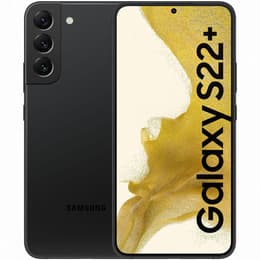
Galaxy S22+ 5G
Galaxy S22+ 5G
Starting at

Refurbished price:194.00

Versus €1,174.01 new

See options
Google Pixel 7A
Google Pixel 7A
Starting at

Refurbished price:177.00

Versus €649.99 new

See options

Ratings

The Samsung Galaxy S22 Plus 5G, released in February 2022, and the Google Pixel 7a, launched in May 2023, are both Android smartphones offering distinct user experiences. While the Galaxy S22 Plus 5G presents a larger display and a more premium build, the Pixel 7a focuses on a compact form factor and advanced computational photography. Both devices run on the Android operating system, providing access to a wide ecosystem of applications and services.

Scores

Durability

When considering the long-term usability of these devices, their release timelines and software support policies are key differentiators.

  • Release Timeline: The Samsung Galaxy S22 Plus 5G was released in February 2022, making it an older model compared to the Google Pixel 7a, which launched in May 2023. This difference in release date impacts their remaining software support.
  • OS Support Duration: The Galaxy S22 Plus 5G is expected to receive four years of Android OS updates, reaching up to Android 16, and five years of security updates, concluding around February 2027. The Google Pixel 7a, being a newer device, benefits from a longer support window, offering five years of both OS and security updates, extending until May 2028.
  • Repairability: The Galaxy S22 Plus 5G received a low repairability score of 3 out of 10 from iFixit, primarily due to the extensive use of strong adhesive, which complicates battery replacements and screen repairs. In contrast, the Google Pixel 7a initially scored 4/10 but was later uprated to 5/10 by iFixit, partly because Google published comprehensive service manuals and made parts more accessible. This suggests the Pixel 7a may be more straightforward to repair, potentially extending its practical lifespan through component replacement.

Year of Release

2022

2023

Compatible with latest Update

Yes

Yes

OS

Android

Android

Foldable

No

No

Performance

Both smartphones offer capable performance for daily tasks, but they approach processing power and battery management with different philosophies.

  • Processor Capabilities: The Galaxy S22 Plus 5G handles demanding applications and multitasking smoothly, providing a responsive experience for users engaging in intensive activities like gaming or video editing. The Pixel 7a also delivers a fluid user experience, efficiently managing everyday apps and offering quick responsiveness, which is beneficial for general use and Google's AI-driven features.
  • Battery Behavior: The Galaxy S22 Plus 5G features a 4500 mAh battery, generally providing solid battery life that can last a full day for many users, though heavy usage might necessitate a mid-day charge. The Pixel 7a, with a 4385 mAh battery, offers decent battery life, with some users reporting it can last a full day under moderate use, while others note that heavy use or specific features like an always-on display can lead to more frequent charging.
  • Storage and RAM: Both devices come with 8GB of RAM, which supports efficient multitasking. The Galaxy S22 Plus 5G offers storage options of 128GB and 256GB, providing flexibility for users with varying storage needs. The Pixel 7a is available with 128GB of internal storage.

Memory (GB)

8 GB

8 GB

Screen quality

The visual experience on both devices is a significant factor, with differences in display technology, size, and refresh rates.

  • Display Technology and Size: The Samsung Galaxy S22 Plus 5G features a larger 6.6-inch Dynamic AMOLED 2X display, known for its vibrant colors and deep blacks. The Google Pixel 7a has a more compact 6.1-inch OLED display, also offering rich colors and good contrast. The larger screen of the S22 Plus 5G provides a more expansive viewing area for media consumption and productivity.
  • Resolution and Brightness: Both phones offer Full HD+ resolution, ensuring sharp and clear visuals for typical viewing distances. The Galaxy S22 Plus 5G boasts a peak brightness of up to 1750 nits, making it highly visible even in bright outdoor conditions. The Pixel 7a's display reaches around 1000 nits peak brightness (HDR), which is also suitable for outdoor use, though the S22 Plus 5G offers a brighter experience.
  • Refresh Rate: The Galaxy S22 Plus 5G features an adaptive 120Hz refresh rate, providing exceptionally smooth scrolling and a more fluid visual experience, particularly noticeable in fast-paced content and navigation. The Pixel 7a offers a 90Hz refresh rate, which is a noticeable improvement over standard 60Hz displays, contributing to smoother interactions.

Resolution

1080 x 2340

1080 x 2400

Screen type

Dynamic AMOLED 2X

OLED

Audiovisual

Both smartphones offer strong camera capabilities, leveraging their respective hardware and software to produce quality images and videos.

  • Rear Camera Systems: The Samsung Galaxy S22 Plus 5G is equipped with a versatile triple-camera setup, including a 50 MP main sensor, a 12 MP ultrawide lens, and a 10 MP telephoto lens with 3x optical zoom. This configuration allows for a range of photographic styles, from wide landscapes to zoomed-in shots. The Google Pixel 7a features a dual-camera system with a high-resolution 64 MP main sensor and a 13 MP ultrawide lens.
  • Photography Performance: The Galaxy S22 Plus 5G delivers good photo quality in various conditions, with improvements in low-light photography compared to its predecessors. However, some users note that its processing of people and moving objects can sometimes be inconsistent. The Pixel 7a is widely praised for its exceptional camera quality, often producing results comparable to or exceeding other phones in its category, particularly excelling in computational photography and image processing. Users report sharp images with good contrast and realistic tones.
  • Video Recording and Audio: The Galaxy S22 Plus 5G supports video recording up to 8K at 24 frames per second, offering high-resolution video capture. The Pixel 7a records video up to 4K at 60 frames per second, with solid stabilization and smooth pans. Both devices offer stereo speakers for media consumption, though some Pixel 7a users have noted the speakers can be somewhat weak.

Main camera

50 megapixels

64 megapixels

Front camera

10 megapixels

13 megapixels

Miscellaneous

Beyond core features, several practical elements contribute to the overall user experience and device utility.

  • Connectivity and Ports: Both the Galaxy S22 Plus 5G and the Pixel 7a support 5G connectivity, ensuring fast mobile data speeds. They also feature Wi-Fi 6E for enhanced wireless internet performance and USB-C 3.2 ports for charging and data transfer. The Pixel 7a includes Bluetooth 5.3, a slightly newer standard than the Galaxy S22 Plus 5G's Bluetooth 5.2.
  • Biometric Security: The Galaxy S22 Plus 5G utilizes an under-display ultrasonic fingerprint sensor and supports face recognition for secure unlocking. The Pixel 7a also features an under-display optical fingerprint sensor and face unlock.
  • Build Materials and Durability: The Galaxy S22 Plus 5G boasts a premium construction with Gorilla Glass Victus+ on both the front and back, encased in an aluminum frame, and carries an IP68 rating for dust and water resistance. The Pixel 7a features Gorilla Glass 3 on the front, a plastic back, and an aluminum frame, with an IP67 rating for dust and water resistance. While both offer good protection, the S22 Plus 5G's higher IP rating and stronger glass provide a slight edge in durability. The Pixel 7a's plastic back, while less premium, has shown good resilience in durability tests.
  • Dimensions and Handling: The Galaxy S22 Plus 5G measures 157.4 x 75.8 x 7.6 mm and weighs 195 g, offering a larger footprint. The Pixel 7a is more compact at 152 x 72.9 x 9 mm and weighs 193.5 g, making it slightly thicker but potentially easier for one-handed use for some individuals.

Weight

195 g

193 g

Screen size (in)

6.6

6.1

Network

5G

5G

SIM card

Physical SIM + eSIM

Physical SIM + eSIM

Carrier compatibility

Unlocked

Unlocked

Connector

USB-C

USB-C

The Samsung Galaxy S22 Plus 5G and the Google Pixel 7a cater to different user preferences, each with its own set of strengths and considerations. Users often praise the Galaxy S22 Plus 5G for its vibrant and bright display, consistently strong performance, and premium build quality. Its camera system is generally well-regarded, though some users have noted occasional inconsistencies with specific subjects. A common criticism for the S22 Plus 5G has been its battery life, which, while solid, may not always meet the demands of heavy users without a mid-day charge.

The Google Pixel 7a frequently receives acclaim for its exceptional camera performance, often considered a highlight for its ability to produce high-quality photos. Its smooth user interface and efficient performance for everyday tasks are also positive points for many users. However, some users have expressed concerns regarding the Pixel 7a's battery life, reporting that it can be inconsistent and may not always last a full day with moderate to heavy use. The display's brightness, while good, has also been mentioned as a factor contributing to battery drain when set to full brightness outdoors.

Users prioritizing a larger, brighter display and a more premium glass-and-metal construction may find the Galaxy S22 Plus 5G well-suited to their needs. Its telephoto lens also offers a distinct advantage for those who frequently use optical zoom. Conversely, users who prioritize a compact device with an outstanding camera for everyday photography and a longer software support window may lean toward the Google Pixel 7a. Its focus on computational photography and a clean Android experience makes it appealing for those who value software-driven features.

Both devices represent compelling options within the Android ecosystem. For those considering a sustainable choice, exploring quality-assured refurbished options for either model can provide an eco-friendly alternative.


See all articles

Our recent comparisons