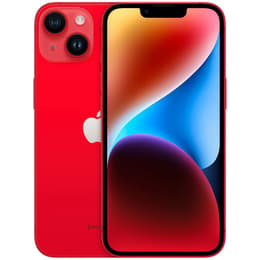


iPhone 11 Vs iPhone 14

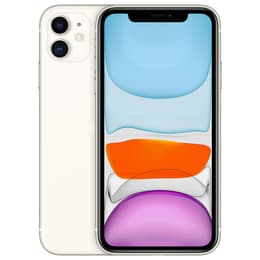
iPhone 11
iPhone 11
Starting at

Refurbished price:154.00

Versus €589.00 new

See options
iPhone 14
iPhone 14
Starting at

Refurbished price:293.00

Versus €759.00 new

See options

Ratings

The iPhone 11 (released September 2019) and the iPhone 14 (released September 2022) represent different generations of Apple's smartphone lineup. While both devices operate on Apple's iOS platform, the iPhone 14 introduces significant advancements in camera technology, processing power, and durability features compared to its predecessor.

Scores

Durability

The practical lifespan of a smartphone is often influenced by its release date and the duration of software support it receives.

  • Release Timeline: The iPhone 11 was released in September 2019, making it three years older than the iPhone 14, which launched in September 2022. This age difference directly impacts the expected period of future software updates.
  • OS Support Duration: Apple typically provides major iOS updates for approximately 5-6 years from a device's release. The iPhone 11 has received updates up to iOS 18 as of September 2024 and is compatible with iOS 26 in September 2025, suggesting its software support is nearing its end. The iPhone 14, being a newer model, is expected to receive software updates for a longer period, extending its functional life by several years.
  • Durability Features: Both models feature glass fronts and backs, but the iPhone 14 incorporates Ceramic Shield on the front, which offers enhanced drop performance. The iPhone 14 also boasts an improved water resistance rating (IP68 for a maximum depth of 6 meters for up to 30 minutes) compared to the iPhone 11 (IP68 for a maximum depth of 2 meters for up to 30 minutes).

Year of Release

2019

2022

Compatible with latest Update

Yes

Yes

OS

iOS

iOS

Foldable

No

No

Performance

Performance differences between the iPhone 11 and iPhone 14 are noticeable, particularly in demanding applications and overall system responsiveness.

  • Processor Capabilities: The iPhone 14 features a more advanced processor, which translates to smoother performance for everyday tasks, faster app loading times, and more fluid multitasking. Users engaging in mobile gaming or editing high-resolution media will experience a more responsive and efficient workflow on the iPhone 14. The iPhone 11, while still capable for general use, may show signs of slower performance with newer, more resource-intensive applications.
  • Battery Behavior: The iPhone 14 generally offers improved battery life compared to the iPhone 11, often lasting a full day for many users. The iPhone 11, while having a respectable battery for its time, may require more frequent charging, especially for heavy users.
  • Storage Options: The iPhone 14 starts with a base storage of 128GB, with options up to 512GB. The iPhone 11 started with 64GB, with options up to 256GB. This means the iPhone 14 offers more storage capacity in its base model, which is beneficial for users who store many photos, videos, and applications.

Memory (GB)

4 GB

6 GB

Screen quality

The display technology and characteristics differ significantly between these two iPhone models, impacting the visual experience.

  • Display Technology and Resolution: The iPhone 14 features a Super Retina XDR OLED display, offering deeper blacks, higher contrast, and more vibrant colors compared to the iPhone 11's Liquid Retina IPS LCD. The iPhone 14 also has a higher resolution (2532 x 1170 pixels at 460 ppi) than the iPhone 11 (1792 x 828 pixels at 326 ppi), resulting in a sharper image.
  • Brightness Levels: The iPhone 14's OLED display can achieve higher peak brightness levels, especially for HDR content (up to 1200 nits), and a typical maximum brightness of 800 nits, making it more legible in bright outdoor conditions. The iPhone 11 has a typical maximum brightness of 625 nits.
  • Refresh Rate: Both the iPhone 11 and iPhone 14 feature a standard 60Hz refresh rate. This means the smoothness of scrolling and animations will be similar between the two devices.

Resolution

828 x 1792

1170 x 2532

Screen type

Liquid Retina IPS LCD

Super Retina XDR OLED

Audiovisual

Camera capabilities have seen substantial improvements from the iPhone 11 to the iPhone 14, particularly in low-light performance and advanced features.

  • Main Camera System: Both phones feature a dual 12MP camera system with wide and ultra-wide lenses. However, the iPhone 14's main camera has a larger sensor and a wider aperture (ƒ/1.5 compared to iPhone 11's ƒ/1.8), allowing it to capture more light, resulting in better low-light photos and improved detail. The iPhone 14 also introduces Photonic Engine for enhanced image processing in challenging lighting.
  • Video Recording and Features: The iPhone 14 offers advanced video capabilities like Cinematic mode, which adds a shallow depth of field to videos, and Action mode for smoother, stabilized footage. While both record 4K video up to 60fps, the iPhone 14's overall video quality benefits from its improved sensor and processing. The front-facing camera on the iPhone 14 also gains autofocus for clearer selfies and video calls.
  • Low-Light Performance: The iPhone 14 significantly outperforms the iPhone 11 in low-light photography due to its larger sensor, wider aperture, and computational photography enhancements like Photonic Engine and improved Night mode.

Main camera

12 megapixels

12 megapixels

Front camera

12 megapixels

12 megapixels

Miscellaneous

Beyond core performance and display, several practical elements differentiate the iPhone 11 and iPhone 14.

  • Connectivity: The iPhone 14 supports 5G cellular connectivity, offering faster download and upload speeds in areas with 5G networks, whereas the iPhone 11 is limited to 4G LTE. Both support Wi-Fi 6 and Bluetooth, though the iPhone 14 features Bluetooth 5.3 compared to the iPhone 11's Bluetooth 5.0.
  • Safety Features: The iPhone 14 includes advanced safety features such as Crash Detection and Emergency SOS via Satellite, which can automatically alert emergency services in critical situations, even without cellular service. These features are not present on the iPhone 11.
  • SIM Technology: In some regions, the iPhone 14 models are eSIM-only, meaning they do not have a physical SIM card tray. The iPhone 11 supports both physical nano-SIM and eSIM.

Weight

194 g

172 g

Screen size (in)

6.1

6.1

Network

4G

5G

SIM card

Physical SIM + eSIM

Physical SIM + eSIM

Carrier compatibility

Unlocked

Unlocked

Connector

Lightning

Lightning

Users often praise the iPhone 11 for its robust performance for everyday tasks and its capable camera system, especially considering its age. Many appreciate its continued software support and solid build quality. Common criticisms, however, sometimes point to its LCD display technology and the absence of 5G connectivity, which are becoming more standard in newer devices.

The iPhone 14, on the other hand, is frequently lauded for its significantly improved camera performance, particularly in low light, its enhanced durability features, and the inclusion of modern connectivity like 5G. Users also value the added safety features such as Crash Detection and Emergency SOS via Satellite. Some discussions note that while it's a strong performer, the standard iPhone 14 shares its processor with the previous generation's Pro model, which some users might consider a minor point of contention compared to the Pro models of its own generation.

Users prioritizing the latest camera technology, enhanced durability, and future-proof connectivity like 5G will find the iPhone 14 well-suited to their needs. It also offers a longer period of expected software updates and advanced safety features. Conversely, users seeking a reliable device for general smartphone use, who may not require the absolute latest in camera or connectivity, might find the iPhone 11 still meets their requirements. For those looking for an eco-friendly alternative, both models are available as quality-assured refurbished options, providing a sustainable choice for their next device.