
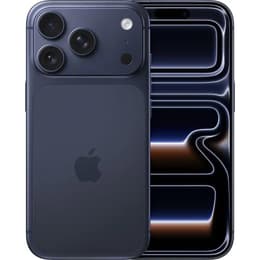


Google Pixel 7 Pro Vs iPhone 17 Pro

Google Pixel 7 Pro
Google Pixel 7 Pro
Starting at

Refurbished price:201.00

Versus €640.98 new

See options
iPhone 17 Pro
iPhone 17 Pro
Starting at

Refurbished price:1,100.00

Versus €1,339.00 new

See options

Ratings

The Google Pixel 7 Pro, released in October 2022, and the iPhone 17 Pro, launched in September 2025, represent distinct approaches to high-end smartphone design and functionality. While both devices offer premium experiences, they differ significantly in their operating systems, camera philosophies, and overall ecosystem integration. The Pixel 7 Pro operates on Android, emphasizing computational photography and AI-driven features, whereas the iPhone 17 Pro runs on iOS, focusing on integrated performance and a refined user experience.

Scores

Durability

When considering the practical lifespan of these devices, several factors come into play, including their release timelines, software support, and physical durability.

  • Release Timeline and Software Support: The Google Pixel 7 Pro, released in October 2022, is guaranteed to receive Android OS updates until October 2025 and security updates until October 2027, providing a total of five years of software support. In contrast, the iPhone 17 Pro, released in September 2025, benefits from Apple's typically longer software support cycle, which often extends to six or seven years of major iOS updates, offering a longer period of access to the latest operating system features and security patches. [10, 18, 22, 40, 41]
  • Physical Durability: Both devices feature robust builds designed for daily use. The Pixel 7 Pro incorporates Gorilla Glass Victus on both its front and back, complemented by an aluminum frame. The iPhone 17 Pro features Ceramic Shield 2 on its display, which offers enhanced scratch resistance, and an anti-reflective coating, with some models utilizing an aluminum unibody chassis. Both phones carry an IP68 rating for water and dust resistance, indicating a similar level of protection against environmental elements. [1, 2, 8, 9, 17, 29, 34]
  • Expected Practical Lifespan: Users prioritizing the absolute longest software update window may find the iPhone 17 Pro more aligned with their needs due to Apple's extended support. However, the Pixel 7 Pro still offers a substantial period of updates, ensuring continued functionality and security for several years.

Year of Release

2022

2025

Compatible with latest Update

Yes

Yes

OS

Android

iOS

Foldable

No

No

Performance

The performance of a smartphone is crucial for handling daily tasks, demanding applications, and multitasking. Both the Pixel 7 Pro and iPhone 17 Pro are designed for high performance, though they achieve this through different hardware and software optimizations.

  • Processing Power: The Google Pixel 7 Pro is powered by a Google Tensor G2 processor, which is optimized for AI and machine learning tasks, contributing to features like advanced computational photography and speech recognition. The iPhone 17 Pro features an A19 Pro chip, which includes a 6-core CPU, a 6-core GPU, and a 16-core Neural Engine. This chip is built on an upgraded 3-nanometer process, offering significant performance improvements, including up to 40 percent faster sustained performance compared to its predecessor. [1, 2, 5, 9, 10, 24, 25, 26]
  • System Responsiveness and Multitasking: The Pixel 7 Pro comes with 12GB of RAM, enabling smooth multitasking and efficient handling of multiple applications simultaneously. The iPhone 17 Pro also includes 12GB of LPDDR5X RAM, which, combined with its powerful processor and optimized iOS, ensures fluid navigation, rapid app loading, and seamless transitions between tasks. Users of both devices can expect a highly responsive experience, with the iPhone 17 Pro likely offering more headroom for future demanding applications due to its newer and more powerful chip architecture. [1, 5, 9, 10, 21, 24, 25, 26]
  • Battery Behavior: The Pixel 7 Pro is equipped with a 5000 mAh battery, supporting 30W wired fast charging and 23W wireless charging. While it generally offers good battery life for typical usage, heavy camera use or sustained high screen brightness can lead to faster drainage. The iPhone 17 Pro features a 15.534 Wh (3988 mAh) battery, with the Pro Max model having a larger 18.748 Wh (4823 mAh) battery. It supports USB-C fast charging, capable of reaching 50% charge in 20 minutes with a 40W adapter, and also includes MagSafe and Qi 2 wireless charging. The iPhone 17 Pro models are noted for offering the longest battery life of any iPhone to date. [1, 10, 12, 15, 20, 21, 25, 27, 32, 35, 39]

Memory (GB)

12 GB

12 GB

Screen quality

The display is a primary interface for smartphone interaction, and both devices offer high-quality viewing experiences with distinct characteristics.

  • Display Technology and Clarity: The Google Pixel 7 Pro features a 6.7-inch LTPO AMOLED display with a resolution of 1440x3120 pixels, resulting in sharp and detailed visuals. The iPhone 17 Pro comes with a 6.3-inch Super Retina XDR OLED display, offering a resolution of 2622x1206 pixels at 460 pixels per inch. Both OLED panels deliver deep blacks and vibrant colors, providing an immersive viewing experience. [1, 2, 5, 9, 10, 21, 23]
  • Brightness and Refresh Rate: The Pixel 7 Pro's display can reach up to 1000 nits in high brightness mode and a peak of 1500 nits, ensuring good visibility in various lighting conditions. It also features a 120Hz adaptive refresh rate for smooth scrolling and responsive interactions. The iPhone 17 Pro elevates brightness further, with a typical brightness of 1000 nits, peak HDR brightness of 1600 nits, and an impressive peak outdoor brightness of 3000 nits, enhancing visibility even in direct sunlight. It also incorporates ProMotion technology with adaptive refresh rates up to 120Hz, ensuring fluid motion and responsiveness. [1, 2, 8, 17, 21, 23]
  • Additional Display Features: The iPhone 17 Pro includes a Dynamic Island, an Always-On display, and an anti-reflective coating to reduce glare, further enhancing its usability in diverse environments. The Pixel 7 Pro also offers an always-on display and a curved screen design. [1, 2, 8, 9, 17, 23]

Resolution

1440 x 3120

2622x1206

Screen type

LTPO AMOLED

Super Retina XDR

Audiovisual

Both the Google Pixel 7 Pro and the iPhone 17 Pro are equipped with advanced camera systems, each leveraging their respective strengths in hardware and software to deliver high-quality imaging.

  • Rear Camera Systems: The Pixel 7 Pro features a triple-camera setup consisting of a 50MP wide-angle lens with optical image stabilization (OIS), a 48MP telephoto lens offering 5x optical zoom and up to 30x Super Res Zoom, and a 12MP ultrawide lens with autofocus and macro focus capabilities. The iPhone 17 Pro also boasts a triple 48MP camera system, including a Fusion Main lens with f/1.78 aperture and second-generation sensor-shift OIS, a Fusion Ultra Wide lens with f/2.2 aperture, and a Fusion Telephoto lens with f/2.8 aperture, offering 4x and 8x optical zoom with a 100mm periscope telephoto. [1, 2, 3, 6, 9, 10, 13, 16, 21, 24, 25, 28, 33, 34, 35]
  • Photography Performance: The Pixel 7 Pro is renowned for its computational photography, producing images with natural colors, excellent detail, and strong low-light performance, including features like Magic Eraser and Photo Unblur. Its telephoto lens provides impressive zoom capabilities. The iPhone 17 Pro's camera system is designed for high-resolution sensors and advanced computational photography, with features like an updated Photonic Engine for noise reduction and improved color accuracy. It also includes a TOF 3D LiDAR scanner for enhanced depth sensing. [1, 3, 6, 11, 13, 28, 33, 34]
  • Video Recording and Front Camera: Both devices support 4K video recording at 60 frames per second across all their cameras. The iPhone 17 Pro further enhances video capabilities with ProRes RAW, Dolby Vision, Log 2 video recording, and Genlock support for professional workflows, and is rumored to support 8K video recording. The Pixel 7 Pro has a 10.8MP front camera, while the iPhone 17 Pro features an 18MP front camera with Centre Stage, which keeps subjects centered during video calls. [1, 10, 13, 16, 25, 33, 35]

Main camera

50 megapixels

48 megapixels

Front camera

10.8 megapixels

18 megapixels

Miscellaneous

Beyond core performance and imaging, several practical elements contribute to the overall user experience of these smartphones.

  • Connectivity and Ports: Both the Google Pixel 7 Pro and the iPhone 17 Pro support 5G connectivity for fast mobile data. The Pixel 7 Pro includes Wi-Fi 6E and Bluetooth 5.2, along with a USB-C 3.2 port. The iPhone 17 Pro features an Apple-designed N1 networking chip, enabling Wi-Fi 7 and Bluetooth 6, and utilizes a USB-C port, which is likely to support Thunderbolt/USB4 for high-speed data transfer. [1, 9, 10, 23]
  • Biometric Security and Sensors: The Pixel 7 Pro offers both an under-display fingerprint reader and Face Unlock for secure access. The iPhone 17 Pro relies primarily on Face ID for biometric authentication, which uses advanced facial recognition technology. [2, 23]
  • Design and Handling: The Pixel 7 Pro measures 162.9 x 76.6 x 8.9 mm and weighs 212 grams. It features a distinctive camera bar design. The iPhone 17 Pro has dimensions of 150.0 × 71.9 × 8.75 mm and weighs 206 grams. Its design includes a Dynamic Island at the top of the display and a unibody aluminum chassis, with some previous Pro models featuring titanium frames. [1, 10, 17, 23]
  • Additional Features: The Pixel 7 Pro includes features like Pixel Call Assist and a free VPN. The iPhone 17 Pro integrates Apple Intelligence across its apps, enhancing communication and productivity with privacy protections. [2, 23]

Weight

212 g

206 g

Screen size (in)

6.7

6.3

Network

5G

5G

SIM card

Physical SIM + eSIM

eSIM

Carrier compatibility

Unlocked

Unlocked

The Google Pixel 7 Pro and iPhone 17 Pro cater to users with distinct preferences, each excelling in different areas based on their respective ecosystems and design philosophies. User feedback for the Pixel 7 Pro often highlights its exceptional camera capabilities, particularly its computational photography, natural image processing, and effective zoom features. Many appreciate the clean Android experience and the integration of Google's AI features. However, some users have noted that while battery life is generally good, it can drain faster with heavy camera usage or high screen brightness. The facial recognition has also been described as inconsistent by some. [15, 28, 33, 34, 36, 39]

For the iPhone 17 Pro, common praise points revolve around its powerful performance, the longevity of iOS software support, and the seamless integration within the Apple ecosystem. Its advanced display technology, including high peak brightness and anti-reflective coating, is also a significant advantage. The camera system, with its high-resolution sensors and professional video features, is expected to be a major draw. Potential concerns, based on general iPhone Pro user sentiment, might include the closed nature of the iOS ecosystem for some users, though this is also a strength for others. [1, 2, 8, 10, 17]

Users prioritizing an open Android experience, advanced computational photography, and a device deeply integrated with Google's AI services will find the Google Pixel 7 Pro well-suited to their needs. Its camera system offers a unique approach to image processing that many photographers appreciate. Conversely, users who value a highly integrated ecosystem, long-term software support, leading raw performance, and advanced video capabilities will likely lean towards the iPhone 17 Pro. Its display and overall system responsiveness are designed for a premium, fluid experience.

Both devices offer compelling features for different user profiles. For those considering a quality-assured refurbished option, both the Pixel 7 Pro and iPhone 17 Pro can provide an eco-friendly alternative to purchasing new, allowing access to premium technology while making a sustainable choice.


See all articles

Our recent comparisons