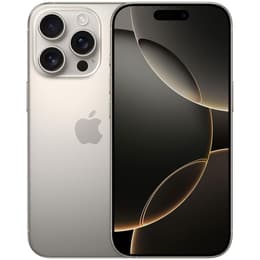

iPhone 14 Vs iPhone 16 Pro

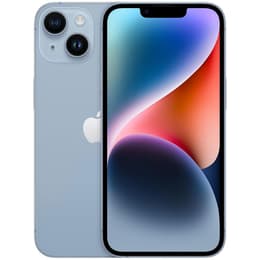
iPhone 14
iPhone 14
Starting at

Refurbished price:287.25

Versus €759.00 new

See options
iPhone 16 Pro
iPhone 16 Pro
Starting at

Refurbished price:650.00

Versus €1,239.00 new

See options

Ratings

The iPhone 14, released in September 2022, and the iPhone 16 Pro, launched in September 2024, represent different tiers and generations within Apple's smartphone lineup. While both devices operate on Apple's iOS ecosystem, the iPhone 16 Pro introduces substantial advancements in display technology, camera capabilities, and overall performance, reflecting its newer release and professional-grade positioning.

Scores

Durability

Evaluating the practical lifespan of these devices involves considering their release timelines, software support, and physical resilience.

  • Release Timeline: The iPhone 14 was released in September 2022, while the iPhone 16 Pro followed two years later in September 2024. This two-year difference directly impacts their expected software support duration.
  • OS Support Duration: Apple typically provides 5-6 years of major iOS updates for its devices. The iPhone 16 Pro, being a newer model, is expected to receive software updates for a longer period than the iPhone 14, offering extended access to new features and security enhancements.
  • Repairability: The iPhone 14 initially received praise for its internal redesign, which made certain repairs, like back glass replacement, more accessible. However, its repairability score was later downgraded due to software limitations and parts pairing requirements that complicate independent repairs. The iPhone 16 Pro, while featuring a durable titanium frame and Ceramic Shield, is also subject to Apple's repair ecosystem, which can influence the ease and cost of long-term maintenance.

Year of Release

2022

2024

Compatible with latest Update

Yes

Yes

Foldable

No

No

Performance

The performance of a smartphone is crucial for daily tasks, from casual browsing to demanding applications and gaming. These two models offer distinct experiences in this regard.

  • Processing Power: The iPhone 14 is equipped with the A15 Bionic chip, which delivers smooth performance for everyday applications, multitasking, and moderate gaming. The iPhone 16 Pro, however, features the A18 Pro chip, designed with a focus on artificial intelligence tasks and offering significantly faster CPU and GPU speeds. This translates to a more responsive experience, quicker app loading times, and enhanced capabilities for intensive tasks like advanced video editing or graphically demanding games.
  • Multitasking and Storage: Both devices offer various internal storage options, typically ranging from 128GB upwards, providing ample space for apps, photos, and videos. The iPhone 16 Pro's more advanced processor and potentially optimized RAM management contribute to a smoother multitasking experience, allowing users to switch between numerous applications without noticeable slowdowns.
  • Battery Behavior: The iPhone 14 generally provides all-day battery life for most users, with approximately 9 hours and 28 minutes of web browsing in tests and up to 20 hours of video playback. The iPhone 16 Pro is designed with a larger battery capacity and a more power-efficient processor, leading to extended usage times, with up to 27 hours of video playback. This means the iPhone 16 Pro can better sustain heavy usage throughout a day without needing a recharge.

Memory (GB)

6 GB

8 GB

Screen quality

The visual experience is a key differentiator, with both models offering high-quality displays but with notable distinctions.

  • Display Technology and Clarity: Both the iPhone 14 and iPhone 16 Pro feature Super Retina XDR OLED displays, known for deep blacks, vibrant colors, and excellent contrast. The iPhone 14 has a 6.1-inch display with a 2532x1170-pixel resolution at 460 pixels per inch (ppi). The iPhone 16 Pro features a larger 6.3-inch display, offering more screen real estate while maintaining a high pixel density for sharp visuals.
  • Refresh Rate and Smoothness: A significant difference lies in the refresh rate. The iPhone 14 features a standard 60Hz refresh rate. In contrast, the iPhone 16 Pro includes ProMotion technology, offering adaptive refresh rates up to 120Hz. This results in noticeably smoother scrolling, more fluid animations, and a more responsive feel, particularly beneficial for gaming and fast-paced content.
  • Brightness Levels: The iPhone 14 offers a typical maximum brightness of 800 nits and a peak HDR brightness of 1200 nits. The iPhone 16 Pro enhances this with a higher typical brightness of 1200 nits for standard content and a peak outdoor brightness of 2000 nits, making it more comfortable to view in bright sunlight.

Resolution

1170 x 2532

1206 x 2622

Screen type

Super Retina XDR OLED

LTPO Super Retina XDR OLED

Audiovisual

Photography and videography capabilities see substantial upgrades between these two generations, particularly with the Pro model's advanced system.

  • Camera System: The iPhone 14 features a dual 12MP camera system, including a main wide lens with sensor-shift optical image stabilization and an ultra-wide lens. The iPhone 16 Pro boasts a more advanced triple camera system, featuring a 48MP main sensor, an upgraded 48MP ultra-wide lens, and a telephoto lens with 5x optical zoom. This allows for greater detail, improved flexibility in framing shots, and superior low-light performance across multiple lenses.
  • Photography Performance: The iPhone 14 delivers strong everyday photos with good detail and color accuracy, benefiting from its Photonic Engine for improved low-light capture. The iPhone 16 Pro significantly elevates photography with its higher-resolution sensors, enhanced low-light capabilities, and features like an anti-reflective lens coating. The 5x optical zoom on the 16 Pro provides greater reach for distant subjects without compromising image quality.
  • Video Recording and Features: Both phones support 4K video recording up to 60 frames per second (fps) and offer Cinematic mode for shallow depth-of-field effects. The iPhone 14 also includes Action mode for stabilized video. The iPhone 16 Pro further enhances video capabilities with support for 4K video recording at 120fps and ProRes 4K at 120fps when using external storage, offering more options for professional-grade video capture. It also introduces a dedicated Capture Button for more intuitive camera control.

Main camera

12 megapixels

48 megapixels

Front camera

12 megapixels

12 megapixels

Miscellaneous

Beyond core features, several practical elements contribute to the overall user experience and connectivity.

  • Connectivity Options: The iPhone 14 supports 5G and Wi-Fi 6, providing fast wireless data speeds for browsing and streaming. The iPhone 16 Pro steps up connectivity with support for Wi-Fi 7 and a faster 5G modem, offering even quicker data transfer speeds, lower latency, and more reliable connections, especially in congested network environments. Both include Bluetooth 5.3.
  • Port Types: The iPhone 14 utilizes Apple's proprietary Lightning port for charging and data transfer. The iPhone 16 Pro transitions to a USB-C port, offering broader compatibility with accessories and faster data transfer speeds (up to 10Gb/s) compared to the iPhone 14.
  • Physical Design and Handling: The iPhone 14 features an aluminum design with a Ceramic Shield front and glass back. The iPhone 16 Pro adopts a strong, lightweight titanium frame, which contributes to its durability. The iPhone 14 has a compact 6.1-inch display, while the iPhone 16 Pro features a slightly larger 6.3-inch display with thinner bezels, providing a more expansive viewing area in a form factor that is slightly taller, wider, and heavier.

Weight

172 g

199 g

Screen size (in)

6.1

6.3

Network

5G

5G

SIM card

Physical SIM + eSIM

eSIM

Carrier compatibility

Unlocked

Unlocked

Connector

Lightning

USB-C (USB 3)

The iPhone 14 and iPhone 16 Pro cater to different user needs, with the iPhone 16 Pro offering significant advancements across key areas. Users often praise the iPhone 14 for its reliable performance, solid camera system for everyday use, and comfortable size. However, some users noted its 60Hz display as a limitation compared to other smartphones on the market, and some reports indicated faster-than-expected battery degradation for certain models.

The iPhone 16 Pro, on the other hand, is frequently lauded for its cutting-edge camera capabilities, including higher resolution sensors and advanced video features, its vibrant and smooth 120Hz ProMotion display, and its extended battery life. Users appreciate the faster processing power for demanding applications and the improved connectivity options. Common praise points for the 16 Pro include its enhanced visual experience and its ability to handle intensive tasks with ease, making it a strong contender for those who prioritize performance and advanced features.

Users prioritizing a capable and dependable smartphone for general use, with a focus on core functionality and a compact form factor, may find the iPhone 14 well-suited to their needs. Conversely, users who demand the latest in mobile technology, particularly in photography, videography, display quality, and raw processing power, will likely lean towards the iPhone 16 Pro. Its larger, more fluid display, advanced camera system, and longer battery life make it ideal for professionals, content creators, or anyone seeking a premium smartphone experience. For those considering either model, exploring quality-assured refurbished options can provide an eco-friendly alternative to access these devices.


See all articles

Our recent comparisons