

Google Pixel 7 Vs Google Pixel Fold

Google Pixel 7
Google Pixel 7
Starting at

Refurbished price:163.99

Versus €649.99 new

See options
Google Pixel Fold
Google Pixel Fold
Starting at

Refurbished price:454.00

Versus €1,750.29 new

See options

Ratings

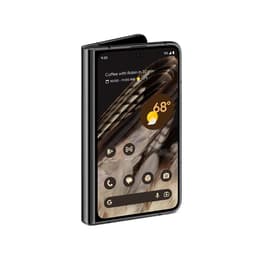
The Google Pixel 7 (2022) and the Google Pixel Fold (2023) represent distinct approaches to smartphone design within the Google ecosystem. While both devices run on the Android operating system and share core software experiences, the Pixel 7 offers a traditional smartphone form factor, whereas the Pixel Fold introduces a foldable design that transforms from a compact phone into a larger tablet-like display. This fundamental difference in design dictates their primary use cases and user experiences.

Scores

Durability

When considering the longevity of these devices, several factors come into play, including their release timelines and software support.

  • Release Timeline: The Pixel 7 was released in October 2022, making it an older model compared to the Pixel Fold, which launched in June 2023. This difference in release date means the Pixel Fold will generally receive software updates for a longer period.
  • Software Support: Both devices are committed to receiving five years of security updates from their respective launch dates. The Pixel 7 is expected to receive OS updates until October 2025 and security updates until October 2027. The Pixel Fold, being newer, will receive OS updates until June 2026 and security updates until June 2028.
  • Repairability: The Pixel 7 is generally considered moderately repairable, with common components like the screen and battery being replaceable. The Pixel Fold, due to its complex folding mechanism and dual-screen design, is inherently more challenging and potentially more costly to repair.

Year of Release

2022

2023

Compatible with latest Update

Yes

Yes

OS

Android

Android

Foldable

No

Yes

Performance

Both the Pixel 7 and Pixel Fold are powered by the same generation of Google's custom processor, leading to similar underlying performance capabilities, though real-world usage can vary.

  • Processor Capabilities: Both devices handle demanding applications and multitasking smoothly, providing a responsive user experience. Users can expect efficient performance for everyday tasks, gaming, and media consumption.
  • Battery Behavior: The Pixel 7 features a 4355 mAh battery, while the Pixel Fold has a larger 4821 mAh battery. User experiences suggest that the Pixel 7 generally offers a full day of use for many users, though heavy usage can lead to more frequent charging. The Pixel Fold's battery life can be inconsistent, especially with extended use of its larger inner display, which consumes more power.
  • Storage Options: Both models are available with 128GB or 256GB of internal storage, with the Pixel Fold also offering a 512GB option, providing ample space for apps, photos, and videos.

Memory (GB)

8 GB

12 GB

Screen quality

The display experience is a primary differentiator between these two Pixel devices, offering distinct advantages depending on user preferences.

  • Display Technology and Resolution: The Pixel 7 features a 6.3-inch OLED display with a resolution of 1080 x 2400 pixels, providing clear and vibrant visuals. The Pixel Fold offers a dual-screen setup: a 5.8-inch OLED cover display (1080 x 2092 pixels) and a larger 7.6-inch foldable OLED inner display (1840 x 2208 pixels) when unfolded.
  • Brightness and Refresh Rate: The Pixel 7's display has a 90Hz refresh rate and can reach up to 1400 nits peak brightness, offering smooth scrolling and good visibility outdoors. Both displays on the Pixel Fold feature a 120Hz refresh rate, providing a very fluid visual experience, and can reach peak brightness levels of up to 1550 nits on the cover screen and 1450 nits on the inner screen.
  • Viewing Experience: The Pixel 7 provides a traditional smartphone viewing experience. The Pixel Fold's larger inner screen is well-suited for media consumption, reading, and multitasking with multiple apps open simultaneously, offering a more immersive experience.

Resolution

1080 x 2400

1840 x 2208

Screen type

AMOLED

Foldable OLED

Audiovisual

Both Pixel devices are known for their strong camera capabilities, leveraging Google's computational photography to produce high-quality images.

  • Camera System: The Pixel 7 features a dual-camera system with a 50 MP main sensor and a 12 MP ultrawide lens. The Pixel Fold includes a 48 MP main sensor, a 10.8 MP ultrawide, and a 10.8 MP telephoto lens with 5x optical zoom, offering more versatility. Both have capable front-facing cameras for selfies and video calls.
  • Photography Performance: Both phones excel in everyday photography and computational photography features like Magic Eraser and Photo Unblur. Users generally praise the Pixel 7's camera for its ability to produce excellent images in various conditions. The Pixel Fold also delivers strong camera performance, with the added benefit of a telephoto lens for zoomed shots.
  • Video and Audio: Both devices support video recording up to 4K at 60 frames per second. Microphone quality for calls and recording is generally clear on both. Speaker output on the Pixel 7 is considered average by some users, while the Pixel Fold offers stereo speakers.

Main camera

50 megapixels

48 megapixels

Front camera

10.8 megapixels

8 megapixels

Miscellaneous

Beyond core features, several practical elements differentiate the Pixel 7 and Pixel Fold, impacting daily usability and handling.

  • Connectivity and Ports: Both devices support 5G connectivity, Wi-Fi 6E, and Bluetooth 5.2, ensuring fast wireless communication. They both feature a USB-C 3.2 port for charging and data transfer.
  • Biometric Security: The Pixel 7 uses an under-display fingerprint sensor and offers face unlock. The Pixel Fold incorporates a side-mounted fingerprint sensor, integrated into the power button, and also includes face unlock.
  • Physical Characteristics: The Pixel 7 is a more compact device, weighing 197g and measuring 155.6 x 73.2 x 8.7 mm. The Pixel Fold is significantly heavier at 283g and has different dimensions when folded (139.7 x 79.5 x 12.1 mm) and unfolded (139.7 x 158.7 x 5.8 mm), making it thicker when folded but very thin when open. The Pixel 7 has an IP68 rating for dust and water resistance, while the Pixel Fold has an IPX8 rating, indicating water resistance but less robust dust protection due to its folding design.

Weight

197 g

283 g

Screen size (in)

6.3

7.6

Network

5G

5G

SIM card

Physical SIM + eSIM

Physical SIM + eSIM

Carrier compatibility

Unlocked

Unlocked

User feedback for the Pixel 7 often highlights its exceptional camera quality, clean Android experience, and solid performance for a traditional smartphone. Common criticisms sometimes include battery life for heavy users and occasional reports of the device heating up with intensive use. The in-display fingerprint sensor has also received mixed reviews, with some users finding it inconsistent.

The Pixel Fold is frequently praised for its innovative large inner display, which enhances multitasking and media consumption, and its capable camera system. However, users often point to its considerable weight and thickness when folded as drawbacks. The visibility of the crease on the inner screen and concerns about the long-term durability of the folding mechanism are also noted. Battery life can be a concern when the larger screen is used extensively.

Users prioritizing a compact, traditional smartphone experience with a strong camera and consistent performance will find the Pixel 7 well-suited to their needs. Its established form factor offers a familiar and reliable daily driver. Conversely, users who value a larger, immersive display for productivity, media, and a unique form factor, and are willing to accept a heavier and thicker device, may lean towards the Pixel Fold. The Pixel Fold caters to those seeking a tablet-like experience in a pocketable device.

For those considering either device, exploring quality-assured refurbished options can provide an eco-friendly alternative to purchasing new, offering a sustainable choice without compromising on functionality.


See all articles

Our recent comparisons