

Galaxy S21 FE 5G Vs iPhone 16

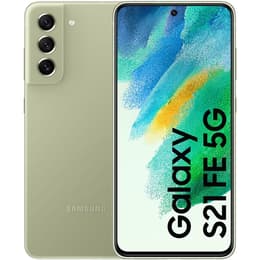
Galaxy S21 FE 5G
Galaxy S21 FE 5G
Starting at

Refurbished price:159.00

Versus €829.91 new

See options
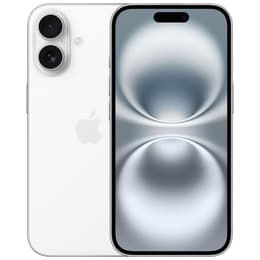
iPhone 16
iPhone 16
Starting at

Refurbished price:548.00

Versus €879.00 new

See options

Ratings

The Samsung Galaxy S21 FE 5G, released in January 2022, and the Apple iPhone 16, launched in September 2024, represent distinct approaches to the modern smartphone experience. While both devices offer robust performance and advanced features, they cater to different user preferences through their respective Android and iOS operating systems. The primary differentiators lie in their ecosystem integration, display technology, and camera philosophies, offering users a choice between a highly customizable Android platform and Apple's streamlined iOS experience.

Scores

Durability

When considering the long-term usability of these devices, their release timelines and software support policies are key factors. The Galaxy S21 FE 5G, being an earlier release, has a shorter remaining software support window compared to the more recent iPhone 16.

  • Software Longevity: The Galaxy S21 FE 5G launched with Android 12 and is expected to receive its final major OS upgrade to Android 16, with security updates continuing until January 2027. In contrast, the iPhone 16, released with iOS 18, is anticipated to receive major iOS updates for approximately 5 to 7 years, potentially extending its software support until around 2036.
  • Physical Durability: Both devices feature robust builds designed for everyday resilience. The Galaxy S21 FE 5G incorporates a Gorilla Glass Victus front and an aluminum frame, along with an IP68 rating for dust and water resistance. The iPhone 16 boasts a Ceramic Shield front, glass back, and an aluminum frame, also carrying an IP68 rating for dust and water resistance.
  • Practical Lifespan: Users seeking the longest possible software update cycle will find the iPhone 16 offers a more extended period of guaranteed major operating system upgrades. However, both devices are built to withstand daily use, and their practical lifespan can be further extended through careful handling and the availability of quality-assured refurbished options.

Year of Release

2022

2024

Compatible with latest Update

Yes

Yes

Foldable

No

No

Performance

The performance of both the Galaxy S21 FE 5G and the iPhone 16 is designed to handle a wide range of tasks, from daily communication to more demanding applications, though they achieve this with different underlying hardware.

  • Processing Power: The Galaxy S21 FE 5G is equipped with a processor capable of smooth multitasking and running current applications effectively. The iPhone 16 features a newer generation processor, which provides enhanced responsiveness and efficiency for demanding apps and complex tasks, including advanced AI features introduced with its operating system.
  • Multitasking and Storage: The Galaxy S21 FE 5G offers configurations with 6GB or 8GB of RAM and storage options of 128GB or 256GB. The iPhone 16 comes with 8GB of RAM and offers more varied storage capacities, including 128GB, 256GB, and 512GB, providing more headroom for extensive app libraries and media.
  • Battery Behavior: The Galaxy S21 FE 5G houses a 4500 mAh battery, with user experiences varying from a full day's use to more frequent charging under heavy loads. The iPhone 16, with a 3561 mAh battery, has shown improved endurance over its predecessor, often lasting a full day for many users.

Memory (GB)

6 GB

8 GB

Screen quality

The visual experience on both smartphones is a key aspect, with each device employing distinct display technologies and characteristics to present content.

  • Display Technology and Clarity: The Galaxy S21 FE 5G features a 6.4-inch Dynamic AMOLED 2X display, known for its vibrant colors and deep blacks, with a resolution of 1080 x 2400 pixels. The iPhone 16 sports a 6.1-inch Super Retina XDR OLED display, offering sharp visuals with a resolution of 1179 x 2556 pixels and excellent contrast.
  • Brightness and Smoothness: The Galaxy S21 FE 5G provides a 120Hz refresh rate for smoother scrolling and animations, alongside a peak brightness of 1200 nits, making it suitable for outdoor viewing. The iPhone 16 maintains a 60Hz refresh rate but compensates with a high peak outdoor brightness of 2000 nits, ensuring good visibility in bright conditions.
  • Viewing Experience: The larger screen of the Galaxy S21 FE 5G offers a more expansive canvas for media consumption and gaming, while the iPhone 16's display, though smaller, delivers exceptional clarity and color accuracy, enhancing the overall viewing experience.

Resolution

1080 x 2340

1179 x 2556

Screen type

Dynamic AMOLED 2X

Super Retina XDR OLED

Audiovisual

Both the Galaxy S21 FE 5G and the iPhone 16 offer capable camera systems, designed to capture moments with clarity and detail, though they differ in their sensor configurations and computational photography approaches.

  • Rear Camera Systems: The Galaxy S21 FE 5G features a versatile triple-camera setup, including a 12 MP main lens with optical image stabilization, an 8 MP telephoto lens with 3x optical zoom, and a 12 MP ultrawide lens. The iPhone 16 comes with a dual-camera system, comprising a 48 MP Fusion main camera with sensor-shift optical image stabilization and a 12 MP ultrawide lens, with the main sensor also enabling 2x telephoto capabilities.
  • Photography Performance: The Galaxy S21 FE 5G is noted for its good everyday photography, producing rich detail and color, though its telephoto lens may struggle in low-light conditions. The iPhone 16 benefits from advanced computational photography, delivering impressive 48MP photos with excellent detail in good lighting and strong video quality.
  • Video Recording and Front Camera: Both devices support 4K video recording at 30/60fps. For selfies, the Galaxy S21 FE 5G has a 32 MP front camera, while the iPhone 16 features a 12 MP front camera.

Main camera

12 megapixels

48 megapixels

Front camera

32 megapixels

12 megapixels

Miscellaneous

Beyond the core specifications, several practical elements contribute to the overall user experience and differentiate the Galaxy S21 FE 5G and the iPhone 16.

  • Connectivity and Ports: Both smartphones support 5G connectivity for fast mobile data. The Galaxy S21 FE 5G uses Wi-Fi 6 and Bluetooth 5.0, while the iPhone 16 features Wi-Fi 6E or 7 and Bluetooth 5.3, offering potentially faster and more stable wireless connections. Both devices have a USB-C port for charging and data transfer, and neither includes a traditional headphone jack.
  • Biometric Security and Design: The Galaxy S21 FE 5G utilizes an under-display optical fingerprint sensor for secure unlocking. The iPhone 16 relies on Face ID for facial recognition. In terms of physical design, the Galaxy S21 FE 5G is slightly larger and heavier at 155.7 x 74.5 x 7.9 mm and 177g, compared to the iPhone 16's 147.6 x 71.6 x 7.8 mm and 170g, impacting one-handed use and pocketability.
  • Additional Features: The iPhone 16 includes Ultra Wideband (UWB) support and features like Emergency SOS via satellite, enhancing its utility in specific scenarios.

Weight

177 g

170 g

Screen size (in)

6.4

6.1

Network

5G

5G

SIM card

Physical SIM

eSIM

Carrier compatibility

Unlocked

Unlocked

Connector

USB-C

USB-C (USB 2)

User sentiment for the Samsung Galaxy S21 FE 5G often highlights its balanced performance, vibrant display, and capable camera system as strong points, making it a solid all-around Android device. However, some users have expressed concerns regarding its battery life, particularly under heavy usage or after certain software updates, and its update longevity compared to newer models. The iPhone 16, being a more recent release, generally receives praise for its enhanced processing power, significant battery life improvements over its predecessors, and its refined camera capabilities, especially in video recording. Criticisms sometimes point to the standard model retaining a 60Hz refresh rate display, which some users might find less fluid compared to higher refresh rate Android counterparts.

Users prioritizing a longer software support window and a highly optimized ecosystem with strong privacy features may find the iPhone 16 to be a more suitable choice. Its robust performance and consistent camera output also appeal to those who value a streamlined user experience. Conversely, individuals who prefer the flexibility and customization options of the Android operating system, along with a slightly larger display and a dedicated telephoto lens, might lean towards the Galaxy S21 FE 5G. Both devices offer reliable performance for daily tasks, and for those looking for an eco-friendly alternative, considering a quality-assured refurbished option for either model can be a sustainable choice.

See all articles

Our recent comparisons






