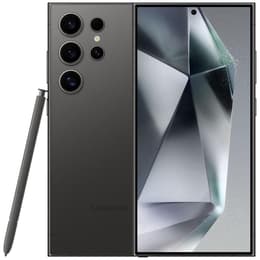
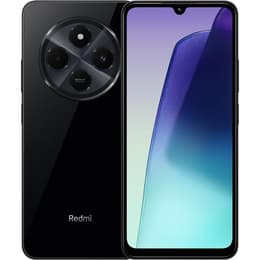


Galaxy S24 Ultra Vs Xiaomi Redmi 14C

Galaxy S24 Ultra
Galaxy S24 Ultra
Starting at

Refurbished price:540.00

Versus €1,589.00 new

See options
Xiaomi Redmi 14C
Xiaomi Redmi 14C
Starting at

Refurbished price:128.20

Versus €189.00 new

See options

Ratings

The Samsung Galaxy S24 Ultra, released in January 2024, and the Xiaomi Redmi 14C, launched in August 2024, represent distinct approaches to smartphone design and functionality. While both operate on the Android platform, the Galaxy S24 Ultra is positioned as a high-end device with advanced features, whereas the Redmi 14C focuses on delivering essential smartphone capabilities for everyday use. These differences are evident across their hardware and software experiences.

Scores

Durability

The longevity of a smartphone is influenced by its release timeline, software support, and physical durability.

  • Release Timeline: The Galaxy S24 Ultra was released in January 2024, making it a more recent flagship device. The Redmi 14C followed in August 2024.
  • Software Support: Samsung has committed to an extended support period for the Galaxy S24 Ultra, promising seven years of major Android operating system updates and security patches. The Redmi 14C is expected to receive two years of major Android updates and four years of security patches. This means the Galaxy S24 Ultra offers a significantly longer period of software relevance.
  • Physical Durability: The Galaxy S24 Ultra features Gorilla Glass Armor for display protection and an IP68 rating for dust and water resistance, indicating a robust build. The Redmi 14C does not carry an official IP rating, suggesting less resistance to environmental elements, though it has undergone internal durability testing for components like the power button and headphone jack.

Year of Release

2024

2024

Compatible with latest Update

Yes

Yes

OS

Android

Android

Foldable

No

No

Performance

Performance in smartphones is determined by the internal processing components, affecting how smoothly applications run and how efficiently the device handles tasks.

  • Processing Power: The Galaxy S24 Ultra is equipped with a current-generation processor designed for demanding applications, intensive multitasking, and advanced gaming. The Redmi 14C utilizes an entry-level processor, suitable for essential daily tasks such as messaging, web browsing, and light gaming.
  • Multitasking and Responsiveness: With its advanced processor and 12GB of RAM, the Galaxy S24 Ultra provides a highly responsive experience, allowing for seamless switching between numerous applications and smooth operation of complex software. The Redmi 14C, available with 4GB, 6GB, or 8GB of RAM, handles basic multitasking adequately, though users might experience occasional stutters with more demanding apps or heavy usage.
  • Storage Options: The Galaxy S24 Ultra offers substantial internal storage options, starting from 256GB and going up to 1TB, without expandable storage. The Redmi 14C provides storage configurations from 64GB to 256GB, with the flexibility of expanding storage up to 1TB via a microSD card.
  • Battery Behavior: The Galaxy S24 Ultra, with its 5000mAh battery, is optimized for extended use, often lasting over a full day even with heavy usage, with some tests showing over 12 hours of screen-on time. The Redmi 14C features a larger 5160mAh battery, typically providing around 1.5 days of moderate use, with some users reporting up to two days under lighter conditions.

Memory (GB)

12 GB

4 GB

Screen quality

The display is a primary interface for smartphone interaction, with technology, resolution, and brightness significantly impacting the visual experience.

  • Display Technology and Clarity: The Galaxy S24 Ultra features a 6.8-inch Dynamic AMOLED 2X display, offering vibrant colors, deep blacks, and a high QHD+ resolution (3088 x 1440 pixels) for exceptionally sharp visuals. The Redmi 14C comes with a 6.88-inch IPS LCD screen with an HD+ resolution (720x1640 pixels), providing clear visuals for everyday content, though not as sharp as higher-resolution panels.
  • Brightness and Outdoor Visibility: The Galaxy S24 Ultra's display can reach a peak brightness of up to 2600 nits, ensuring excellent readability even in direct sunlight. The Redmi 14C offers a typical brightness of 450 nits and a peak brightness of 600 nits in High Brightness Mode (HBM), which is adequate for indoor use and generally usable outdoors, though direct sunlight may present challenges.
  • Refresh Rate and Smoothness: Both devices feature a 120Hz refresh rate. The Galaxy S24 Ultra's adaptive refresh rate can scale from 1Hz to 120Hz, optimizing power consumption while providing smooth scrolling and responsive interactions. The Redmi 14C's 120Hz refresh rate also contributes to a fluid visual experience, particularly for scrolling and media consumption.

Resolution

1440 x 3120

720 x 1640

Screen type

Dynamic LTPO AMOLED 2X

IPS LCD

Audiovisual

Camera systems are crucial for capturing moments, with differences in sensor capabilities and software features impacting photo and video quality.

  • Rear Camera System: The Galaxy S24 Ultra boasts a versatile quad-camera setup, including a 200MP main sensor, a 12MP ultrawide lens, a 10MP telephoto lens with 3x optical zoom, and a 50MP telephoto lens with 5x optical zoom, offering extensive photographic flexibility and detail. The Redmi 14C features a 50MP main rear camera, often accompanied by a secondary depth sensor, designed for capturing clear everyday photos.
  • Low-Light and Everyday Photography: The Galaxy S24 Ultra excels in various lighting conditions, with advanced processing for detailed and bright low-light images. The Redmi 14C's 50MP main camera captures detailed photos in good daylight, with features like HDR and portrait modes for versatility.
  • Video Recording Capabilities: The Galaxy S24 Ultra offers advanced video recording, supporting up to 8K resolution at 30 frames per second (fps) and 4K at 120fps, along with features like Pro Video mode, Portrait Video, and enhanced stabilization. The Redmi 14C records video at up to 1080p resolution at 30fps for both front and rear cameras, suitable for social content, but lacks advanced stabilization.
  • Front Camera: The Galaxy S24 Ultra includes a 12MP front camera. The Redmi 14C features a 13MP front camera, which performs well for selfies, including in low-light conditions with its night mode and soft light ring.

Main camera

200 megapixels

50 megapixels

Front camera

12 megapixels

13 megapixels

Miscellaneous

Beyond core specifications, various practical elements contribute to the overall user experience and device utility.

  • Connectivity: The Galaxy S24 Ultra supports advanced Wi-Fi standards and Bluetooth v5, along with dual SIM capabilities. The Redmi 14C supports dual SIM 4G LTE (or 5G for its 5G variant), Wi-Fi 5, and Bluetooth 5.4, with NFC availability varying by market.
  • Ports and Sensors: The Galaxy S24 Ultra features a USB-C port and includes an S Pen for enhanced productivity. The Redmi 14C offers a USB Type-C port and retains a 3.5mm headphone jack, which is beneficial for users with wired audio accessories. Both devices include essential sensors like accelerometers and ambient light sensors, with the Redmi 14C also featuring a side-mounted fingerprint scanner and AI face unlock.
  • Build Materials and Handling: The Galaxy S24 Ultra is constructed with a titanium frame, contributing to a premium feel and enhanced durability. The Redmi 14C typically features a glass front with a plastic frame and back, with some variants offering an eco-leather finish, providing a comfortable grip. The Galaxy S24 Ultra weighs 232 grams, while the Redmi 14C weighs around 204-211 grams, making it slightly lighter.

Weight

232 g

207 g

Screen size (in)

6.8

6.88

Network

5G

4G

SIM card

Dual Physical SIM + eSIM

Dual Physical SIM

Carrier compatibility

Unlocked

Unlocked

User feedback for the Samsung Galaxy S24 Ultra frequently praises its exceptional camera system, particularly its zoom capabilities and advanced video features, as well as its vibrant and bright display. Users also highlight the extended software support and robust build quality as significant advantages. Common criticisms are less prevalent but sometimes touch on its substantial size and weight. For the Xiaomi Redmi 14C, users often commend its smooth 120Hz display, dependable battery life for moderate use, and the inclusion of a 3.5mm headphone jack. Some users note that its performance is best suited for basic tasks, and the camera, while capable in good lighting, may not match higher-end devices in challenging conditions.

Users prioritizing a cutting-edge camera system, a highly responsive and bright display, and long-term software support will find the Galaxy S24 Ultra well-suited to their needs. Its advanced processing power makes it ideal for demanding applications and intensive multimedia creation. Conversely, users who focus on essential smartphone functions, a large and fluid display for everyday browsing, and reliable battery life for general use may lean toward the Redmi 14C. It serves as a practical device for communication, social media, and light entertainment.

For those considering either device, exploring quality-assured refurbished options can provide an eco-friendly alternative to purchasing new.


See all articles

Our recent comparisons






