

iPhone 16e Vs Xiaomi Redmi Note 11

iPhone 16e
iPhone 16e
Starting at

Refurbished price:387.00

Versus €719.00 new

See options
Xiaomi Redmi Note 11
Starting at

Refurbished price:108.00

Versus €249.99 new

See options

Ratings

The iPhone 16E, released in early 2025, and the Xiaomi Redmi Note 11, launched in early 2022, represent distinct approaches to smartphone design and functionality. While both devices offer a comprehensive mobile experience, they cater to different user expectations through their respective operating systems and hardware capabilities. The iPhone 16E operates on Apple's iOS, emphasizing a streamlined user experience and integration with Apple's ecosystem, whereas the Redmi Note 11 runs on Android with Xiaomi's MIUI, offering greater customization and a broader range of hardware configurations. A primary differentiator lies in their release timelines, leading to significant generational advancements in performance and camera technology in the newer iPhone model.

Scores

Durability

The practical lifespan of a smartphone is influenced by its release timeline, software support, and physical durability. These two devices offer different trajectories in these aspects.

  • Release Timeline & Software Support: The iPhone 16E, launched in February 2025, benefits from Apple's extended software support, typically receiving iOS updates for five to six years from its release. This means it will continue to receive new features and security patches for a longer duration. The Redmi Note 11, released in January 2022, initially ran Android 11 with MIUI 13 and has since been updated to Xiaomi HyperOS based on Android 13. Its software support window is shorter compared to the iPhone, meaning it will reach its end-of-life for major OS updates sooner.
  • Durability Features: The Redmi Note 11 features an IP53 rating for dust and splash protection, offering a degree of resistance against everyday elements. While specific IP ratings for the iPhone 16E were not detailed in all sources, iPhones of its generation typically offer robust water and dust resistance. Both devices are built with materials designed for daily use, though the iPhone 16E, being a newer model, may incorporate more recent advancements in material science for enhanced resilience.
  • Expected Practical Lifespan: Users prioritizing long-term software updates and access to the latest features will find the iPhone 16E offers a longer practical lifespan. For users who do not require the absolute latest software and are content with a stable, slightly older Android version, the Redmi Note 11 can still serve effectively for several years, especially as a quality-assured refurbished option.

Year of Release

2025

2022

OS

iOS

Android

Foldable

No

No

Performance

Performance is a key area where the generational gap between these two devices becomes apparent, impacting app responsiveness and multitasking capabilities.

  • Processor Capabilities: The iPhone 16E is equipped with an A18 chip, which provides substantial processing power for demanding applications, complex computations, and advanced AI features. This allows for smooth operation across a wide range of tasks, from intensive gaming to advanced photo and video editing. The Redmi Note 11 is powered by a Qualcomm Snapdragon 680 4G processor, which handles everyday tasks like web browsing, social media, and light gaming efficiently.
  • System Responsiveness & Multitasking: The iPhone 16E offers a highly responsive user experience, with applications launching quickly and transitions appearing fluid. Its processor and optimized software contribute to seamless multitasking, allowing users to switch between numerous applications without noticeable slowdowns. The Redmi Note 11 provides a generally smooth experience for typical daily usage, though it may exhibit some minor delays when handling very demanding applications or extensive multitasking.
  • Storage Options: The iPhone 16E is available with internal storage options of 128GB, 256GB, and 512GB. The Redmi Note 11 offers 64GB or 128GB of internal storage, with the added flexibility of expandable storage up to 1TB via a microSD card. This difference caters to users with varying storage needs and preferences for physical expansion.

Memory (GB)

8 GB

4 GB

Screen quality

The visual experience on a smartphone is largely defined by its display technology, resolution, and brightness, with both devices offering distinct characteristics.

  • Display Technology & Clarity: The iPhone 16E features a 6.1-inch Super Retina XDR OLED display, known for its deep blacks, high contrast, and vibrant color reproduction. This OLED panel provides excellent clarity with a resolution of 2532x1170 pixels at 460 pixels per inch (ppi). The Redmi Note 11 comes with a 6.43-inch FHD+ AMOLED DotDisplay, also utilizing OLED technology to deliver rich colors and good contrast, with a resolution of 1080x2400 pixels at 409 ppi.
  • Brightness & Refresh Rate: The iPhone 16E's display offers strong brightness levels, with typical brightness and higher peak brightness for HDR content, ensuring good visibility in various lighting conditions. Its refresh rate is 60Hz. The Redmi Note 11 boasts a 90Hz refresh rate, providing a smoother scrolling experience and more fluid animations compared to a standard 60Hz display. It also offers high brightness, with a typical HBM of 700 nits and a peak brightness of 1000 nits, making it suitable for outdoor use.
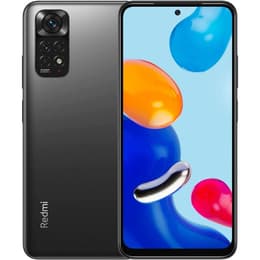
  • Screen Size & Viewing Experience: The Redmi Note 11 offers a slightly larger screen at 6.43 inches, which can be beneficial for media consumption and productivity tasks. The iPhone 16E's 6.1-inch display provides a compact viewing experience while maintaining high visual fidelity. The iPhone 16E retains a traditional notch design, while the Redmi Note 11 features a punch-hole cutout for its front camera.

Resolution

2532x1170

1080 x 2400

Audiovisual

Camera capabilities are a significant factor for many users, and these devices offer different photographic and videographic strengths.

  • Rear Camera Systems: The iPhone 16E features a 2-in-1 rear camera system, comprising a 48MP Fusion Main camera with a wide f/1.6 aperture and a 12MP 2x Telephoto option that utilizes optical-quality zoom by cropping the main sensor. This setup is designed for detailed photos and effective optical zoom. The Redmi Note 11 is equipped with a quad-camera setup: a 50MP main sensor (f/1.8), an 8MP ultrawide lens (f/2.2), a 2MP macro camera, and a 2MP depth sensor.
  • Photography Performance: The iPhone 16E benefits from advanced image processing, offering strong performance in various lighting conditions, including improved low-light photography and features like Smart HDR. The Redmi Note 11's 50MP main camera can capture detailed images in good lighting, but its performance in low-light conditions and with the ultrawide and macro lenses is generally considered acceptable for its segment.
  • Video Recording & Front Camera: The iPhone 16E supports 4K video recording at up to 60 frames per second (fps) and has a 12MP front camera with a f/1.9 aperture, capable of 4K Dolby Vision video recording. The Redmi Note 11 records video at up to 1080p at 30fps and features a 13MP front camera (f/2.4) for selfies and video calls.

Front camera

TrueDepth 12MP

13 megapixels

Miscellaneous

Beyond core specifications, several practical elements contribute to the overall user experience and device utility.

  • Connectivity & Ports: The iPhone 16E supports 5G cellular connectivity and Wi-Fi 6 (802.11ax), offering faster wireless speeds and improved network performance. It features a USB-C port for charging and data transfer. The Redmi Note 11 supports 4G LTE and Wi-Fi 5 (802.11ac). It includes a USB Type-C 2.0 port and retains a 3.5mm headphone jack, providing traditional audio connectivity.
  • Sensors & Biometrics: The iPhone 16E utilizes Face ID for secure facial recognition. It also introduces an Action Button, customizable for quick access to various functions, and a dedicated Capture Button for camera controls. The Redmi Note 11 features a side-mounted fingerprint sensor for biometric authentication. It also includes an IR Blaster, allowing it to function as a universal remote control for home appliances.
  • Design & Handling: The iPhone 16E maintains a compact form factor with a 6.1-inch display. The Redmi Note 11, with its 6.43-inch display, offers a slightly larger footprint. Both devices are designed for comfortable handling, though the specific build materials and finishes contribute to their distinct tactile experiences. The Redmi Note 11 also features dual speakers for an enhanced audio experience.

Weight

167 g

179 g

Screen size (in)

6.1

6.43

Network

5G

4G

SIM card

eSIM

Dual Physical SIM

Carrier compatibility

Unlocked

Unlocked

User feedback for the iPhone 16E often highlights its robust performance, the seamless integration of Apple Intelligence features, and the quality of its camera system, particularly its ability to capture detailed photos and 4K video. Users appreciate the extended software support and the overall polished iOS experience. Some common observations include its 60Hz display refresh rate, which some users might find less fluid compared to higher refresh rate panels on other devices. The retention of the notch, rather than the Dynamic Island, is also a point of note for some within the Apple ecosystem.

For the Xiaomi Redmi Note 11, users frequently praise its vibrant 90Hz AMOLED display, which offers a smooth visual experience for everyday scrolling and media consumption. The long-lasting 5000mAh battery and fast charging capabilities are also consistently highlighted as strong advantages, providing reliable power throughout the day. The inclusion of a 3.5mm headphone jack and an IR Blaster are often cited as practical conveniences. Criticisms sometimes point to its performance for very demanding applications and its camera performance in challenging lighting conditions, which is considered adequate for its segment but not exceptional.

Users prioritizing cutting-edge performance, advanced camera features, and a long software support window will find the iPhone 16E well-suited to their needs, especially those who value the Apple ecosystem and its integrated services. Conversely, users who prioritize a smooth high-refresh-rate display, exceptional battery life, expandable storage, and traditional connectivity options like a headphone jack may lean toward the Xiaomi Redmi Note 11. Both devices offer compelling features for different user profiles, and considering a quality-assured refurbished option for either model can provide an eco-friendly alternative to new purchases.

See all articles

Our recent comparisons