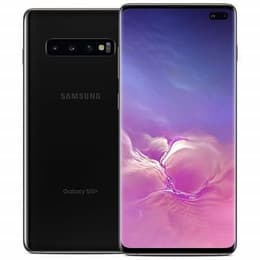
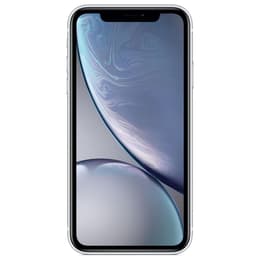


Galaxy S10+ Vs iPhone XR

Galaxy S10+
Galaxy S10+
Starting at

Refurbished price:135.00

Versus €1,009.00 new

See options
iPhone XR
iPhone XR
Starting at

Refurbished price:121.00

Versus €439.00 new

See options

Ratings

The Samsung Galaxy S10 Plus, released in March 2019, and the Apple iPhone XR, launched in October 2018, are both smartphones that offered premium experiences in their respective ecosystems. While the Galaxy S10 Plus runs on the Android operating system, featuring Samsung's One UI, the iPhone XR operates on Apple's iOS. Key differentiators between these two devices include their display technology, camera configurations, and overall design philosophy.

Scores

Durability

When considering the long-term usability of these devices, their release timelines and software support are important factors.

  • Release Timeline and Age: The iPhone XR was released in October 2018, making it slightly older than the Galaxy S10 Plus, which launched in March 2019. This difference in release date can influence the duration of future software support.
  • OS Support Duration: The iPhone XR, originally running iOS 12, has received updates up to iOS 18.x, indicating a longer software support cycle from Apple. The Galaxy S10 Plus, launched with Android 9.0, officially concluded its major OS updates with Android 11. This means the iPhone XR generally offers a longer period of receiving the latest operating system features and security patches.
  • Repairability: The iPhone XR received an iFixit repairability score of 6 out of 10, suggesting it is moderately repairable, with common repairs like display and battery replacements being relatively straightforward. In contrast, the Galaxy S10 Plus scored 3 out of 10 from iFixit, indicating a more challenging repair process due to components like the glued-in battery and glass backplate. [7, 25, 29, 39, 42, 43]

Year of Release

2019

2018

Compatible with latest Update

No

Yes

OS

Android

iOS

Foldable

No

No

Performance

Both devices were equipped with powerful processors at their release, offering smooth performance for daily tasks, though their approaches to system architecture differ.

  • Processor Capabilities: The iPhone XR features Apple's A12 Bionic chip, which was known for its efficiency and strong performance in handling demanding applications and graphics-intensive tasks. The Galaxy S10 Plus is powered by either the Exynos 9820 or Snapdragon 855, depending on the region, both of which provided robust performance for multitasking and gaming.
  • Storage and Multitasking: The Galaxy S10 Plus offered more flexible storage options, ranging from 128GB up to 1TB, with the added benefit of expandable storage via a microSD card. It also came with higher RAM configurations (8GB or 12GB), which can contribute to smoother multitasking with many applications open simultaneously. The iPhone XR was available with 64GB, 128GB, or 256GB of internal storage and 3GB of RAM, without expandable storage. [2, 4, 8, 17, 21, 24]
  • Battery Behavior: The Galaxy S10 Plus, with its 4100 mAh battery, was noted for providing a full day of heavy use and potentially two days with average usage. [13, 26, 31, 34, 38] The iPhone XR, equipped with a 2942 mAh battery, also demonstrated excellent battery longevity, with some tests showing it could last over 11 hours of continuous web browsing and nearly 20 hours of video playback, often outperforming its contemporaries. [16, 28, 35, 36]

Memory (GB)

8 GB

3 GB

Screen quality

The visual experience on these two smartphones is distinct, primarily due to their differing display technologies and resolutions.

  • Display Technology: The Galaxy S10 Plus features a 6.4-inch Dynamic AMOLED display, known for its deep blacks, vibrant colors, and high contrast ratios. [4, 12, 14, 18, 24] The iPhone XR utilizes a 6.1-inch Liquid Retina HD display, which is an advanced LCD panel. While LCDs generally offer good color accuracy, they do not achieve the same level of contrast or true black as AMOLED screens. [2, 3, 8, 11, 19, 21]
  • Resolution and Clarity: The Galaxy S10 Plus boasts a significantly higher resolution of 1440 x 3040 pixels, resulting in a pixel density of 522 ppi, offering very sharp and detailed visuals. [4, 12, 18, 24] The iPhone XR has a resolution of 1792 x 828 pixels, with a pixel density of 326 ppi. While this resolution is considered sufficient for most users, the individual pixels may be discernible upon close inspection compared to the S10 Plus. [2, 3, 8, 11, 19, 21]
  • Brightness and Features: The Galaxy S10 Plus can reach a peak brightness of 1200 nits, supporting HDR10+ content for an enhanced viewing experience. [12, 14] The iPhone XR offers a typical maximum brightness of 625 nits and includes Apple's True Tone technology, which adjusts the display's white balance to match ambient light. [3, 11]

Resolution

1440 x 3040

828 x 1792

Screen type

Dynamic AMOLED

Liquid Retina IPS LCD

Audiovisual

Both devices offer capable camera systems, but they approach photography with different hardware configurations and software philosophies.

  • Rear Camera System: The Galaxy S10 Plus features a versatile triple-camera setup on the rear, including a 12MP wide-angle lens with variable aperture, a 12MP telephoto lens with 2x optical zoom, and a 16MP ultrawide-angle lens. This provides flexibility for various shooting scenarios, from expansive landscapes to zoomed-in subjects. [1, 5, 10, 14, 22, 24, 26, 32] The iPhone XR, on the other hand, relies on a single 12MP wide-angle lens for its main camera. [8, 9, 15, 21, 27, 30, 33]
  • Photography Performance: The Galaxy S10 Plus generally produces vibrant images with good detail and dynamic range in well-lit conditions. Its ultrawide lens is useful for capturing broader scenes, and the telephoto lens allows for optical zoom. Low-light performance was considered good, though some users noted it could be improved compared to competitors at the time. [1, 5, 22, 26, 32] The iPhone XR's single camera, despite lacking optical zoom and an ultrawide option, delivers consistent and high-quality photos, particularly excelling in color accuracy and dynamic range thanks to features like Smart HDR. Its Portrait mode, while limited to detecting human faces, creates a pleasing bokeh effect. [9, 15, 27, 30, 33]
  • Front Camera and Video: The S10 Plus includes a dual front camera system (10MP main + 8MP depth sensor) capable of 4K video recording, offering detailed selfies and enhanced portrait effects. [5, 14, 24] The iPhone XR has a 7MP TrueDepth front camera, which also supports Portrait mode and Face ID. Both phones are capable of recording 4K video at 60 frames per second. [11, 15, 21, 24]

Main camera

12 megapixels

12 megapixels

Front camera

10 megapixels

7 megapixels

Miscellaneous

Beyond core performance, several practical features and design elements differentiate these two smartphones.

  • Connectivity and Ports: The Galaxy S10 Plus supports newer Wi-Fi standards (Wi-Fi 6, or 802.11ax) and includes a traditional 3.5mm headphone jack, offering more audio flexibility. It uses a USB-C port for charging and data transfer. [24] The iPhone XR supports Wi-Fi 5 (802.11ac) and relies on Apple's proprietary Lightning port, omitting a headphone jack. [8, 17, 20]
  • Biometric Security: The Galaxy S10 Plus features an ultrasonic in-display fingerprint sensor for secure unlocking, alongside facial recognition. [14, 24] The iPhone XR exclusively uses Face ID, Apple's facial recognition system, for biometric authentication. [8]
  • Build Materials and Handling: The S10 Plus features a glass front (Gorilla Glass 6) and back (Gorilla Glass 5) with an aluminum frame, giving it a premium feel. It weighs between 175g and 198g. [4, 23, 24] The iPhone XR also has a glass back and front, but with an aluminum frame, and weighs 194g. [8, 17, 21] Both devices offer water and dust resistance, with the S10 Plus rated IP68 (up to 1.5m for 30 mins) and the iPhone XR rated IP67 (up to 1m for 30 mins). [2, 3, 8, 21, 24]

Weight

175 g

194 g

Screen size (in)

6.4

6.1

Network

4G

4G

SIM card

Physical SIM

Physical SIM + eSIM

Carrier compatibility

Unlocked

Unlocked

Connector

USB-C + Jack 3.5mm

Lightning

The Samsung Galaxy S10 Plus and iPhone XR, while from similar eras, cater to slightly different user preferences. Users often praised the Galaxy S10 Plus for its expansive and vibrant AMOLED display, versatile triple-camera system, and the inclusion of features like a headphone jack and expandable storage. [1, 10, 14, 22, 26] Criticisms sometimes pointed to its repairability score and the potential for inconsistent low-light camera performance compared to some rivals. [5, 29, 39] The iPhone XR garnered acclaim for its exceptional battery life, consistent camera performance despite having a single lens, and Apple's long-term software support. [16, 28, 35, 36] Some users noted the lower-resolution LCD display and the absence of a telephoto lens as potential drawbacks. [19, 21]

Users prioritizing a high-resolution, vibrant display, a comprehensive multi-lens camera system, and the flexibility of expandable storage and a headphone jack may find the Galaxy S10 Plus well-suited to their needs. Conversely, individuals who value extended software longevity, robust battery performance, and the streamlined iOS ecosystem with consistent single-lens camera quality may lean towards the iPhone XR. Both devices represent solid choices for everyday use, and opting for a quality-assured refurbished option can provide an eco-friendly alternative for either model.


See all articles

Our recent comparisons