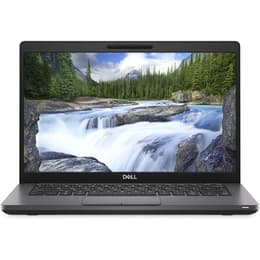
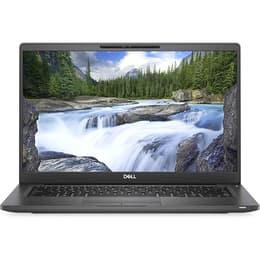


Dell Latitude 5400 14" Vs Dell Latitude 7400 14"

Dell Latitude 5400 14"
Starting at

Refurbished price:250.00

Versus €1,030.00 new

See options
Dell Latitude 7400 14"
Starting at

Refurbished price:276.00

Versus €629.00 new

See options

Ratings

The Dell Latitude 5400 and Dell Latitude 7400 are 14-inch business-oriented laptops, both released in mid-2019. While sharing a common foundation as productivity tools, the Latitude 7400 is often positioned as a more premium ultraportable option, offering enhanced design and display characteristics, whereas the Latitude 5400 provides robust performance in a more traditional form factor. Both devices run on the Windows operating system, ensuring a consistent software experience for users.

Scores

Durability

Both the Dell Latitude 5400 and 7400 were introduced in 2019, meaning they share a similar starting point for software support and expected lifespan. As business-grade laptops, they are designed for durability and extended use.

  • OS Support: Both models are compatible with Windows 10 and Windows 11, extending their supported lifespan beyond the initial Windows 10 end-of-support date. This ensures continued access to security updates and new features for several years.
  • Repairability: Dell designed both the Latitude 5400 and 7400 with ease of maintenance in mind. Key components like the battery, RAM, and storage drives are generally accessible, with screws often designed to remain attached to the bottom panel, simplifying the repair process.
  • Build Quality: The Latitude 5400 features a durable chassis, with some configurations incorporating carbon fiber and undergoing MIL-STD 810G testing for resilience. The Latitude 7400 often boasts a slim aluminum chassis, contributing to a premium feel and robust construction.

Year of Release

2017

2019

Last Os Compatibility

Yes

Yes

OS

Windows 11

Windows 11

Performance

Both Latitude models are equipped to handle demanding business applications and multitasking, offering solid performance for professional use cases.

  • Processor Capabilities: Both laptops utilize 8th generation Intel Core processors, providing efficient performance for everyday tasks, document editing, web browsing, and moderate data processing. Users can expect smooth operation across typical office software and productivity suites.
  • Storage and RAM: Configurations for both devices include fast NVMe PCIe SSDs, which contribute to quick boot times and rapid application loading. Both models also support ample DDR4 RAM, typically up to 32GB, allowing for effective multitasking with numerous applications open simultaneously without significant slowdowns.
  • Battery Behavior: Both the Latitude 5400 and 7400 are noted for their strong battery life, with many configurations capable of lasting through a full workday. The Latitude 7400, particularly some 2-in-1 variants, has been reported to achieve exceptionally long durations, making it well-suited for extended periods away from a power outlet. Both support ExpressCharge for faster recharging.

Memory (GB)

16 GB

16 GB

Processor

Core i5 - Gen 8 (U)

Core i7 - Gen 8 (U)

Graphic card

Integrated Graphics

Integrated Graphics

Screen quality

The visual experience on these laptops varies depending on the specific display configuration, catering to different user preferences and work environments.

  • Display Technology and Resolution: Both models offer 14-inch displays with options for Full HD (1920x1080) resolution, providing clear visuals for text and images. The Latitude 5400 typically features anti-glare FHD panels, while the Latitude 7400 also offers anti-glare FHD options, including some with touch capabilities and privacy features.
  • Brightness Levels: The Latitude 7400 generally provides brighter display options, often reaching 300 nits, which can improve visibility in well-lit environments or outdoors. The Latitude 5400's displays typically offer around 220 nits of brightness.
  • Special Features: The Latitude 7400 has configurations with Dell's SafeScreen privacy technology, which narrows viewing angles to protect sensitive information from onlookers. Some 7400 models also offer optional 4K resolution for the 2-in-1 variants, providing a sharper image for detailed work.

Resolution

1920 x 1080

1920 x 1080

Screen type

IPS

IPS

Camera

Audiovisual

For communication and media consumption, both laptops include standard features suitable for business use, though with some differences in overall quality.

  • Webcam and Microphone: Both the Latitude 5400 and 7400 include integrated webcams and microphones, suitable for video conferencing and online meetings. The Latitude 5400 offers an optional IR camera for Windows Hello, enhancing login security.
  • Speaker Output: User feedback indicates that the speaker quality on both models is generally functional for business use, but not exceptional for immersive media consumption. The Latitude 7400's speakers have been noted by some users as being thin and not very loud.
  • Video Recording: The integrated cameras support standard video recording capabilities for virtual meetings and basic content creation, aligning with typical business laptop expectations.

Miscellaneous

Beyond core performance, several practical elements distinguish these two Dell Latitude laptops, impacting daily usability and connectivity.

  • Connectivity Options: Both models offer robust wireless connectivity, including Wi-Fi 5 (802.11ac) and optional Wi-Fi 6 (802.11ax), along with Bluetooth 5.0. The Latitude 5400 typically includes an RJ-45 Ethernet port, which may be absent on some Latitude 7400 configurations. Both can be configured with optional LTE mobile broadband for connectivity on the go.
  • Port Selection: Both laptops provide a comprehensive array of ports. They include multiple USB Type-A ports, HDMI, and a universal audio jack. The Latitude 7400 consistently features a Thunderbolt 3 port, offering versatile high-speed connectivity, while it is an optional feature on the Latitude 5400. Both also include a microSD card reader.
  • Weight and Dimensions: The Latitude 7400 is often highlighted for its more compact and lighter design, with weights starting around 1.35 kg, making it a more portable option. The Latitude 5400 typically weighs around 1.48 kg.

Weight

1590 g

1400 g

Screen size

14

14

The Dell Latitude 5400 and 7400, both released in 2019, cater to business users with slightly different priorities. Users frequently praise the Latitude 5400 for its strong performance, durable chassis, and long battery life, making it a reliable workhorse. Some common criticisms include its somewhat bland design and a display that can be less bright than competitors.

The Latitude 7400, on the other hand, receives commendation for its premium aluminum build, excellent battery life, and often brighter display options. Its more compact and lighter form factor is also a frequent highlight. However, some users have noted that its speakers can be thin, and certain configurations might lack an Ethernet port.

Users prioritizing a robust and dependable laptop for everyday productivity, with a focus on a comprehensive port selection including Ethernet, may find the Dell Latitude 5400 well-suited to their needs. Its solid performance and repairability make it a practical choice for a consistent work environment. Conversely, users who value a more portable, premium-feeling device with a brighter display and advanced connectivity like Thunderbolt 3, and who frequently work on the go, may lean towards the Dell Latitude 7400. Both models offer strong performance for business applications, making the choice largely dependent on preferences for design, display brightness, and specific port requirements.

For those considering these models, exploring quality-assured refurbished options can provide an eco-friendly alternative, offering reliable performance for various professional and academic demands.
See all articles

Our recent comparisons