

iPhone 14 Vs OnePlus 11

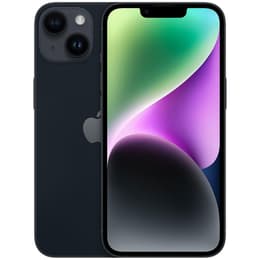
iPhone 14
iPhone 14
Starting at

Refurbished price:287.25

Versus €759.00 new

See options
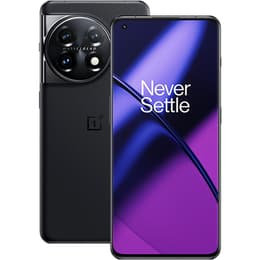
OnePlus 11
OnePlus 11
Starting at

Refurbished price:325.00

Versus €949.00 new

See options

Ratings

The iPhone 14, released in September 2022, and the OnePlus 11, launched globally in February 2023, represent distinct approaches to the modern smartphone experience. While both devices offer high-end performance and advanced camera systems, they cater to different user preferences through their operating systems and hardware philosophies. The iPhone 14 operates on Apple's iOS, known for its integrated ecosystem, while the OnePlus 11 runs on Android with OxygenOS, offering greater customization.

Scores

Durability

When considering the longevity of these devices, several factors come into play, including their release timelines, software support, and physical durability.

  • Release Timeline: The iPhone 14 was introduced in September 2022, making it slightly older than the OnePlus 11, which had its global launch in February 2023. This difference in release dates can influence the duration of future software support.
  • Software Longevity: Apple typically provides iOS updates for its iPhones for approximately five to seven years from their release. This suggests the iPhone 14 could receive major iOS updates until at least 2027 or 2028, ensuring continued access to new features and security patches. The OnePlus 11, on the other hand, is promised four major Android OS upgrades and five years of security updates. Since it launched with Android 13, it is expected to receive updates through Android 17 and security patches for an additional year.
  • Durability Features: Both devices offer a degree of protection against environmental elements. The iPhone 14 carries an IP68 rating for dust and water resistance. The OnePlus 11 is rated IP64 for protection against water and dust, which is a good level of protection, though not as high as some other flagship devices.

Year of Release

2022

2023

OS

iOS

Android

Foldable

No

No

Performance

Both the iPhone 14 and OnePlus 11 are designed to deliver smooth and responsive performance for a variety of tasks, from everyday use to more demanding applications.

  • System Responsiveness: The iPhone 14 handles demanding apps and multitasking smoothly, providing a fluid user experience. The OnePlus 11 also offers rapid performance in day-to-day operations, feeling quick and responsive.
  • Battery Behavior: The iPhone 14's battery can comfortably last through a full day for most users, typically requiring charging overnight. In real-world testing, the iPhone 14 lasted around 9 hours and 28 minutes in continuous web surfing tests. The OnePlus 11 features a larger battery capacity and has demonstrated strong battery life, with some tests showing it lasting over 13 hours in web browsing scenarios. Users report getting around five and a half hours of screen-on time, with fast charging capabilities providing several hours of use from a short charge.
  • Storage and RAM: The iPhone 14 is available with 128GB, 256GB, or 512GB of internal storage and includes 6GB of RAM. The OnePlus 11 offers configurations with 8GB or 16GB of RAM and storage options of 128GB (UFS 3.1) or 256GB (UFS 4.0).

Memory (GB)

6 GB

16 GB

Screen quality

The visual experience on both smartphones is a key consideration, with each offering distinct display technologies and features.

  • Display Technology and Clarity: The iPhone 14 features a 6.1-inch Super Retina XDR OLED display with a resolution of 2532 x 1170 pixels, resulting in a pixel density of approximately 460 pixels per inch (ppi). The OnePlus 11 boasts a larger 6.7-inch LTPO3 Fluid AMOLED display with a higher resolution of 1440 x 3216 pixels, yielding a pixel density of around 525 ppi. This higher pixel density on the OnePlus 11 contributes to a sharper image.
  • Brightness and Refresh Rate: The iPhone 14's display has a typical maximum brightness of 800 nits and can reach a peak of 1200 nits for HDR content. It operates at a standard 60Hz refresh rate. The OnePlus 11's display offers a typical brightness of 500 nits, a high brightness mode (HBM) of 800 nits, and a peak brightness of 1300 nits. It features an adaptive refresh rate that can dynamically adjust from 1Hz to 120Hz, providing smoother scrolling and animations while conserving power.
  • Viewing Experience: The OnePlus 11's display supports Dolby Vision and HDR10+, ensuring enhanced content looks vibrant. Its flexible OLED display stack provides superior viewing angles and lower screen reflectance compared to some competitors.

Resolution

1170 x 2532

1440 x 3216

Audiovisual

Both the iPhone 14 and OnePlus 11 offer advanced camera systems designed to capture high-quality photos and videos, though with different approaches and features.

  • Main Camera Capabilities: The iPhone 14 features a new 12MP main camera with a larger sensor and larger pixels, along with a faster aperture, which Apple states improves low-light performance. The OnePlus 11 is equipped with a 50MP main camera (Sony IMX890 sensor) with optical image stabilization (OIS) and a wide aperture, producing clean, sharp, and well-exposed images in daylight with accurate color reproduction.
  • Low-Light and Video Performance: The iPhone 14 includes a Photonic Engine, an enhanced image pipeline that significantly improves mid- to low-light performance across all cameras. It also features an Action Mode for improved video stabilization. The OnePlus 11's main camera performs well in low-light environments, thanks to its larger sensor and bright aperture lens, and offers a dedicated night mode. It supports video recording up to 8K at 24fps and 4K at 30/60fps.
  • Additional Lenses and Features: The iPhone 14 includes an Ultra Wide camera. The OnePlus 11 features a versatile triple-camera setup co-developed with Hasselblad, including a 48MP ultra-wide camera and a 32MP telephoto camera with 2x optical zoom, designed for portrait photography. The front-facing camera on the OnePlus 11 is a 16MP sensor.

Miscellaneous

Beyond core performance and display, several practical elements differentiate the user experience of the iPhone 14 and OnePlus 11.

  • Connectivity and Ports: Both devices support 5G connectivity. The iPhone 14 utilizes a Lightning port for charging and data transfer. The OnePlus 11 features a USB-C port. The OnePlus 11 is also Wi-Fi 7 ready and supports Bluetooth 5.3.
  • Biometric Security: The iPhone 14 relies on Face ID for secure facial recognition. The OnePlus 11 incorporates an in-display fingerprint sensor and also supports face unlock.
  • Design and Handling: The iPhone 14 has a width of 71.5 mm, a height of 146.7 mm, a depth of 7.80 mm, and weighs 172 grams. The OnePlus 11 measures 163.1 mm in height, 74.1 mm in width, and 8.5 mm in depth, with a weight of 205 grams. The OnePlus 11 also includes the signature alert slider, a physical switch for quickly changing sound profiles.

Weight

172 g

205 g

Screen size (in)

6.1

6.7

Network

5G

5G

SIM card

Physical SIM + eSIM

Physical SIM

Carrier compatibility

Unlocked

Unlocked

The iPhone 14 and OnePlus 11 each present a compelling package, appealing to different user priorities. User feedback for the iPhone 14 often highlights its reliable camera performance, particularly improvements in low-light photography, and the overall seamless experience within the iOS ecosystem. Some users, however, note that the standard iPhone 14 offers incremental upgrades over its predecessor, with more significant advancements reserved for the Pro models.

For the OnePlus 11, common praise points include its strong performance, extended battery life, and rapid charging capabilities. The display quality, with its high resolution and adaptive refresh rate, is also frequently cited as a positive. Some users appreciate the customization options offered by OxygenOS. Criticisms are less frequent but can sometimes touch upon the IP rating not being as high as some competitors or the front camera performance in challenging lighting.

Users prioritizing a highly integrated ecosystem, consistent software updates over a longer period, and a focus on refined camera processing may find the iPhone 14 well-suited to their needs. Conversely, individuals who value a larger, higher-resolution display with a dynamic refresh rate, faster charging, and greater Android customization options may lean toward the OnePlus 11. Both devices offer a quality-assured refurbished option, providing an eco-friendly alternative for consumers seeking to make informed and sustainable choices.


See all articles

Our recent comparisons