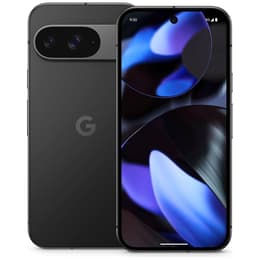
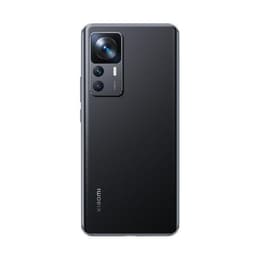


Google Pixel 9 Vs Xiaomi 12T

Google Pixel 9
Google Pixel 9
Starting at

Refurbished price:376.00

Versus €1,066.71 new

See options
Xiaomi 12T
Xiaomi 12T
Starting at

Refurbished price:138.00

Versus €649.00 new

See options

Ratings

The Google Pixel 9, expected to be released in August 2024, represents Google's latest iteration of its smartphone line, focusing on advanced computational photography and artificial intelligence. In contrast, the Xiaomi 12T, launched in October 2022, offers a balance of high-resolution camera capabilities and rapid charging technology. These devices cater to different user priorities, with the Pixel 9 emphasizing software-driven experiences and the Xiaomi 12T providing robust hardware features.

Scores

Durability

When considering the long-term usability of these smartphones, several factors contribute to their practical lifespan, including software support and physical durability.

  • Software Longevity: The Google Pixel 9 is anticipated to offer an extended software support period, with Google typically providing seven years of OS upgrades for its flagship devices. This suggests the Pixel 9 will receive major Android updates and security patches well into the future, potentially until 2031. The Xiaomi 12T, released in late 2022, launched with Android 12 and is upgradable to Android 14, indicating a shorter, though still substantial, period of official software updates compared to the Pixel 9's expected commitment.
  • Physical Durability: The Xiaomi 12T features Corning Gorilla Glass 5 for screen protection and carries an IP53 rating for dust and splash resistance, offering a degree of protection against everyday elements. Details for the Pixel 9's specific durability features are based on rumors, but it is expected to feature a flat screen and more rounded edges, with a glossy back for the standard model.
  • Expected Practical Lifespan: Users prioritizing the longest possible software support and access to the latest Android features will find the Pixel 9's projected update timeline more appealing. The Xiaomi 12T offers a solid build for its release era, but its software support window is naturally shorter due to its earlier launch.

Year of Release

2024

2022

Compatible with latest Update

Yes

Yes

OS

Android

Android

Foldable

No

No

Performance

The performance of a smartphone is largely determined by its internal processing power, memory, and how efficiently it manages daily tasks and demanding applications.

  • Processing Capabilities: The Google Pixel 9 is expected to be powered by Google's next-generation Tensor G4 chip, designed to enhance on-device artificial intelligence and machine learning tasks, leading to smooth operation for complex AI features and general system responsiveness. The Xiaomi 12T utilizes the MediaTek Dimensity 8100-Ultra processor, which provides efficient performance for everyday applications, multitasking, and mobile gaming.
  • Memory and Storage: The Pixel 9 is rumored to come with 12GB of RAM and storage options of 128GB or 256GB, providing ample space for applications and media, and supporting fluid multitasking. The Xiaomi 12T is equipped with 8GB of RAM and offers 128GB or 256GB of UFS 3.1 storage, contributing to quick app loading and data transfer speeds.
  • Battery Behavior: The Xiaomi 12T features a substantial 5000 mAh battery, which, combined with its 120W fast charging capability, allows for rapid recharges, reaching a full charge in approximately 20 minutes. While specific battery life details for the Pixel 9 are not yet confirmed, it is expected to feature Qi2 wireless charging, offering 15W wireless charging with magnetic alignment.

Memory (GB)

12 GB

8 GB

Screen quality

The display is a primary interface for smartphone interaction, and differences in technology, resolution, and brightness significantly impact the viewing experience.

  • Display Technology and Clarity: Both devices feature OLED display technology, known for producing deep blacks and vibrant colors. The Xiaomi 12T has a 6.67-inch AMOLED display with a resolution of 1220 x 2712 pixels, offering a clear and detailed viewing experience. The Google Pixel 9 is expected to come with a 6.24-inch OLED display, with rumors suggesting improvements in clarity and color reproduction.
  • Brightness and Refresh Rate: The Xiaomi 12T offers a 120Hz refresh rate for smooth scrolling and animations, with a peak brightness of 900 nits, making it suitable for outdoor use. The Pixel 9 is rumored to also feature a 120Hz refresh rate and a higher HDR brightness of up to 1,800 nits, which would provide enhanced visibility in bright conditions.
  • Viewing Experience: The larger screen of the Xiaomi 12T might offer a more expansive viewing area for media consumption, while the Pixel 9's rumored higher brightness could provide a more comfortable viewing experience in direct sunlight. Both displays support HDR10+ for improved contrast and color range in compatible content.

Resolution

1080 x 2424

1220 x 2712

Screen type

OLED

AMOLED

Audiovisual

Camera systems are a key differentiator, with both hardware and software playing crucial roles in image and video capture quality.

  • Rear Camera System: The Xiaomi 12T features a triple-camera setup, including a 108MP main sensor with optical image stabilization (OIS), an 8MP ultrawide lens, and a 2MP macro lens. The Google Pixel 9 is expected to have a 50MP main sensor and a 50MP ultrawide lens, but the base model is not rumored to include a telephoto lens. Google's Pixel phones are known for their computational photography, which enhances image quality through software processing.
  • Photography and Video Features: The Xiaomi 12T's main camera can record video at up to 4K resolution at 30 frames per second, and its front camera supports 1080p at 60 frames per second. The Pixel 9 is anticipated to introduce a suite of advanced camera features, including 'Add Me' for group shots, 'Macro Focus,' enhanced 'Night Sight,' 'Astrophotography,' and various video stabilization options. Google is also reportedly working on 8K video recording at 30 frames per second, though its availability on the Pixel 9 at launch is not confirmed.
  • Front Camera: The Xiaomi 12T is equipped with a 20MP front camera. The Pixel 9 is rumored to feature a 10.5MP front camera.

Main camera

50 megapixels

108 megapixels

Front camera

10.5 megapixels

20 megapixels

Miscellaneous

Beyond core specifications, several practical elements contribute to the overall user experience, from connectivity to physical design.

  • Connectivity and Ports: Both devices support 5G connectivity. The Xiaomi 12T includes Wi-Fi 6 and Bluetooth 5.3, along with NFC and an infrared blaster. It uses a USB-C port for charging and data transfer, but lacks a 3.5mm headphone jack, requiring an adapter for wired audio. The Google Pixel 9 is expected to feature satellite connectivity for emergency and non-emergency messaging, and will also use a USB-C port.
  • Biometric Security: The Xiaomi 12T incorporates an in-display optical fingerprint sensor and supports AI face unlock for secure access. While specific details for the Pixel 9's biometric features are not fully confirmed, it is expected to offer secure unlocking methods consistent with previous Pixel generations.
  • Physical Characteristics: The Xiaomi 12T measures 163.1 x 75.9 x 8.6 mm and weighs 202 grams. The Pixel 9 is rumored to have dimensions of approximately 6.01 x 2.83 x 0.33 inches, suggesting a potentially more compact form factor. The Xiaomi 12T also features stereo speakers with Dolby Atmos for an enhanced audio experience.

Weight

198 g

220 g

Screen size (in)

6.3

6.67

Network

5G

5G

SIM card

Physical SIM + eSIM

Dual Physical SIM

Carrier compatibility

Unlocked

Unlocked

Connector

USB-C

USB-C

The Google Pixel 9 and Xiaomi 12T offer distinct strengths, making them suitable for different user preferences. Users who prioritize cutting-edge software experiences, advanced AI capabilities, and a long-term commitment to software updates may find the Pixel 9 to be a compelling choice. Its expected Tensor G4 chip and rumored extensive camera features, including satellite connectivity, position it as a device focused on intelligent functionality and future-readiness.

On the other hand, the Xiaomi 12T appeals to those who value robust hardware specifications, particularly in terms of display quality and charging speed. Its large, vibrant AMOLED display with a 120Hz refresh rate and exceptionally fast 120W wired charging are significant advantages for users who consume a lot of media or need quick power-ups throughout the day. While its camera system is capable, it relies more on megapixel count than the Pixel's computational photography approach.

Common praise for the Xiaomi 12T often highlights its impressive display, rapid charging, and solid performance for its segment. Some users have noted that its secondary cameras are not as strong as the main sensor and that its software experience (MIUI) might not be as streamlined as stock Android. For the Pixel 9, expectations are high for its camera performance, AI integration, and extended software support, building on Google's reputation in these areas. Concerns for unreleased Pixel devices often revolve around battery efficiency and modem performance, though the Pixel 9 is rumored to address these with a new modem.

Ultimately, the decision between these two devices depends on individual priorities. Users seeking a device with a strong emphasis on software innovation, long-term support, and advanced AI features will likely lean towards the Pixel 9. Those who prioritize a large, high-refresh-rate display, rapid charging, and a capable main camera for a more immediate hardware-centric experience might find the Xiaomi 12T a better fit. Both devices, when considered as quality-assured refurbished options, offer an eco-friendly alternative to purchasing new, extending their lifecycle and providing value.


See all articles

Our recent comparisons
