

iPhone 16 Pro Vs iPhone 17

iPhone 16 Pro
iPhone 16 Pro
Starting at

Refurbished price:669.00

Versus €1,239.00 new

See options
iPhone 17
iPhone 17
Starting at

Refurbished price:704.00

Versus €979.00 new

See options

Ratings

The iPhone 16 Pro, released in September 2024, and the iPhone 17, launched in September 2025, represent two distinct offerings within Apple's smartphone lineup. While both devices deliver a premium user experience, they cater to slightly different priorities through their hardware and feature sets. The iPhone 16 Pro emphasizes advanced camera capabilities and a robust build, whereas the iPhone 17 introduces display enhancements and a refined core experience. Both models operate on Apple's iOS platform, ensuring a consistent software ecosystem.

Scores

Durability

When considering the longevity of these devices, several factors come into play, including software support, physical durability, and repairability.

  • Release Timeline: The iPhone 16 Pro was released in September 2024, while the iPhone 17 followed in September 2025. This means the iPhone 17 will likely receive software updates for approximately one year longer than the iPhone 16 Pro, extending its practical lifespan for users who prioritize the latest iOS features and security patches.
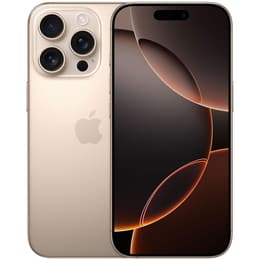
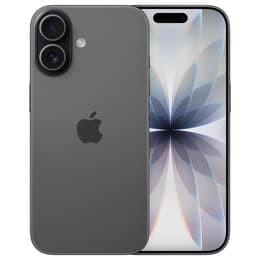
  • Build Materials: The iPhone 16 Pro features a titanium frame, known for its strength and lighter weight compared to stainless steel. The iPhone 17, on the other hand, utilizes an aluminum frame with a Ceramic Shield 2 front and a glass back. Both devices offer IP68 dust and water resistance, allowing submersion up to 6 meters for 30 minutes. The iPhone 17's Ceramic Shield 2 is noted for improved scratch resistance.
  • Repairability: While specific repairability scores can vary, both iPhones are designed with Apple's ecosystem in mind. The availability of parts and authorized repair services typically remains consistent for several years post-launch. Users seeking an eco-friendly alternative might consider quality-assured refurbished options for either model, extending their lifecycle.

Performance

The performance of a smartphone is largely dictated by its internal processing power and how efficiently it manages tasks and battery consumption.

  • Processor Capabilities: The iPhone 16 Pro is equipped with the A18 Pro chip, featuring a hexa-core CPU and a 6-core GPU, alongside a 16-core Neural Engine designed for machine learning tasks. The iPhone 17 houses the newer A19 chip, which also has a hexa-core CPU but a 5-core GPU with integrated neural accelerators, and a 16-core Neural Engine. While the A19 is a newer generation, the 'Pro' designation of the A18 Pro suggests it was designed for more demanding professional workflows. Both chips are capable of handling demanding applications, multitasking, and graphics-intensive gaming smoothly.
  • Battery Behavior: The iPhone 16 Pro has a 3582 mAh battery, while the iPhone 17 features a slightly larger 3692 mAh battery. In real-world usage, the iPhone 17 generally offers a modest improvement in battery life, particularly for video playback. Both support fast wired charging, with the iPhone 17 capable of reaching 50% charge in 20 minutes using a 40W adapter, compared to the iPhone 16 Pro's 30 minutes with a 20W adapter. Both also support Qi2 wireless charging and MagSafe, with the iPhone 17 supporting up to 25W MagSafe charging versus 22W on the iPhone 16 Pro.
  • Storage and RAM: Both devices come with 8GB of RAM, contributing to smooth multitasking. The iPhone 16 Pro offers storage options from 128GB up to 1TB, while the iPhone 17 starts at 256GB and goes up to 512GB.

Memory (GB)

8 GB

8 GB

Screen quality

The visual experience on a smartphone is heavily influenced by its display technology, resolution, and brightness levels.

  • Display Technology and Size: Both the iPhone 16 Pro and iPhone 17 feature a 6.3-inch Super Retina XDR OLED display with a resolution of 2622x1206 pixels at 460 pixels per inch (ppi). Both displays incorporate ProMotion technology, offering an adaptive refresh rate up to 120Hz for fluid scrolling and responsiveness, and support Always-On display functionality.
  • Brightness Levels: Both models provide a typical maximum brightness of 1000 nits and peak HDR brightness of 1600 nits. However, the iPhone 17 boasts a higher peak outdoor brightness of 3000 nits, compared to the iPhone 16 Pro's 2000 nits. This difference can significantly impact screen legibility in bright sunlight.
  • Visual Enhancements: Both displays support HDR10 and Dolby Vision for enhanced contrast and color accuracy in compatible content. They also feature Ceramic Shield front covers for durability, with the iPhone 17 utilizing Ceramic Shield 2 for improved scratch resistance.

Audiovisual

The camera systems on both iPhones are designed to capture high-quality images and videos, though they differ in their specific configurations and capabilities.

  • Rear Camera System: The iPhone 16 Pro features a triple-camera setup, including a 48MP main wide camera, a 48MP ultrawide camera, and a 12MP telephoto lens with 5x optical zoom. The iPhone 17 comes with a dual-camera system, comprising a 48MP Fusion main camera and a 48MP Fusion ultrawide camera. While the iPhone 17 lacks a dedicated telephoto lens, its main camera can achieve 2x optical quality zoom through sensor cropping. The iPhone 16 Pro's 48MP ultrawide camera was a significant upgrade over previous models.
  • Front Camera and Video: The iPhone 16 Pro has a 12MP front camera with autofocus. The iPhone 17 upgrades this to an 18MP front camera with Centre Stage, which automatically adjusts the camera to keep subjects in view during video calls. For video recording, the iPhone 16 Pro supports 4K video up to 120 frames per second (fps) and ProRes video. The iPhone 17 supports 4K video recording up to 60 fps. Both offer features like Cinematic mode and Spatial Video recording.
  • Photography Features: Both models offer advanced computational photography features, including Night mode, Smart HDR, and Photographic Styles. The iPhone 16 Pro's 48MP main and ultrawide cameras, along with its dedicated telephoto, provide more versatility for different photographic scenarios, especially for distant subjects.

Miscellaneous

Beyond core performance and display, several practical elements contribute to the overall user experience of a smartphone.

  • Connectivity: Both the iPhone 16 Pro and iPhone 17 support 5G cellular connectivity and Wi-Fi 7, offering fast wireless speeds. The iPhone 17 incorporates Apple's new N1 networking chip, which also supports Bluetooth 6, an upgrade from the iPhone 16 Pro's Bluetooth 5.3.
  • Ports and Biometrics: Both devices feature a USB-C port. However, the iPhone 16 Pro's USB-C port supports USB 3 speeds (up to 10Gb/s), allowing for faster data transfers, while the iPhone 17's USB-C port operates at USB 2 speeds. Both models rely on Face ID for secure biometric authentication.
  • Design and Handling: The iPhone 16 Pro has dimensions of 149.6 x 71.5 x 8.25 mm and weighs 199 grams, featuring a titanium frame. The iPhone 17 is slightly thinner and lighter at 149.6 x 71.5 x 7.95 mm and 177 grams, with an aluminum frame. Both include the Action button and a dedicated Camera Control button for quick access to camera functions.

Screen size (in)

6.3

6.3

Network

5G

5G

SIM card

eSIM

eSIM

Carrier compatibility

Unlocked

Unlocked

User sentiment for both the iPhone 16 Pro and iPhone 17 generally highlights their strong performance and reliable Apple ecosystem. The iPhone 16 Pro is often praised for its comprehensive camera system, particularly its dedicated telephoto lens and robust titanium build, making it a favored choice for users who prioritize advanced photography and a premium feel. Some users, however, noted that its display brightness could be improved in very sunny conditions.

The iPhone 17 receives acclaim for bringing several 'Pro' features to a standard model, such as the 120Hz ProMotion display and significantly brighter outdoor screen. Its improved front camera and faster charging capabilities are also frequently mentioned as positive upgrades. Some users might find the absence of a dedicated telephoto lens a trade-off, though the enhanced main and ultrawide cameras still deliver excellent results.

Users prioritizing a versatile and advanced camera system with a dedicated optical zoom and a premium titanium construction may find the iPhone 16 Pro well-suited to their needs. Those who value the latest display technology, including higher peak outdoor brightness and ProMotion on a non-Pro model, along with a lighter design and improved front camera, might lean towards the iPhone 17. Both devices offer a strong foundation for daily use, and considering a quality-assured refurbished option for either model can provide a sustainable choice for consumers.


See all articles

Our recent comparisons