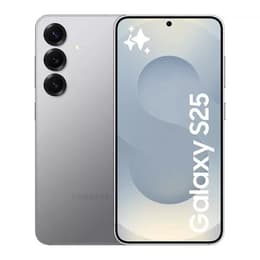
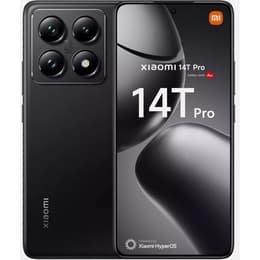


Galaxy S25 Vs Xiaomi 14T Pro

Galaxy S25
Galaxy S25
Starting at

Refurbished price:489.60

Versus €910.00 new

See options
Xiaomi 14T Pro
Xiaomi 14T Pro
Starting at

Refurbished price:395.00

Versus €1,500.00 new

See options

Ratings

The Samsung Galaxy S25 and the Xiaomi 14T Pro are both high-end Android smartphones, released in early 2025 and late 2024 respectively. While both devices offer premium experiences, they present distinct approaches to display technology, battery capabilities, and camera systems. The Galaxy S25 runs on Android 15 with Samsung's One UI 7, while the Xiaomi 14T Pro launched with Android 14.

Scores

Durability

When considering the practical lifespan of these devices, several factors come into play, including their release timelines and software support. The Samsung Galaxy S25 was released in February 2025, making it a slightly newer device compared to the Xiaomi 14T Pro, which launched in September 2024.

  • OS Support: The Galaxy S25 is notable for Samsung's commitment to providing seven years of operating system and security updates, extending its software longevity significantly, with support expected to continue until around 2032. The Xiaomi 14T Pro, while also receiving regular updates, typically follows a shorter support cycle, often around three to four major Android updates and four to five years of security patches.
  • Physical Durability: Both devices offer robust build quality. The Galaxy S25 features Gorilla Glass Victus 2 on both the front and back, complemented by an Armor aluminum 2 frame, and boasts an IP68 rating for dust and water resistance. The Xiaomi 14T Pro also comes with an IP68 rating for splash, water, and dust resistance and utilizes a metal frame in its construction.
  • Expected Lifespan: Users prioritizing the longest possible software support and cutting-edge features for an extended period may find the Galaxy S25 more aligned with their needs. For those who typically upgrade their devices more frequently, the Xiaomi 14T Pro still offers a substantial practical lifespan with its durable build and ongoing software maintenance.

Year of Release

2025

2024

OS

Android

Android

Foldable

No

No

Performance

Both the Samsung Galaxy S25 and the Xiaomi 14T Pro are equipped with high-performance processors designed to handle demanding applications and multitasking with ease.

  • Processing Power: The Galaxy S25 is powered by a current-generation Qualcomm Snapdragon 8 Elite for Galaxy processor, which is optimized for smooth operation across various tasks, from intensive gaming to complex productivity applications. The Xiaomi 14T Pro features the MediaTek Dimensity 9300+ chipset, known for its strong performance in both everyday use and high-load scenarios, including advanced AI computations. Both processors ensure a responsive user experience and efficient handling of modern smartphone demands.
  • Memory and Storage: The Galaxy S25 comes with 12GB of RAM across all models, with storage options ranging from 128GB to 512GB. The Xiaomi 14T Pro also offers 12GB of RAM and provides storage configurations up to 1TB, catering to users with extensive storage needs. Neither device supports expandable storage via a microSD card.
  • Battery Performance: The Xiaomi 14T Pro features a larger 5000 mAh battery, which generally translates to longer usage times between charges for many users. The Galaxy S25 has a 4000 mAh battery. In terms of charging, the Xiaomi 14T Pro supports significantly faster 120W wired and 50W wireless charging, allowing for very quick power-ups. The Galaxy S25 supports 25W wired and 15W wireless charging.

Memory (GB)

12 GB

12 GB

Screen quality

The display is a central feature for both smartphones, offering vibrant visuals and smooth interactions, though with some key differences in specifications.

  • Display Technology and Size: The Samsung Galaxy S25 features a 6.2-inch Dynamic LTPO AMOLED 2X display, known for its deep blacks, vibrant colors, and excellent contrast. The Xiaomi 14T Pro offers a larger 6.67-inch OLED display, providing a more expansive viewing area.
  • Resolution and Clarity: The Galaxy S25 has a resolution of 2340 x 1080 pixels, resulting in a pixel density of approximately 416 pixels per inch (ppi). The Xiaomi 14T Pro boasts a higher resolution of 2712 x 1220 pixels, with a pixel density of around 446 ppi, offering slightly sharper details.
  • Brightness and Refresh Rate: Both displays offer high brightness levels, with the Galaxy S25 reaching a peak brightness of 2600 nits, ensuring good visibility even in bright outdoor conditions. The Xiaomi 14T Pro can achieve a peak brightness of 4000 nits, with a nominal brightness of 1600 nits. The Galaxy S25 features a 120Hz adaptive refresh rate for smooth scrolling and animations. The Xiaomi 14T Pro takes this a step further with a 144Hz refresh rate, which can provide an even more fluid visual experience, particularly in compatible games and content.

Resolution

1080x2340

1220 x 2712

Screen type

Dynamic LTPO AMOLED 2X

AMOLED

Audiovisual

Both smartphones are equipped with advanced camera systems designed to capture high-quality photos and videos, each with its own strengths.

  • Rear Camera Systems: The Samsung Galaxy S25 features a versatile triple-camera setup, including a 50 MP wide-angle main camera with optical image stabilization (OIS), a 10 MP telephoto lens offering 3x optical zoom with OIS, and a 12 MP ultrawide camera with a 120-degree field of view. The Xiaomi 14T Pro also sports a triple-lens system, co-engineered with Leica, featuring a 50 MP Light Hunter 900 main sensor, a 12 MP ultrawide lens, and a 50 MP telephoto lens with 2.6x optical zoom.
  • Photography Performance: The Galaxy S25's camera system is known for its consistent image processing and strong performance in various lighting conditions, including low-light environments. Its telephoto lens provides clear zoomed-in shots. The Xiaomi 14T Pro, with its Leica optics, aims to deliver images with distinct color science and detail, particularly benefiting from its high-resolution main and telephoto sensors. Its larger front camera sensor also contributes to detailed selfies.
  • Video Capabilities and Audio: Both devices are capable of recording video at up to 8K resolution at 24/30 frames per second and 4K at 30/60 frames per second. The Galaxy S25 includes features like HDR10+ video recording and stereo sound recording. The Xiaomi 14T Pro offers features like movie mode for cinematic effects and advanced parameter controls in director mode. Both phones feature stereo speakers for an immersive audio experience, but neither includes a traditional 3.5mm headphone jack.

Miscellaneous

Beyond core performance and display, several practical features and design elements differentiate these two devices.

  • Connectivity and Ports: Both the Galaxy S25 and Xiaomi 14T Pro support 5G connectivity for fast mobile data speeds. The Galaxy S25 supports Wi-Fi 7 and Bluetooth 5.4. The Xiaomi 14T Pro also supports modern Wi-Fi standards and Bluetooth, and both utilize a USB-C port for charging and data transfer. Neither device includes a 3.5mm headphone jack.
  • Biometrics and Sensors: The Galaxy S25 features an ultrasonic in-screen fingerprint sensor for secure unlocking. The Xiaomi 14T Pro also incorporates an in-display fingerprint sensor. Additionally, the Xiaomi 14T Pro includes an infrared (IR) blaster, allowing it to function as a universal remote control for various home appliances.
  • Design and Handling: The Galaxy S25 is the more compact of the two, measuring 146.9 x 70.5 x 7.2 mm and weighing 162g, making it easier for one-handed use and pocketability. The Xiaomi 14T Pro is larger and heavier at 160.4 x 75.1 x 8.4 mm and 209g, offering a more substantial feel and a larger screen. Both devices feature premium build materials, with the Galaxy S25 using Gorilla Glass Victus 2 and an aluminum frame, and the Xiaomi 14T Pro featuring a metal frame.

Weight

162 g

209 g

Screen size (in)

6.2

6.67

Network

5G

5G

SIM card

Physical SIM + eSIM

Dual Physical SIM

Carrier compatibility

Unlocked

Unlocked

User feedback for both the Samsung Galaxy S25 and the Xiaomi 14T Pro often highlights their respective strengths. The Galaxy S25 is frequently praised for its long-term software support, offering peace of mind for users who keep their devices for many years. Its compact size and refined user interface are also common points of appreciation. Some users, however, might desire a larger battery capacity or faster charging speeds.

The Xiaomi 14T Pro typically receives acclaim for its impressive battery life and exceptionally fast charging capabilities, which are significant advantages for heavy users or those frequently on the go. Its larger, high-refresh-rate display and advanced camera system with Leica tuning are also popular features. Potential criticisms might revolve around its larger physical footprint compared to the base Galaxy S25 model, and a shorter software update commitment.

Users prioritizing extended software longevity and a more compact, premium design will find the Samsung Galaxy S25 well-suited to their needs. Conversely, users who value a larger display, superior battery endurance, and rapid charging, along with a distinct camera experience, may lean toward the Xiaomi 14T Pro. Both devices represent strong choices in the high-end Android segment, and considering a quality-assured refurbished option for either model can be an eco-friendly alternative for making an informed, sustainable choice.


See all articles

Our recent comparisons







