

iPhone SE (2020) Vs Xiaomi Redmi Note 13 Pro

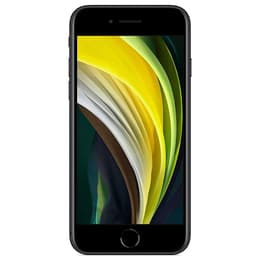
iPhone SE (2020)
iPhone SE (2020)
Starting at

Refurbished price:102.00

Versus €319.00 new

See options
Xiaomi Redmi Note 13 Pro
Starting at

Refurbished price:179.00

Versus €349.00 new

See options

Ratings

The iPhone SE 2020 and the Xiaomi Redmi Note 13 Pro represent distinct approaches to smartphone design and functionality, catering to different user preferences. The iPhone SE 2020, released in April 2020, offers a compact form factor and operates on Apple's iOS ecosystem. In contrast, the Xiaomi Redmi Note 13 Pro, launched globally in January 2024, provides a larger display, a versatile camera system, and runs on the Android platform. These devices primarily differentiate themselves through their operating systems, physical size, and camera capabilities.

Scores

Durability

When considering the long-term usability of a smartphone, factors like software support, physical resilience, and ease of repair are important. The iPhone SE 2020, being an Apple device, benefits from a long software support cycle, receiving updates for several years from its release. The Xiaomi Redmi Note 13 Pro, a more recent Android device, also offers a commitment to software updates, though the duration typically varies by manufacturer.

  • Software Longevity: The iPhone SE 2020, initially running iOS 13.4, has received updates up to iOS 18.x and is projected to receive updates as far as iOS 26 in 2025, indicating a substantial period of software support. The Redmi Note 13 Pro launched with Android 13 and MIUI 14, and has since been updated to Android 15 with Xiaomi HyperOS 2, suggesting a commitment to ongoing software enhancements.
  • Physical Durability: The iPhone SE 2020 features an IP67 rating for water and dust resistance, offering protection against splashes and submersion. The Redmi Note 13 Pro comes with an IP54 rating, providing adequate protection against dust and splashes. The Redmi Note 13 Pro also incorporates Corning Gorilla Glass Victus for enhanced screen protection.
  • Repairability: The iPhone SE 2020 received a repairability score of 6 out of 10 from iFixit, noting that common components like the display and battery are relatively straightforward to replace, though the glass back can be challenging to repair. The Redmi Note 13 Pro 5G (which shares many characteristics with the Pro model) has an average repairability score of 6.5 out of 10, with modular components and accessible battery, though screen replacement may require disassembling several parts.

Year of Release

2020

2023

Compatible with latest Update

Yes

Yes

OS

iOS

Android

Foldable

No

No

Performance

Performance in a smartphone is crucial for smooth daily operation, from launching applications to managing multiple tasks simultaneously. These two devices offer different performance profiles shaped by their respective hardware and software optimizations.

  • System Responsiveness: The iPhone SE 2020 is equipped with a powerful processor for its release year, enabling smooth navigation, quick app launches, and efficient handling of demanding applications. The Redmi Note 13 Pro (5G version) utilizes a current-generation processor that provides smooth performance for everyday tasks and can handle gaming and multitasking effectively.
  • Multitasking Capabilities: The iPhone SE 2020 typically comes with 3GB of RAM, which, combined with iOS's efficient memory management, allows for competent multitasking. The Redmi Note 13 Pro offers more generous RAM configurations, starting from 8GB and going up to 12GB, which supports extensive multitasking and keeps more applications active in the background.
  • Storage Options: Both devices offer various storage capacities to suit user needs. The iPhone SE 2020 is available with 64GB, 128GB, or 256GB of internal storage. The Redmi Note 13 Pro provides options including 128GB, 256GB, and 512GB, with some configurations offering expandable storage up to 1TB.

Memory (GB)

3 GB

8 GB

Screen quality

The display is a primary interface for smartphone interaction, and the quality of the screen significantly impacts the user experience, from media consumption to daily browsing.

  • Display Technology and Clarity: The iPhone SE 2020 features a 4.7-inch IPS LCD display with a resolution of 1334x750 pixels, offering clear visuals and good color reproduction. The Redmi Note 13 Pro boasts a larger 6.67-inch AMOLED display with a higher resolution of 1080x2400 pixels, providing deep blacks, vibrant colors, and sharp detail.
  • Brightness and Outdoor Visibility: The Redmi Note 13 Pro's AMOLED panel offers high brightness levels, making it suitable for outdoor use even in sunny conditions. While the iPhone SE 2020's LCD screen provides adequate brightness for most indoor and outdoor scenarios, it may not match the peak brightness of the AMOLED panel in direct sunlight.
  • Refresh Rate and Smoothness: The iPhone SE 2020 has a standard refresh rate, providing a consistent visual experience. The Redmi Note 13 Pro features a 120Hz adaptive refresh rate, which results in noticeably smoother scrolling and more fluid animations, enhancing the overall user interaction.

Resolution

750 x 1334

1220 x 2712

Screen type

Retina IPS LCD

AMOLED

Audiovisual

Camera capabilities are a significant consideration for many smartphone users, influencing how they capture and share moments. Both devices offer distinct camera systems designed for different photographic approaches.

  • Rear Camera System: The iPhone SE 2020 features a single 12-megapixel main camera with an f/1.8 aperture, which, combined with its advanced image processing, delivers detailed photos with natural colors and good dynamic range in well-lit conditions. The Redmi Note 13 Pro is equipped with a versatile triple-camera setup, including a 200-megapixel main sensor with optical image stabilization (OIS) and an f/1.7 aperture, an 8-megapixel ultrawide lens, and a 2-megapixel macro camera. The 200MP sensor allows for highly detailed images and offers 2x/4x lossless zoom.
  • Low-Light and Video Performance: The iPhone SE 2020 performs well in adequate lighting, but it lacks a dedicated Night Mode, which can limit its performance in very low-light environments. It supports 4K video recording at up to 60 frames per second, offering good stabilization. The Redmi Note 13 Pro's main camera performs well in low-light conditions, often utilizing pixel-binning technology to capture more light. It can record 4K video at 30 frames per second with the rear camera.
  • Front Camera and Additional Features: The iPhone SE 2020 has a 7-megapixel front-facing camera that supports software-based Portrait Mode. The Redmi Note 13 Pro features a 16-megapixel front camera, capable of good selfies and video calls, and records 1080p video at 60 frames per second.

Main camera

12 megapixels

200 megapixels

Front camera

7 megapixels

16 megapixels

Miscellaneous

Beyond core features, several practical elements contribute to the overall user experience, including connectivity, physical design, and additional functionalities.

  • Connectivity and Ports: The iPhone SE 2020 supports 4G LTE, Wi-Fi 6, and Bluetooth 5.0, along with NFC for mobile payments. It uses a Lightning port for charging and data transfer and does not include a 3.5mm headphone jack. The Redmi Note 13 Pro offers 5G connectivity, along with modern Wi-Fi and Bluetooth standards, and NFC. It features a USB-C port for charging and data, and notably retains a 3.5mm headphone jack.
  • Biometrics and Security: The iPhone SE 2020 utilizes Touch ID, an integrated fingerprint sensor in the home button, for secure unlocking and authentication. The Redmi Note 13 Pro incorporates an in-display fingerprint sensor for biometric security.
  • Design and Handling: The iPhone SE 2020 has a compact and lightweight design, measuring 138.4 x 67.3 x 7.3 mm and weighing 148g, making it easy for one-handed use. The Redmi Note 13 Pro is a larger device, with dimensions of 161.15 x 74.24 x 7.98 mm and a weight of 187g, offering a more expansive screen experience.

Weight

148 g

187 g

Screen size (in)

4.7

6.67

Network

4G

5G

SIM card

Physical SIM + eSIM

Dual Physical SIM

Carrier compatibility

Unlocked

Unlocked

User feedback for the iPhone SE 2020 often praises its compact size, the familiarity of its design for long-time iPhone users, and the robust performance delivered by its processor, especially for a device of its generation. Criticisms frequently center on its battery life, which many users find insufficient for heavy use, and its dated display technology compared to more modern smartphones. The single camera, while capable, is also noted for its lack of versatility and absence of a Night Mode.

For the Xiaomi Redmi Note 13 Pro, users frequently highlight its impressive AMOLED display with a high refresh rate, its long-lasting battery, and the fast charging capabilities as significant advantages. The 200-megapixel main camera is often lauded for its detail and performance in good lighting. Some common concerns include the performance of the auxiliary cameras (ultrawide and macro) not matching the main sensor's quality, and potential software nuances with MIUI.

Users prioritizing a compact device with a familiar operating system and long-term software support may find the iPhone SE 2020 well-suited to their needs. Those who value a large, vibrant display, extended battery life, faster charging, and a versatile camera system with high-resolution capabilities may lean toward the Xiaomi Redmi Note 13 Pro. Both devices offer distinct advantages, and choosing between them often comes down to individual preferences regarding size, operating system, and specific feature priorities. Considering a quality-assured refurbished option for either model can be a sustainable choice for consumers.


See all articles

Our recent comparisons