

Compare models

Galaxy S26 Ultra Vs Xiaomi 13T Pro

  • 1-year minimum warranty
  • Free delivery on all orders
  • Free 30-day returns
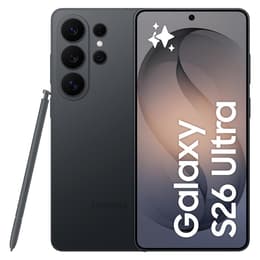
Galaxy S26 Ultra
Starting at

Refurbished price:€887.00

Versus €1,449.00 new

See options
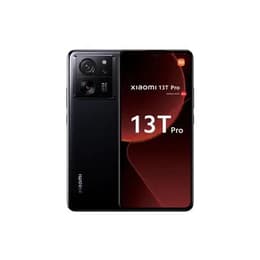
Xiaomi 13T Pro
Starting at

Refurbished price:€406.00

Versus €900.00 new

See options

Differences at a glance

The Samsung Galaxy S26 Ultra (2026) and the Xiaomi 13T Pro (2023) represent advanced mobile technology across different release years and manufacturing philosophies. While the Galaxy S26 Ultra functions as a contemporary flagship with integrated productivity tools, the Xiaomi 13T Pro provides performance-focused hardware centered around media consumption and fast charging capabilities. Both devices operate on the Android ecosystem, though each applies a distinct interface layout and software ecosystem. Understanding how their core hardware and real-world behaviors differ helps users determine which model matches their daily routines.

Available Models

Colour

Storage

Scores

Durability

When examining hardware longevity and software support, both devices approach update schedules and structural durability through different manufacturer commitments.

  • Software Support Timeline: The Galaxy S26 Ultra benefits from an extended multi-year update policy providing long-term security patches and system upgrades, whereas the Xiaomi 13T Pro features a more standard multi-year update window that aligns with its earlier release year.
  • Repairability and Build: Both smartphones utilize robust frame materials and glass panels, though obtaining official replacement components and local service support varies depending on regional availability and carrier distribution networks.
  • Expected Practical Lifespan: Users seeking maximum software longevity and prolonged security updates will find the newer Galaxy model well-equipped for extended use, while the Xiaomi 13T Pro remains a viable daily driver for users who upgrade on a standard multi-year cycle.

Year of Release

2026

2023

Compatible with latest Update

Yes

Yes

OS

Android

Android

Foldable

No

No

Performance

Performance capabilities vary noticeably due to the generation gap between their internal processors and memory configurations.

  • Multitasking and App Loading: The Galaxy S26 Ultra handles demanding professional applications and intensive background tasks smoothly thanks to its current-generation processor and ample RAM, while the Xiaomi 13T Pro manages everyday browsing, media streaming, and moderate multitasking reliably with its high-tier processor from its release era.
  • Storage and Battery Behavior: Both devices offer generous internal storage configurations without expandable storage slots, though their battery endurance profiles differ based on battery capacity management and processor efficiency during heavy daily usage.
  • System Responsiveness: Users transitioning between multiple heavy applications will notice rapid switching speeds on both handsets, with the newer hardware architecture providing additional performance headroom for future software updates.

Screen quality

Display characteristics shape the visual experience for media consumption, reading, and outdoor visibility.

  • Display Technology and Clarity: Both models feature vibrant OLED panels that deliver deep contrast levels, sharp resolution, and vivid color reproduction suitable for viewing high-definition video content.
  • Brightness and Outdoor Legibility: The Galaxy S26 Ultra reaches high peak brightness thresholds that maintain clear readability under direct sunlight, whereas the Xiaomi 13T Pro offers adequate outdoor brightness levels for standard daylight usage.
  • Refresh Rate and Smoothness: High refresh rate support ensures fluid scrolling across web pages and responsive touch interactions during gaming or navigation on both devices.

Resolution

1440 x 3120

1220 x 2712

Audiovisual

Imaging and audio hardware influence how each device captures memories and reproduces sound for daily multimedia tasks.

  • Camera System Capabilities: The Galaxy S26 Ultra equips a versatile multi-lens array featuring advanced telephoto zoom capabilities for distant subjects, while the Xiaomi 13T Pro utilizes a high-resolution main sensor paired with collaborative optical tuning for everyday photography and low-light environments.
  • Video Recording and Audio Output: Both smartphones support high-resolution video capture with stabilization features, complemented by stereo speakers that deliver clear audio for casual listening and hands-free calls.
  • Microphone Performance: Integrated microphone arrays capture distinct voice audio during phone calls and video recordings, reducing background noise in typical indoor settings.

Front camera

12.0

20 megapixels

Miscellaneous

Practical daily usability depends on physical dimensions, connectivity standards, and built-in sensor technologies.

  • Connectivity and Ports: Both models support modern 5G networks, Wi-Fi standards, and Bluetooth pairing, utilizing reversible USB-C ports for charging and data transfer.
  • Physical Handling: The Galaxy S26 Ultra features a large footprint designed to accommodate an integrated stylus and expansive screen real estate, while the Xiaomi 13T Pro offers a slightly more compact handling profile with curved rear edges.
  • Authentication and Sensors: Secure biometric authentication is handled via under-display fingerprint sensors and facial recognition options on both devices for quick unlocking.

Weight

214 g

200 g

Screen size (in)

6.9

6.67

Network

5G

5G

SIM card

Physical SIM + eSIM

Dual Physical SIM

Carrier compatibility

Unlocked

Unlocked

Connector

USB-C

USB-C

What the community thinks

Real user discussions highlight distinct preferences for each device across online technology communities. Owners of the Galaxy S26 Ultra frequently praise its extensive zoom capabilities, integrated productivity stylus, and long-term software commitment. Conversely, users of the Xiaomi 13T Pro often emphasize rapid charging speeds and reliable processing power relative to its generation. Users prioritizing advanced camera zoom and extended software support may prefer the Galaxy S26 Ultra, while users focusing on fast power replenishment and balanced everyday performance may lean toward the Xiaomi 13T Pro.

For those exploring sustainable purchasing decisions, opting for a quality-assured refurbished option provides a practical way to acquire these advanced technologies while reducing electronic waste. Choosing between these two models ultimately depends on whether long-term system updates or rapid power delivery align closer with your daily requirements.