

Compare models
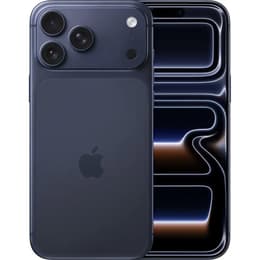
Google Pixel 9 Vs iPhone 17 Pro Max
- 1-year minimum warranty
- Free delivery on all orders
- Free 30-day returns
Differences at a glance
The Google Pixel 9 (2024) and the Apple iPhone 17 Pro Max (2025) represent distinct approaches to modern smartphone design, operating systems, and ecosystem integration. While the Pixel 9 focuses on a compact form factor and software-driven intelligence, the iPhone 17 Pro Max delivers a large-screen flagship experience powered by Apple's robust hardware ecosystem. Operating on Android and iOS respectively, these devices cater to users with very different preferences regarding software environments and physical proportions.
Available Models
Colour
Storage
Scores
Durability
Both handsets are engineered for multi-year usage, though their support timelines and physical endurance profiles vary according to their respective release schedules.
- Software longevity: The Google Pixel 9 receives major operating system upgrades for up to seven years from its launch, matching the long-term support window provided by Apple's iOS ecosystem.
- Build durability: Both models incorporate high-grade glass protection and aluminum framing alongside robust water and dust resistance ratings, supporting dependable day-to-day resilience.
- Repairability: Authorized service pathways are widely established for both manufacturers, helping extend the operational lifespan of quality-assured refurbished options.
Year of Release
2024
2025
Compatible with latest Update
Yes
Yes
OS
Android
iOS
Foldable
No
No
Performance
Day-to-day operation handles multitasking, demanding applications, and system navigation fluidly across both devices, though their underlying hardware architectures and memory configurations differ.
- Multitasking capacity: Generous random access memory allocations allow both phones to keep numerous background applications active without forcing sudden reloads.
- System responsiveness: App loading speeds, graphical rendering, and general interface fluidity remain exceptionally prompt, whether navigating through productivity tasks or immersive gaming.
- Battery endurance: Power efficiency optimizations ensure that both models comfortably clear a full day of mixed use, supported by rapid charging capabilities.
Screen quality
Visual output is handled by advanced OLED panels designed to deliver deep contrast levels and sharp detail for media consumption and daily reading.
- Display dimensions: The Google Pixel 9 utilizes a more compact 6.3-inch panel suited for single-handed handling, whereas the iPhone 17 Pro Max provides an expansive 6.9-inch workspace.
- Outdoor legibility: High peak brightness capabilities ensure that on-screen content remains clearly visible even under direct sunlight.
- Motion smoothness: Adaptive refresh rate technology scales up to 120Hz for fluid scrolling while scaling down during static content to conserve battery.
Resolution
1080 x 2424
2868x1320
Screen type
OLED
Super Retina XDR
Audiovisual
Image and video capture systems on both smartphones utilize multi-lens arrays backed by advanced computational processing to handle challenging lighting conditions.
- Photography performance: Both primary and secondary sensors deliver crisp detail and balanced color accuracy across everyday scenes, low-light environments, and wide-angle compositions.
- Video recording: High-resolution video capture features robust stabilization systems that minimize unwanted hand movement during motion.
- Audio reproduction: Integrated stereo speaker setups provide clear voice frequencies and balanced sound output for hands-free calls and media playback.
Main camera
50 megapixels
48 megapixels
Front camera
10.5 megapixels
18 megapixels
Miscellaneous
Connectivity standards, physical dimensions, and everyday functional elements define how each device integrates into a user's daily routine.
- Network connectivity: Comprehensive 5G compatibility, modern Wi-Fi protocols, and advanced Bluetooth standards ensure stable wireless connections.
- Physical handling: At 198 grams, the lighter Google Pixel 9 offers a lighter footprint in the pocket compared to the heavier 233-gram build of the iPhone 17 Pro Max.
- Biometric security: Secure facial recognition and fingerprint authentication methods provide quick and reliable device unlocking.
Weight
198 g
233 g
Screen size (in)
6.3
6.9
Network
5G
5G
SIM card
Physical SIM + eSIM
eSIM
Carrier compatibility
Unlocked
Unlocked
Connector
USB-C
USB-C
What the community thinks
User discussions across public forums frequently highlight the Google Pixel 9 for its comfortable one-handed ergonomics, clean software interface, and reliable computational photography. At the same time, commentators frequently praise the iPhone 17 Pro Max for its massive display estate, robust processing headroom, and exceptional battery longevity during intensive media tasks. Common criticisms for the Pixel involve occasional thermal throttling under sustained heavy loads, while critics of the iPhone occasionally note its substantial physical weight and large footprint in smaller pockets.
Users prioritizing a pocket-friendly device with an intuitive Android environment will find the Google Pixel 9 well-suited to their daily routines. Conversely, users prioritizing maximum screen space, expansive media viewing, and the iOS ecosystem may lean toward the iPhone 17 Pro Max. For consumers interested in sustainable tech habits, choosing a quality-assured refurbished model provides an eco-friendly alternative that reduces electronic waste without compromising on performance.









