

Galaxy A34 Vs Galaxy S24 FE

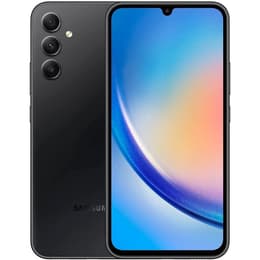
Galaxy A34
Galaxy A34
Starting at

Refurbished price:135.00

Versus €399.00 new

See options
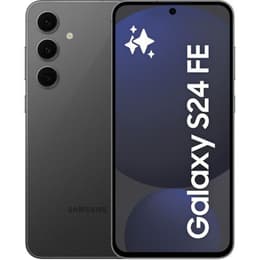
Galaxy S24 FE
Galaxy S24 FE
Starting at

Refurbished price:329.00

Versus €991.15 new

See options

Ratings

The Samsung Galaxy A34, released in March 2023, and the Samsung Galaxy S24 FE, launched in September 2024, are both Android smartphones from Samsung's diverse lineup. While the Galaxy A34 is positioned within the mid-range A series, the Galaxy S24 FE belongs to the Fan Edition of the flagship S series, offering a blend of premium features. The primary distinctions between these two devices lie in their build quality, processing power, and long-term software support, catering to different user expectations and needs.

Scores

Durability

When considering the long-term usability of a smartphone, software support and physical resilience are key factors. The Galaxy A34 and Galaxy S24 FE offer different commitments in this regard.

  • Software Longevity: The Galaxy A34, launched with Android 13, is guaranteed to receive four generations of Android OS updates and five years of security updates, extending its support until 2027. In contrast, the newer Galaxy S24 FE, which debuted with Android 14, benefits from an extended policy of seven years of OS and security updates, ensuring support until 2031. This longer support period means the S24 FE will remain current with the latest features and security patches for a significantly longer duration.
  • Physical Durability: The Galaxy A34 features a glass front protected by Gorilla Glass 5, with a plastic back and frame. It carries an IP67 rating for dust and water resistance, meaning it can withstand immersion in up to 1 meter of water for 30 minutes. The Galaxy S24 FE presents a more robust build, incorporating an aluminum frame and Gorilla Glass Victus+ on both the front and back for enhanced scratch and drop protection. It also boasts an IP68 rating, allowing for immersion in up to 1.5 meters of water for 30 minutes.
  • Repairability: While specific repairability scores can vary by region and independent assessments, the use of more premium materials like Gorilla Glass Victus+ on the S24 FE might suggest a slightly more complex repair process compared to the A34's plastic components, though both are designed for a practical lifespan with proper care.

Year of Release

2023

2024

OS

Android

Android

Foldable

No

No

Performance

The performance of a smartphone is crucial for daily tasks, from browsing to demanding applications. The Galaxy A34 and Galaxy S24 FE are equipped with different internal components that influence their responsiveness and capability.

  • Processing Power: The Galaxy A34 is powered by an octa-core processor that handles everyday applications and multitasking efficiently. Users can expect smooth navigation and reliable performance for general use. The Galaxy S24 FE, on the other hand, features a more advanced octa-core processor, an underclocked variant of the Exynos 2400. This allows for more demanding applications, complex gaming, and faster processing of AI-driven tasks, providing a more fluid and powerful user experience.
  • Memory and Storage: Both devices offer configurations with 6GB or 8GB of RAM, with the S24 FE typically starting at 8GB. The Galaxy A34 provides 128GB or 256GB of internal storage and supports expandable storage via a microSD card up to 1TB. The Galaxy S24 FE also comes with 128GB or 256GB storage options, but it does not offer expandable storage. Users who require extensive storage for media and apps without relying on cloud services might find the A34's expandable storage beneficial.
  • Battery Behavior: The Galaxy A34 is equipped with a 5000 mAh battery, which generally provides ample power for a full day of moderate to heavy use. The Galaxy S24 FE has a 4700 mAh battery. Despite the slightly smaller capacity, the S24 FE's more efficient processor and software optimizations contribute to competitive battery endurance, often lasting a full day for many users.

Memory (GB)

6 GB

8 GB

Screen quality

The display is a primary interface for smartphone interaction, and both the Galaxy A34 and Galaxy S24 FE offer vibrant viewing experiences with distinct characteristics.

  • Display Technology and Size: The Galaxy A34 features a 6.6-inch Super AMOLED display, providing deep blacks and vivid colors. The Galaxy S24 FE steps up with a slightly larger 6.7-inch Dynamic AMOLED 2X display, which offers enhanced color accuracy and dynamic range. Both displays offer a 120Hz refresh rate, contributing to smoother scrolling and more fluid animations.
  • Resolution and Brightness: Both phones feature a Full HD+ resolution (1080 x 2340 pixels), ensuring sharp and clear visuals for everyday content consumption. However, the Galaxy S24 FE offers a significantly higher peak brightness of 1900 nits, compared to the Galaxy A34's 1000 nits. This higher brightness on the S24 FE improves outdoor visibility and enhances HDR content viewing.
  • Viewing Experience: The slightly larger screen of the S24 FE, combined with its superior brightness and Dynamic AMOLED 2X technology, provides a more immersive and visually striking experience, particularly for media consumption and gaming. The A34's display remains excellent for its category, offering a satisfying viewing experience for most users.

Resolution

1080 x 2340

1080 x 2340

Screen type

Super AMOLED

Dynamic AMOLED 2X

Audiovisual

For many users, the camera system is a critical component of a smartphone. The Galaxy A34 and Galaxy S24 FE both offer versatile camera setups, but with differences in their capabilities and features.

  • Rear Camera System: The Galaxy A34 features a triple rear camera setup, including a 48 MP main sensor with optical image stabilization (OIS), an 8 MP ultrawide lens, and a 5 MP macro lens. It is capable of recording video at 4K resolution at 30 frames per second. The Galaxy S24 FE also has a triple camera system, but with higher specifications: a 50 MP main sensor with OIS, a 12 MP ultrawide lens, and an 8 MP telephoto lens with 3x optical zoom and OIS. The inclusion of a dedicated telephoto lens on the S24 FE allows for clearer zoomed-in shots without significant loss of detail.
  • Photography Performance: The S24 FE's larger main sensor and the addition of a telephoto lens generally result in more detailed photos, especially in challenging lighting conditions, and offer greater versatility for different types of shots. Its ProVisual Engine, powered by AI, further enhances photo and video quality, particularly in low light. Both phones deliver good results in well-lit environments, but the S24 FE provides a more advanced and flexible photography experience.
  • Front Camera and Video: For selfies and video calls, the Galaxy A34 has a 13 MP front camera. The Galaxy S24 FE features a 10 MP front camera. Both devices support 4K video recording with their front cameras. The S24 FE can record rear video at up to 8K resolution at 30 frames per second, offering higher detail for video content creation.

Miscellaneous

Beyond core performance and display, several practical features contribute to the overall user experience of a smartphone. The Galaxy A34 and Galaxy S24 FE differ in some of these aspects.

  • Connectivity and Ports: Both devices support 5G connectivity for fast mobile data. The Galaxy A34 supports Wi-Fi 5 (802.11ac) and Bluetooth 5.3. The Galaxy S24 FE is equipped with Wi-Fi 6 (802.11ax) for faster and more stable wireless connections, and likely a newer Bluetooth standard. Both phones feature a USB-C port for charging and data transfer, but neither includes a 3.5mm headphone jack.
  • Biometric Security and AI: The Galaxy A34 uses an under-display optical fingerprint sensor for secure unlocking. The Galaxy S24 FE also features an in-display fingerprint sensor. A significant differentiator for the S24 FE is the inclusion of Galaxy AI features, such as Circle to Search, Live Translate, and Browser Assist, which enhance productivity and interaction.
  • Design and Handling: The Galaxy A34 weighs 199g and has dimensions of 161.3 x 78.1 x 8.2 mm. The Galaxy S24 FE is slightly heavier at 213g and measures 162 x 77.3 x 8mm. The S24 FE's aluminum frame and Gorilla Glass Victus+ contribute to a more premium in-hand feel compared to the A34's plastic construction.

Weight

199 g

213 g

Screen size (in)

6.6

6.7

Network

5G

5G

SIM card

Dual Physical SIM

Dual Physical SIM

Carrier compatibility

Unlocked

Unlocked

Connector

USB-C

USB-C

The Samsung Galaxy A34 and Galaxy S24 FE cater to users with varying priorities, reflecting their different positions within Samsung's smartphone portfolio. User feedback for the Galaxy A34 often highlights its reliable battery life, vibrant Super AMOLED display, and consistent performance for everyday tasks as strong positives. Some users appreciate its expandable storage, a feature becoming less common in newer devices. Criticisms sometimes point to its plastic build feeling less premium compared to higher-end phones.

For the Galaxy S24 FE, common praise centers on its powerful processor, the enhanced durability of its build materials, and the significant commitment to long-term software updates. The improved camera system, especially the telephoto lens and AI features, also receives positive attention. Some users might note its slightly larger size and weight compared to some other devices in its class.

Users prioritizing extended software support, a more robust build, and advanced camera capabilities, including optical zoom and AI enhancements, will find the Galaxy S24 FE well-suited to their needs. Its more powerful processor also benefits those who engage in mobile gaming or demanding applications. Conversely, users who value expandable storage, a slightly lighter device, and a capable smartphone for general use at a more accessible entry point may prefer the Galaxy A34. Both devices offer a quality experience, and choosing between them depends on which features align best with individual usage patterns. For those seeking a sustainable choice, both models are available as quality-assured refurbished options, extending their lifecycle and reducing electronic waste.


See all articles

Our recent comparisons