

Compare models
Galaxy S25 Ultra Vs Galaxy S26 Ultra
- 1-year minimum warranty
- Free delivery on all orders
- Free 30-day returns
Differences at a glance
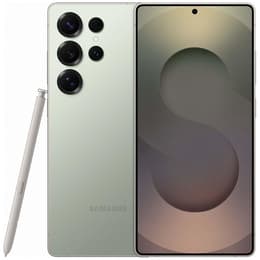
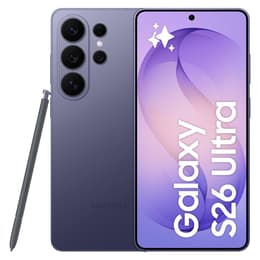
The Samsung Galaxy S25 Ultra (2025) and the Samsung Galaxy S26 Ultra (2026) represent consecutive generations of large-format flagship smartphones. While both devices share a similarly sized display and a built-in stylus, the newer model introduces an updated processor architecture, faster charging speeds, and refined software capabilities that distinguish it from its predecessor. Operating on the Android platform with Samsung's custom interface, both handsets deliver extensive software support, though their release schedules place them one year apart.
Available Models
Colour
Storage (GB)
Scores
Durability
When examining hardware longevity and software support, both devices are built for extended multi-year use, though their launch timelines create a distinct window of active manufacturer updates.
- Software support lifecycle: The newer model benefits from an extended period of major operating system upgrades and security patches due to its later release date, while the predecessor offers a slightly shorter remaining update window.
- Repairability and build: Both units utilize sturdy titanium frames and reinforced glass panels, sharing similar structural resilience and standard repair scores across authorized service channels.
- Expected lifespan: Both smartphones maintain high structural integrity and robust internal components capable of functioning reliably over many years of daily operation.
Year of Release
2025
2026
Compatible with latest Update
Yes
Yes
OS
Android
Android
Foldable
No
No
Performance
Under everyday conditions, both handsets handle intensive workloads, demanding applications, and high-end mobile gaming with minimal friction thanks to their high-tier internal hardware configurations.
- System responsiveness: The newer model incorporates an upgraded generation of processing silicon, resulting in marginally faster app launching times and smoother sustained performance during heavy multitasking.
- Battery behavior: Both devices feature a standard 5000 mAh battery capacity designed to last through a typical day of mixed usage, though the newer variant supports faster wired charging speeds.
- Memory configurations: Both options provide ample Random Access Memory starting at generous baselines, ensuring seamless switching between multiple background tasks and resource-heavy programs.
Screen quality
Both smartphones feature large, high-resolution organic light-emitting diode displays that deliver sharp text reproduction, deep black levels, and wide viewing angles suitable for all forms of media consumption.
- Display brightness: Both models achieve high peak luminance levels, ensuring content remains clearly legible even under direct sunlight or bright outdoor environments.
- Refresh rate smoothness: Both devices support adaptive refresh rates up to high frequencies, ensuring fluid scrolling through web pages and responsive motion during gaming sessions.
- Viewing area: Each phone utilizes a expansive screen real estate spanning nearly seven inches, framed by narrow bezels that maximize the usable surface area.
Resolution
1440x3120
1440 x 3120
Audiovisual
Equipped with versatile multi-lens configurations, both handsets excel at capturing detailed photographs across various lighting conditions and recording stable high-resolution video.
- Low-light photography: The newer device features refined image processing algorithms that slightly improve noise reduction and clarity in challenging dark environments compared to its predecessor.
- Video stabilization: Both models offer advanced stabilization features and clear audio recording capabilities via built-in multi-microphone arrays for calls and video capture.
- Media audio output: Stereo speaker setups on both units deliver loud, balanced sound reproduction suitable for casual video playback and hands-free communication.
Front camera
12
12.0
Miscellaneous
Practical everyday features, physical dimensions, and connectivity standards remain largely consistent while offering subtle refinements in ergonomics and daily usability.
- Connectivity standards: Both smartphones support modern fifth-generation cellular networks, rapid wireless protocols, and precise satellite positioning systems.
- Biometric security: Fast and reliable ultrasonic fingerprint sensors embedded beneath the screen are paired with secure facial recognition options on both models.
- Physical handling: Both devices share a prominent footprint and integrated stylus housing, though minor shifts in corner curvature and edge thickness alter how each phone rests in the hand.
Weight
218 g
214 g
Screen size (in)
6.9
6.9
Network
5G
5G
SIM card
Dual Physical SIM
Physical SIM + eSIM
Carrier compatibility
Unlocked
Unlocked
Connector
USB-C
USB-C
What the community thinks
User feedback from community discussions highlights strong appreciation for the expansive display clarity, versatile camera systems, and integrated stylus functionality present on both models. Common points of discussion often revolve around the large physical footprint of these devices, which can feel demanding during one-handed operation. Users prioritizing the absolute latest processing efficiencies and slightly quicker charging speeds will find the newer model well-suited to their workflow. Conversely, users seeking a robust flagship experience with nearly identical core capabilities often look toward quality-assured refurbished options of the preceding generation as a sustainable, eco-friendly alternative.