

Compare models
Galaxy S24 Vs Galaxy S26 Ultra
- 1-year minimum warranty
- Free delivery on all orders
- Free 30-day returns
Differences at a glance
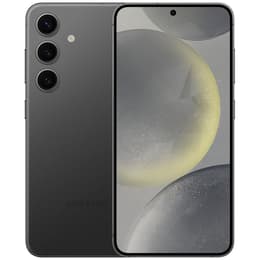
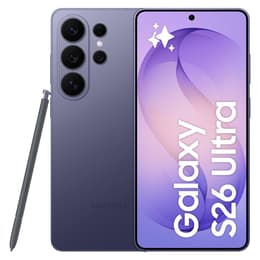
The Samsung Galaxy S24 (2024) and the Samsung Galaxy S26 Ultra (2026) represent different generations and formats within Samsung's flagship smartphone family. While the Galaxy S24 offers a compact, everyday design, the Galaxy S26 Ultra introduces a larger workspace, advanced camera versatility, and specialized productivity tools. Both devices operate on Android platforms with comprehensive software support, though they target distinct user preferences through size and hardware capability.
Available Models
Colour
Storage (GB)
Scores
Durability
Both devices are built for long-term ownership, differing primarily in their release timelines and resulting software support horizons.
- Software support duration: The Galaxy S26 Ultra launches with a newer Android version, extending its major update window further into the future compared to the Galaxy S24.
- Expected practical lifespan: Both models utilize durable glass and metal frames designed to handle daily wear, backed by multi-year manufacturer patch commitments.
- Repairability: Standardized internal layouts mean both devices benefit from established service networks when component replacements become necessary over time.
Year of Release
2024
2026
Compatible with latest Update
Yes
Yes
OS
Android
Android
Foldable
No
No
Performance
Underneath the exterior, these smartphones handle demanding daily software requirements through different tiers of internal hardware.
- Multitasking and responsiveness: The Galaxy S26 Ultra provides increased baseline memory and advanced processing headroom, keeping demanding applications and heavy multitasking running smoothly.
- Battery behavior: The larger footprint of the Galaxy S26 Ultra accommodates a higher-capacity battery designed to sustain intensive use through a full day, whereas the compact Galaxy S24 requires more frequent recharges during heavy workloads.
- Storage capacity: The Galaxy S26 Ultra starts with higher baseline storage options, accommodating large media libraries and local files without immediate management.
Screen quality
Visual output differs significantly in physical scale and viewing workspace between the two models.
- Display technology and size: The Galaxy S24 features a compact 6.2-inch dynamic screen suitable for one-handed navigation, while the Galaxy S26 Ultra provides a sweeping 6.9-inch workspace ideal for media consumption and document viewing.
- Outdoor visibility: Both panels deliver high peak brightness levels, ensuring sharp text and clear images under direct sunlight.
- Motion smoothness: High refresh rate support across both models ensures fluid scrolling through web pages and responsive touch feedback during navigation.
Resolution
1080 x 2340
1440 x 3120
Audiovisual
Imaging capabilities range from versatile everyday snapshots to specialized multi-lens configurations for distant subjects.
- Camera system versatility: The Galaxy S24 relies on a triple-lens setup that handles standard wide and ultrawide photography reliably, while the Galaxy S26 Ultra incorporates a multi-lens array featuring high-resolution sensors and extended optical zoom capabilities.
- Low-light performance: Advanced image processing on both devices brightens dark scenes effectively, with the larger sensor architecture of the Ultra capturing finer details in dim environments.
- Audio and media: Stereo speakers on both models deliver clear sound output for calls and video playback, supported by multi-microphone arrays that isolate voices clearly during recordings.
Front camera
12 megapixels
12.0
Miscellaneous
Physical dimensions and connectivity standards shape how each phone integrates into daily routines and travel.
- Handling and dimensions: The Galaxy S24 weighs significantly less and features a slim profile that fits easily into smaller pockets, whereas the Galaxy S26 Ultra is heavier and wider to accommodate its larger screen and integrated stylus.
- Connectivity: Both models support current-generation 5G networks, fast Wi-Fi standards, and reliable Bluetooth pairing for wireless accessories.
- Security sensors: Quick biometric authentication is handled via responsive under-display fingerprint sensors and facial recognition capabilities on both devices.
Weight
167 g
214 g
Screen size (in)
6.2
6.9
Network
5G
5G
SIM card
Dual Physical SIM + eSIM
Physical SIM + eSIM
Carrier compatibility
Unlocked
Unlocked
Connector
USB-C
USB-C
What the community thinks
Community feedback highlights distinct user preferences for each smartphone. Users frequently praise the Galaxy S24 for its lightweight, pocket-friendly form factor that makes single-handed use effortless. Conversely, owners of the Galaxy S26 Ultra consistently value its expansive display space, versatile zoom photography, and enduring battery performance during long days away from a charger. Some users note that the Ultra's larger physical dimensions can feel heavy in smaller pockets, while compact phone users point out that the standard S24 requires more frequent battery replenishment under heavy use.
Users prioritizing portability and a compact footprint that is easy to manage with one hand will find the Galaxy S24 well-suited to their daily routines. Meanwhile, users prioritizing maximum screen workspace, advanced multi-lens photography, and extended battery endurance will lean toward the Galaxy S26 Ultra. For those seeking a quality-assured refurbished option, exploring eco-friendly alternatives on Back Market allows buyers to acquire either model while supporting sustainable technology reuse.