

Compare models
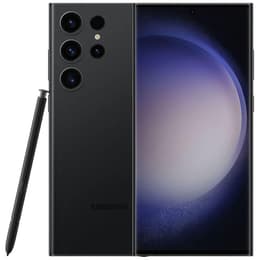
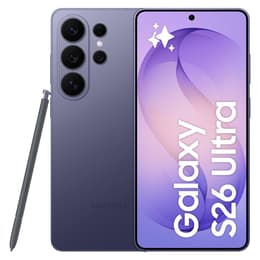
Galaxy S23 Ultra Vs Galaxy S26 Ultra
- 1-year minimum warranty
- Free delivery on all orders
- Free 30-day returns
Differences at a glance
The Samsung Galaxy S23 Ultra (2023) and the Samsung Galaxy S26 Ultra (2026) represent successive iterations of Samsung's premier large-format smartphone line. While both devices cater to power users seeking extensive productivity features and high-end multimedia capabilities, the Galaxy S26 Ultra introduces refined physical ergonomics, generational processing advancements, and updated software support compared to its older counterpart. Both models run the Android operating system paired with Samsung's custom interface, providing a familiar software ecosystem while differing in their long-term support timelines.
Available Models
Colour
Storage (GB)
Scores
Durability
When evaluating hardware longevity and software support, both smartphones offer robust frameworks for extended use, though their timelines differ based on their release years.
- Software Support Duration: The Galaxy S26 Ultra benefits from an extended software update lifecycle, ensuring security patches and operating system upgrades arrive for several more years than the Galaxy S23 Ultra.
- Repairability and Build Integrity: Both models utilize durable glass and metal configurations paired with water resistance ratings, though newer manufacturing methods in the Galaxy S26 Ultra slightly improve drop resistance and structural efficiency.
- Expected Practical Lifespan: Users can anticipate multi-year usability from either device, with the Galaxy S26 Ultra providing extended future-proofing for individuals looking to retain their hardware across a longer horizon.
Year of Release
2023
2026
Compatible with latest Update
Yes
Yes
OS
Android
Android
Foldable
No
No
Performance
Under everyday conditions, both devices handle demanding operations efficiently, though generational silicon upgrades deliver noticeable improvements in intense multi-application scenarios.
- App Loading and Multitasking: The Galaxy S26 Ultra runs heavy applications and switches between background processes with slightly enhanced fluidity, supported by higher baseline memory configurations.
- Battery Behavior: Both devices house large-capacity power cells designed to endure standard daily routines, though power management efficiency in the newer Galaxy S26 Ultra yields more consistent stamina during heavy utilization.
- System Responsiveness: Everyday interactions, web browsing, and high-frame-rate gaming operate smoothly across both models, with the Galaxy S23 Ultra remaining a capable performer despite its age.
Screen quality
Display technology on both Ultra models delivers expansive viewing areas tailored for media consumption, document editing, and outdoor visibility.
- Display Technology and Clarity: Both devices utilize high-resolution OLED panels featuring deep contrast levels and sharp text rendering, accompanied by integrated styluses for precision input.
- Outdoor Brightness: The Galaxy S26 Ultra incorporates enhanced peak luminance capabilities that improve legibility under direct sunlight compared to the legacy panel on the Galaxy S23 Ultra.
- Refresh Rate Smoothness: Adaptive refresh rate technology scales smoothly from low frequencies to high rates on both handsets, ensuring fluid scrolling during daily navigation.
Resolution
1440 x 3088
1440 x 3120
Audiovisual
Photography and video capture configurations on these flagship series prioritize versatility across diverse lighting conditions and focal lengths.
- Lens Array Versatility: Both models feature multi-lens setups including ultra-wide and high-resolution main sensors, alongside telephoto options for distant subjects.
- Low-Light and Video Performance: Processing enhancements on the Galaxy S26 Ultra yield cleaner low-light imagery and reduced digital noise in challenging lighting conditions, while the Galaxy S23 Ultra maintains reliable everyday photo clarity.
- Media and Audio Output: Stereo speaker setups on both devices deliver balanced sound output for hands-free calls and video playback, supplemented by clear multi-microphone arrays.
Front camera
12 megapixels
12.0
Miscellaneous
Practical daily usability is shaped by physical dimensions, weight distribution, and connectivity standards embedded within each chassis.
- Physical Design and Handling: The Galaxy S26 Ultra adopts slightly softer corner contours that improve hand comfort during prolonged holding sessions, whereas the Galaxy S23 Ultra features a squarer silhouette.
- Connectivity and Ports: Both models support modern fifth-generation cellular networks and standard wireless protocols, utilizing reversible USB Type-C ports for charging and wired data transfer.
- Biometric Security: Under-display fingerprint sensors and facial recognition options provide swift unlocking security on both devices.
Weight
234 g
214 g
Screen size (in)
6.8
6.9
Network
5G
5G
SIM card
Dual Physical SIM + eSIM
Physical SIM + eSIM
Carrier compatibility
Unlocked
Unlocked
Connector
USB-C
USB-C
What the community thinks
User feedback from online communities highlights distinct preferences between these two generations. Owners of the Galaxy S23 Ultra frequently praise its enduring performance, comprehensive multi-lens camera system, and reliable daily battery endurance, though some note that its sharp corner edges can cause discomfort during extended one-handed use. Conversely, users transitioning to the Galaxy S26 Ultra point out the noticeable improvements in physical ergonomics due to softer chassis geometry, alongside enhanced outdoor display clarity and extended software longevity. For individuals exploring sustainable purchasing choices, opting for a quality-assured refurbished Galaxy S23 Ultra presents an eco-friendly alternative that retains core flagship utility.
Users prioritizing maximum software lifespan, refined ergonomics for comfortable handling, and peak outdoor screen visibility may lean toward the Galaxy S26 Ultra. Meanwhile, users seeking established flagship performance at a different generational tier will find the Galaxy S23 Ultra well-suited to their requirements. Evaluating individual daily tasks and software update preferences will ultimately guide the most appropriate selection between these two capable devices.