

Galaxy A15 5G Vs iPhone 14

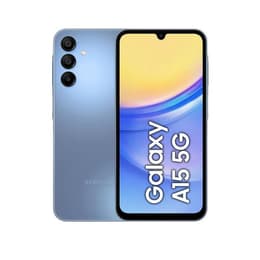
Galaxy A15 5G
Galaxy A15 5G
Starting at

Refurbished price:124.00

Versus €248.54 new

See options
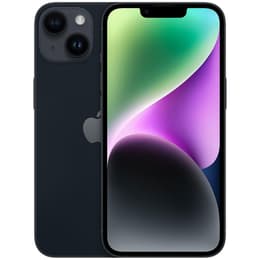
iPhone 14
iPhone 14
Starting at

Refurbished price:287.25

Versus €759.00 new

See options

Ratings

The Samsung Galaxy A15 5G, released in December 2023, and the Apple iPhone 14, launched in September 2022, represent distinct approaches to smartphone design and functionality. While the Galaxy A15 5G operates on Android with Samsung's One UI, the iPhone 14 runs on Apple's iOS platform. These devices cater to different user preferences, with the Galaxy A15 5G offering a larger display and expandable storage, and the iPhone 14 focusing on a streamlined user experience and robust performance.

Scores

Durability

When considering the long-term usability of these devices, their respective release timelines and software support policies are key factors.

  • Software Longevity: The Samsung Galaxy A15 5G launched with Android 14 and is expected to receive up to four major Android operating system upgrades and five years of security patches. The iPhone 14, released with iOS 16, typically receives around five years of major iOS updates and security support.
  • Repairability: The iPhone 14 initially received a favorable repairability assessment due to an internal redesign making components more accessible. However, this score was later downgraded due to software limitations that can restrict functionality when non-authorized parts are used for repairs. Information regarding the specific repairability score for the Galaxy A15 5G is less widely available, but its construction is primarily plastic.
  • Expected Lifespan: Both devices are designed for several years of use, with their software update policies providing a clear indication of their supported lifespan. Users prioritizing the latest software features for the longest duration might find the Galaxy A15 5G's update policy competitive within its ecosystem, while the iPhone 14 offers a consistent update cycle typical of Apple devices.

Year of Release

2023

2022

Compatible with latest Update

Yes

Yes

OS

Android

iOS

Foldable

No

No

Performance

The performance of a smartphone significantly impacts daily usage, from app responsiveness to handling demanding tasks.

  • Everyday Responsiveness: The iPhone 14 is equipped with a powerful processor that ensures smooth operation, quick app loading, and fluid multitasking, even with graphically intensive applications. The Galaxy A15 5G provides competent performance for general mobile tasks and everyday use, though some users have noted occasional delays or lag when handling more demanding applications or extensive multitasking.
  • Battery Behavior: The Galaxy A15 5G features a large battery capacity, often translating to extended usage times and easily lasting a full day on a single charge for many users. The iPhone 14 also offers all-day battery life for typical usage, with some users praising its endurance, while others have observed faster degradation over time or reduced performance under heavy use.
  • Storage and Multitasking: The iPhone 14 comes with 6GB of RAM, contributing to its ability to manage multiple applications efficiently. The Galaxy A15 5G is available with 4GB, 6GB, or 8GB of RAM, with 4GB being a common configuration, which can affect its multitasking capabilities compared to devices with more memory. The Galaxy A15 5G offers expandable storage via a microSD card, a feature not present on the iPhone 14.

Memory (GB)

4 GB

6 GB

Screen quality

The display is a primary interface for smartphone interaction, and both devices offer distinct viewing experiences.

  • Display Technology and Clarity: The Galaxy A15 5G features a 6.5-inch Super AMOLED display, known for its vibrant colors, deep blacks, and high contrast. The iPhone 14 sports a 6.1-inch Super Retina XDR OLED display, which also delivers excellent color accuracy, deep blacks, and sharp detail. Both offer a Full HD+ resolution, providing clear visuals for content consumption.
  • Brightness and Refresh Rate: The Galaxy A15 5G's display can reach up to 800 nits in high brightness mode, making it suitable for outdoor viewing. It also features a 90Hz refresh rate, providing a smoother scrolling experience than standard 60Hz displays. The iPhone 14 offers a typical brightness of 800 nits and can peak at 1200 nits for HDR content, ensuring good visibility in various lighting conditions. However, its display has a standard 60Hz refresh rate.
  • Viewing Experience: Users prioritizing a larger, smoother display for everyday interactions and media consumption might lean towards the Galaxy A15 5G due to its size and 90Hz refresh rate. Those who value consistent color accuracy and high peak brightness for HDR content, within a slightly more compact form factor, may prefer the iPhone 14.

Resolution

1080 x 2340

1170 x 2532

Screen type

Super AMOLED

Super Retina XDR OLED

Audiovisual

Camera capabilities are a significant consideration for many users, and these phones offer different photographic strengths.

  • Rear Camera Systems: The Galaxy A15 5G features a triple-camera setup with a 50MP main sensor, a 5MP ultrawide lens, and a 2MP macro lens. The iPhone 14 has a dual-camera system, comprising a 12MP main camera and a 12MP ultrawide camera.
  • Photography Performance: The Galaxy A15 5G's main camera performs well in bright conditions, producing images with good detail and color balance, though some users note slightly oversaturated colors. Its ultrawide and macro lenses offer versatility but with lower detail. The iPhone 14's camera system is praised for its consistent quality in various lighting conditions, including improved low-light performance thanks to its Photonic Engine. It delivers sharp, clear photos and excellent dynamic range.
  • Video Recording and Features: The iPhone 14 excels in video recording, offering 4K video at various frame rates with effective stabilization and features like Cinematic Mode and Action Mode. The Galaxy A15 5G supports Full HD video recording at 30 frames per second. The iPhone 14 does not offer optical zoom or a dedicated macro mode, unlike some higher-end phones.

Main camera

50 megapixels

12 megapixels

Front camera

13 megapixels

12 megapixels

Miscellaneous

Beyond core features, several practical elements contribute to the overall user experience.

  • Connectivity and Ports: Both devices support 5G connectivity for fast mobile data. The Galaxy A15 5G includes a 3.5mm headphone jack and a USB-C port for charging and data transfer. The iPhone 14 uses a Lightning port for charging and accessories and does not have a headphone jack.
  • Biometrics and Security: The Galaxy A15 5G features a side-mounted fingerprint reader for secure unlocking. The iPhone 14 utilizes Face ID, Apple's facial recognition system, for secure authentication.
  • Design and Handling: The iPhone 14 features a Ceramic Shield front and a glass back with an aluminum frame, offering splash, water, and dust resistance with an IP68 rating. It weighs 172 grams and has dimensions of 146.7 x 71.5 x 7.8 mm. The Galaxy A15 5G has a primarily plastic build with Dragontrail Pro glass protecting the display. It weighs 200 grams and measures 160.1 x 76.8 x 8.4 mm.

Weight

200 g

172 g

Screen size (in)

6.5

6.1

Network

5G

5G

SIM card

Dual Physical SIM

Physical SIM + eSIM

Carrier compatibility

Unlocked

Unlocked

The Samsung Galaxy A15 5G and the iPhone 14 cater to different user priorities, each excelling in specific areas. Users often praise the Galaxy A15 5G for its vibrant AMOLED display with a 90Hz refresh rate, its long battery life, and the inclusion of a headphone jack and expandable storage. Some common criticisms from users include occasional performance lag with demanding apps and the camera's limitations in varied lighting conditions.

The iPhone 14 is frequently lauded for its consistently smooth performance, the quality of its camera system for both photos and videos, and the overall polished user experience of iOS. User feedback sometimes points to the standard 60Hz refresh rate as a drawback compared to many Android devices, and some have reported concerns about battery degradation over time or issues with part-pairing for repairs.

Users prioritizing a larger, smoother display for media and general browsing, along with the flexibility of expandable storage and a headphone jack, may find the Galaxy A15 5G well-suited to their needs. Conversely, those who value a highly responsive operating system, a robust camera for diverse shooting scenarios, and a compact, premium build might lean towards the iPhone 14. Both devices are available as quality-assured refurbished options, providing an eco-friendly alternative for consumers.

See all articles

Our recent comparisons