


Compare models
Galaxy Z Fold7 Vs Google Pixel 9 Pro
- 1-year minimum warranty
- Free delivery on all orders
- Free 30-day returns
Differences at a glance
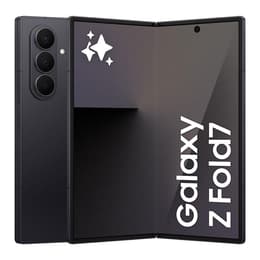
The Samsung Galaxy Z Fold7 (2025) and the Google Pixel 9 Pro (2024) represent two distinct visions for high-end mobile computing, contrasting a book-style foldable design with a traditional candy bar smartphone format. While both devices deliver powerful everyday capabilities, the Galaxy Z Fold7 stands out with its transformable dual-screen workspace, whereas the Pixel 9 Pro focuses on a compact, pocket-friendly candy bar footprint paired with advanced photography features. Both devices operate on Android, providing access to extensive app ecosystems while catering to very different structural and physical user preferences.
Available Models
Colour
Storage
Scores
Durability
When evaluating structural longevity and software support, both the Galaxy Z Fold7 and the Pixel 9 Pro are built to remain relevant for years through comprehensive manufacturer update commitments.
- Software support timelines: Both manufacturers provide long-term software support spanning up to seven years of major operating system upgrades, ensuring extended feature updates and security patches.
- Hardware resilience: The Pixel 9 Pro utilizes a traditional rigid glass and metal candy bar frame with high-level water resistance, whereas the Galaxy Z Fold7 incorporates complex hinge mechanisms and flexible internal display layers that require careful handling over years of daily folding.
- Expected lifespan: Traditional candy bar designs like the Pixel 9 Pro generally face fewer mechanical wear points over time, while the Galaxy Z Fold7 offers high software longevity offset by the physical considerations inherent to foldable screen technology.
Year of Release
2025
2024
Performance
Both smartphones handle demanding daily routines, multitasking sessions, and resource-intensive applications efficiently, though their internal resource management and thermal layouts differ.
- Multitasking and memory: Both models are equipped with generous RAM configurations that allow smooth switching between multiple background tasks, heavy productivity tools, and demanding games without noticeable stutter.
- Battery behavior: The Pixel 9 Pro manages power effectively for a full day of mixed use within a standard frame, while the larger inner display of the Galaxy Z Fold7 draws more energy during extended media consumption or split-screen multitasking sessions.
- Storage capacity: Both options offer versatile internal storage tiers starting at baseline levels suitable for normal app libraries and scaling upward for users with large offline media collections.
Screen quality
Display performance represents a primary divergence between these two models, driven entirely by their differing physical form factors.
- Display technology: The Pixel 9 Pro features a vibrant, high-resolution OLED panel with adaptive refresh rate capabilities that scale smoothly for static reading or fast motion. In contrast, the Galaxy Z Fold7 provides a compact cover screen alongside an expansive 8-inch folding internal display that transforms into a tablet-sized canvas.
- Outdoor visibility: Both devices reach high peak brightness levels, ensuring clear legibility and contrast when used outdoors under direct sunlight.
- Viewing experience: Users watching widescreen videos or reviewing documents benefit from the expansive surface area of the foldable inner screen, while the Pixel 9 Pro offers a conventional, crease-free viewing field optimized for single-handed use.
Audiovisual
Imaging capabilities on both smartphones deliver reliable results across diverse lighting conditions, supported by sophisticated automated processing software.
- Camera systems: The Pixel 9 Pro utilizes a versatile triple-lens rear arrangement featuring high-resolution main, ultra-wide, and telephoto sensors optimized for detailed zoom and balanced color science. The Galaxy Z Fold7 similarly deploys a multi-lens rear setup anchored by a very high-resolution primary sensor that captures sharp details in daylight and low light.
- Video and audio: Both models record stable, high-definition video with clear multi-microphone audio capture suitable for vlogging or virtual meetings.
- Media consumption: Built-in stereo speakers on both devices produce loud, clear sound output for casual video playback and hands-free calls without requiring external accessories.
Miscellaneous
Practical daily usability is shaped by physical dimensions, biometric security features, and modern connectivity standards.
- Build and handling: The Pixel 9 Pro offers a comfortable, ergonomic handfeel with a standard weight and width, whereas the Galaxy Z Fold7 is engineered to be notably thin when unfolded yet feels heavier and thicker when closed in the pocket.
- Security sensors: Both devices support fast biometric authentication, utilizing responsive facial recognition alongside secure fingerprint sensors integrated into the power button or beneath the display.
- Connectivity: Modern 5G capabilities, fast Wi-Fi standards, and Bluetooth support are standard across both models, ensuring rapid data transfers and stable accessory pairing.
Screen size (in)
8.0
6.8
Network
5G
5G
SIM card
Dual Physical SIM + eSIM
Physical SIM + eSIM
Carrier compatibility
Unlocked
Unlocked
Connector
USB-C (USB 3)
USB-C
What the community thinks
Choosing between the Galaxy Z Fold7 and the Pixel 9 Pro depends heavily on individual workflow preferences and physical form factor priorities. Users prioritizing multitasking flexibility, tablet-sized screens, and advanced productivity layouts may prefer the Galaxy Z Fold7, while users prioritizing a traditional pocket-friendly footprint, ergonomic single-handed use, and streamlined photography tools will lean toward the Pixel 9 Pro. For those seeking a quality-assured refurbished option that aligns with sustainable purchasing habits, looking into a professionally restored device provides an eco-friendly alternative to buying brand new. Ultimately, both devices offer robust feature sets tailored to distinct styles of daily mobile usage.