
iPhone 16 Vs Xiaomi Redmi 14C

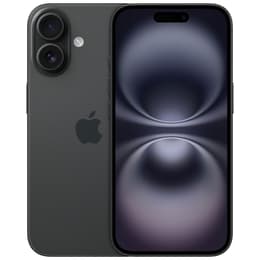
iPhone 16
iPhone 16
Starting at

Refurbished price:548.00

Versus €879.00 new

See options
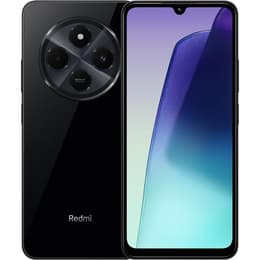
Xiaomi Redmi 14C
Xiaomi Redmi 14C
Starting at

Refurbished price:128.20

Versus €189.00 new

See options

Ratings

The iPhone 16, released in September 2024, represents Apple's continued evolution in its flagship smartphone line, operating on the iOS ecosystem. In contrast, the Xiaomi Redmi 14C, launched in late 2024 and early 2025 across its 4G and 5G variants, offers an Android experience powered by Xiaomi's HyperOS. These devices cater to different user expectations, with the iPhone 16 focusing on advanced features and a premium experience, while the Redmi 14C aims to provide essential smartphone functionalities with a focus on value.

The primary differentiators between these two smartphones lie in their operating systems, overall performance capabilities, and display technologies, each designed to appeal to distinct user preferences.

Scores

Durability

When considering the practical lifespan of these devices, several factors come into play, including software support, physical durability, and the longevity of internal components.

  • Release Timeline: The iPhone 16 was released in September 2024, while the Xiaomi Redmi 14C saw its 4G variant launch in August 2024 and a 5G variant in January 2025. This means both devices are relatively current, offering modern features and software.
  • Software Longevity: Apple typically provides extensive iOS support, often exceeding five years for its devices, suggesting the iPhone 16 will receive updates well into the future. The Redmi 14C, running Android 14 with HyperOS, is promised two major Android updates and four years of security patches, which is a generous offering for its category.
  • Durability Features: The iPhone 16 features Ceramic Shield protection on its display, designed to enhance drop resistance. While the Redmi 14C does not specify a similar advanced screen protection, it often utilizes a plastic frame and glass-like back, which can offer a degree of resilience to everyday bumps. The Redmi 14C 5G variant also carries an IP52 rating for dust and splash resistance.

Year of Release

2024

2024

Compatible with latest Update

Yes

Yes

Foldable

No

No

Performance

The performance of a smartphone is crucial for daily operations, influencing everything from app responsiveness to multitasking efficiency and gaming experiences.

  • Processing Power: The iPhone 16 is equipped with Apple's A18 Bionic chip, which provides substantial processing power for demanding applications, complex multitasking, and advanced gaming. This processor also includes an enhanced neural engine, supporting advanced artificial intelligence and machine learning tasks. The Xiaomi Redmi 14C, depending on the variant, is powered by either the MediaTek Helio G81 Ultra or the Qualcomm Snapdragon 4 Gen 2 (for the 5G model). These chipsets are designed for efficient performance in everyday tasks like social media browsing, messaging, and light gaming, though they may experience minor stutters with heavy multitasking or graphically intensive applications.
  • Memory and Storage: All iPhone 16 models come with 8GB of RAM, facilitating smooth multitasking and efficient handling of multiple applications simultaneously. Storage options for the iPhone 16 range from 128GB to 512GB. The Redmi 14C offers more varied configurations, with RAM options of 4GB, 6GB, or 8GB, and internal storage of 128GB or 256GB. It also supports expandable storage via a microSD card, providing flexibility for users who require additional space for media and files.
  • Battery Behavior: The iPhone 16 features a 3,561mAh battery, optimized for efficient power consumption within the iOS ecosystem, typically providing a full day of use for most users. It supports faster wired charging at up to 40W and 20W MagSafe wireless charging. The Redmi 14C houses a larger 5160mAh battery, which, despite its size, has been noted in some real-world tests to offer around 39 hours of moderate use, which is considered average for its category. It supports 18W fast charging, though a charger may not always be included.

Memory (GB)

8 GB

4 GB

Screen quality

The display is a primary interface for smartphone interaction, and differences in technology, resolution, and brightness significantly impact the user experience.

  • Display Technology and Clarity: The iPhone 16 features a 6.1-inch Super Retina XDR OLED display, offering deep blacks, high contrast, and vibrant colors. Its resolution of 2556 by 1179 pixels results in a sharp 460 pixels per inch (ppi). The Xiaomi Redmi 14C comes with a larger 6.88-inch IPS LCD panel. While it provides a spacious viewing area, its HD+ resolution (720x1640 pixels) and 260 ppi offer less sharpness compared to the iPhone, which is typical for its segment.
  • Brightness and Refresh Rate: The iPhone 16's display can reach a typical maximum brightness of 1000 nits, with peak HDR brightness at 1600 nits and up to 2000 nits peak brightness outdoors, ensuring good visibility in various lighting conditions. It maintains a standard 60Hz refresh rate for the base model. The Redmi 14C offers a 120Hz refresh rate, providing smoother scrolling and a more fluid visual experience, which is a notable feature for its category. Its brightness levels are rated at 450 nits typical and 600 nits peak, which is sufficient for indoor use but may be less visible under direct sunlight.
  • Viewing Experience: The iPhone 16's OLED panel delivers superior color accuracy and contrast, making it well-suited for media consumption and detailed visual tasks. The Redmi 14C's larger IPS LCD screen, combined with its high refresh rate, offers an immersive experience for casual browsing and video streaming, despite its lower resolution.

Resolution

1179 x 2556

720 x 1640

Screen type

Super Retina XDR OLED

IPS LCD

Audiovisual

Camera capabilities are a significant consideration for many users, encompassing everything from everyday snapshots to more advanced photography and video recording.

  • Rear Camera System: The iPhone 16 features an advanced dual-camera system, including a 48MP Fusion Main camera with a wide f/1.6 aperture and sensor-shift optical image stabilization, capable of capturing detailed 24MP and 48MP photos. It also offers a 12MP Ultra Wide camera with a 120° field of view and macro capabilities. The system supports advanced computational photography features like Photonic Engine, Deep Fusion, and Smart HDR 5. The Xiaomi Redmi 14C is equipped with a 50MP dual-rear camera setup, typically comprising a main sensor with an f/1.8 aperture and an auxiliary lens for depth sensing. It performs well in daylight, producing photos with decent contrast and sharpness, though it may struggle in low-light conditions due to the absence of optical image stabilization.
  • Front Camera and Video Recording: The iPhone 16 includes a 12MP front camera with autofocus, Retina Flash, and advanced image processing, supporting 4K Dolby Vision video recording. For video, the iPhone 16 can record 4K Dolby Vision at up to 60 frames per second, with Cinematic mode up to 4K 30fps and Action mode for stabilized footage. It also supports spatial video recording. The Redmi 14C features either an 8MP or 13MP front camera, which is suitable for selfies and video calls, often including beautification features. Both front and rear cameras on the Redmi 14C are capable of recording video at 1080p at 30 frames per second.
  • Special Features: The iPhone 16 introduces a new Camera Control button, allowing for intuitive control over focus, exposure, and zoom. It also supports spatial photos and videos, enhancing compatibility with Apple's spatial computing ecosystem. The Redmi 14C focuses on providing reliable camera performance for everyday use within its category.

Main camera

48 megapixels

50 megapixels

Front camera

12 megapixels

13 megapixels

Miscellaneous

Beyond core performance and display, various practical elements contribute to the overall user experience, from connectivity to physical design.

  • Connectivity and Ports: The iPhone 16 supports Wi-Fi 6E, offering faster and more reliable wireless connections, and features a USB-C port for charging and data transfer. The Xiaomi Redmi 14C supports Wi-Fi 5 and Bluetooth 5.4. It also includes a USB Type-C port and, notably, retains a 3.5mm headphone jack, which is a practical feature for many users. Depending on the region, it may also include NFC for contactless payments.
  • Biometric Security: The iPhone 16 relies on Face ID for secure facial recognition. The Redmi 14C offers both a side-mounted fingerprint sensor and AI face unlock for convenient and secure access.
  • Design and Handling: The iPhone 16 maintains a premium build with its Ceramic Shield front cover. Its dimensions are designed for comfortable one-handed use. The Redmi 14C features a larger 6.88-inch display, which contributes to its overall dimensions of approximately 171.88 x 77.8 x 8.22 mm and a weight ranging from 204 to 211 grams. Its design often includes a plastic frame and a glass-like back, providing a secure grip.
  • Additional Features: The iPhone 16 incorporates an Action Button, previously exclusive to Pro models, and a new Capture Button for enhanced photo and video control. The Redmi 14C offers dual SIM support and expandable storage, catering to users who need flexibility with carriers or extensive media storage.

Weight

170 g

207 g

Screen size (in)

6.1

6.88

Network

5G

4G

SIM card

eSIM

Dual Physical SIM

Carrier compatibility

Unlocked

Unlocked

Connector

USB-C (USB 2)

USB-C

The iPhone 16 and Xiaomi Redmi 14C cater to distinct segments of the smartphone market, each excelling in different areas based on user priorities. User sentiment for the iPhone 16 often praises its seamless integration within the Apple ecosystem, powerful processing capabilities, and advanced camera features, particularly for those who value high-quality photography and video. Criticisms, when they arise, sometimes relate to the incremental nature of upgrades compared to previous generations or the absence of certain features found in its Pro counterparts, such as a higher refresh rate display on the base model.

For the Xiaomi Redmi 14C, users frequently commend its large, smooth 120Hz display, which offers an enjoyable viewing experience for its category. Its long-lasting battery life is also a common positive, providing dependable usage throughout the day. However, some users note that while its camera performs well in good lighting, it may not match the performance of higher-end devices in challenging conditions, and the processor, while capable for daily tasks, might not satisfy demanding gamers or heavy multitaskers. The presence of some pre-installed software (bloatware) has also been mentioned.

Users prioritizing a premium operating system, robust performance for demanding applications, and advanced camera capabilities will find the iPhone 16 well-suited to their needs. Its strong software support and integrated ecosystem offer a consistent and refined experience. Conversely, users who prioritize a large, fluid display, extended battery life, and expandable storage for media, while operating within the Android ecosystem, may lean toward the Xiaomi Redmi 14C. It serves as a practical choice for everyday communication, social media, and casual entertainment.

Both devices offer compelling features within their respective categories. For those considering a more sustainable choice, exploring quality-assured refurbished options for either model can provide an eco-friendly alternative.


See all articles

Our recent comparisons