
iPhone 16 Vs Xiaomi 12T

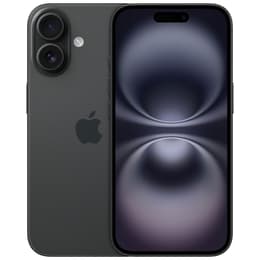
iPhone 16
iPhone 16
Starting at

Refurbished price:549.00

Versus €879.00 new

See options
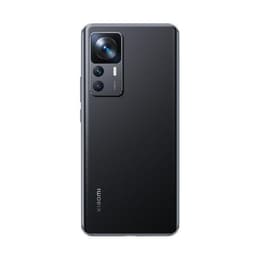
Xiaomi 12T
Xiaomi 12T
Starting at

Refurbished price:131.00

Versus €649.00 new

See options

Ratings

The iPhone 16, released in September 2024, and the Xiaomi 12T, launched in October 2022, represent different generations and operating system ecosystems within the smartphone market. While both devices offer robust performance for daily tasks, the iPhone 16 benefits from more recent technological advancements and a longer software support timeline, whereas the Xiaomi 12T provides a high refresh rate display and exceptionally fast charging.

Scores

Durability

The practical lifespan of a smartphone is heavily influenced by its release timeline, software support, and physical durability. The iPhone 16, being a more recent release, offers a longer expected period of software updates and overall longevity compared to the Xiaomi 12T.

  • Software Longevity: The iPhone 16 launched with iOS 18 and is expected to receive major iOS updates for approximately 6-7 years, extending its functional life well into the future. In contrast, the Xiaomi 12T, which debuted with Android 12, is slated to receive major Android OS updates up to Android 15 and security updates until October 2026, indicating a shorter remaining support window.
  • Physical Durability: The iPhone 16 features a Ceramic Shield front cover, designed for enhanced drop performance, and an aluminum frame, along with an IP68 rating for water and dust resistance, allowing submersion up to 6 meters for 30 minutes. The Xiaomi 12T utilizes Corning Gorilla Glass 5 for screen protection and has a plastic frame, but lacks an official IP rating for water and dust ingress.
  • Expected Practical Lifespan: Users prioritizing the longest possible software support and robust physical protection will find the iPhone 16 better suited for extended use. The Xiaomi 12T, while durable for its class, will reach its end-of-software-support sooner, potentially impacting its long-term usability for those who value the latest features and security patches.

Year of Release

2024

2022

Compatible with latest Update

Yes

Yes

Foldable

No

No

Performance

Performance in smartphones is determined by the processor, RAM, and overall system optimization, impacting how smoothly applications run and how efficiently the device handles multitasking. The iPhone 16, with its newer internal components, offers a significant performance advantage over the Xiaomi 12T.

  • Processing Power: The iPhone 16 is equipped with Apple's A18 chip, featuring a 6-core CPU, a 5-core GPU, and a 16-core Neural Engine, optimized for demanding applications and advanced on-device artificial intelligence tasks. The Xiaomi 12T is powered by the MediaTek Dimensity 8100-Ultra processor, which provides capable performance for everyday use and gaming, but is an older generation chip.
  • Multitasking and Responsiveness: Both devices come with 8GB of RAM, which is sufficient for managing multiple applications simultaneously. However, the iPhone 16's more advanced processor and tighter integration between hardware and software generally result in smoother transitions, faster app loading times, and more efficient handling of intensive workloads, including complex games and video editing.
  • Storage Options: The iPhone 16 is available with 128GB, 256GB, or 512GB of internal storage. The Xiaomi 12T offers 128GB or 256GB storage configurations.

Memory (GB)

8 GB

8 GB

Screen quality

The display is a primary interface for smartphone interaction, and differences in technology, resolution, and refresh rate can significantly affect the visual experience. Both devices offer high-quality displays, but with distinct characteristics.

  • Display Technology and Resolution: The iPhone 16 features a 6.1-inch Super Retina XDR OLED display with a resolution of 2556 by 1179 pixels, resulting in a pixel density of 460 pixels per inch. The Xiaomi 12T comes with a larger 6.67-inch AMOLED display, offering a resolution of 1220 by 2712 pixels and a pixel density of 446 pixels per inch. Both technologies provide vibrant colors and deep blacks.
  • Brightness and Outdoor Visibility: The iPhone 16 boasts a typical maximum brightness of 1000 nits, with peak HDR brightness reaching 1600 nits and peak outdoor brightness up to 2000 nits, ensuring excellent visibility even in bright sunlight. The Xiaomi 12T has a typical brightness of 500 nits and a peak brightness of 900 nits, which is adequate for most conditions but may struggle more in direct outdoor light.
  • Refresh Rate and Smoothness: A notable difference is the refresh rate; the iPhone 16 maintains a standard 60Hz refresh rate. The Xiaomi 12T, however, offers a smoother visual experience with a 120Hz adaptive refresh rate, which can make scrolling and animations appear more fluid.

Resolution

1179 x 2556

1220 x 2712

Screen type

Super Retina XDR OLED

AMOLED

Audiovisual

Camera systems are a key differentiator for many users, with capabilities extending beyond megapixel counts to include computational photography, sensor technology, and video features. The iPhone 16 offers a more refined and versatile camera experience, particularly in computational photography and video, while the Xiaomi 12T provides a high-resolution main sensor.

  • Rear Camera Systems: The iPhone 16 features an advanced dual-camera system with a 48-megapixel main sensor (f/1.6 aperture) and a 12-megapixel ultrawide sensor (f/2.2 aperture). It supports 2x optical zoom and up to 10x digital zoom. The Xiaomi 12T is equipped with a triple camera setup, including a 108-megapixel main sensor (f/1.7 aperture) with optical image stabilization, an 8-megapixel ultrawide sensor (f/2.2 aperture), and a 2-megapixel macro sensor.
  • Photography Performance: The iPhone 16 excels in computational photography, offering features like Photonic Engine, Deep Fusion, and Smart HDR 5, which contribute to detailed and well-exposed images across various lighting conditions. It also introduces macro photography to the standard models. The Xiaomi 12T's 108-megapixel main sensor can capture highly detailed photos, and it performs well in good lighting, though its ultrawide and macro lenses are less capable.
  • Video Recording and Features: The iPhone 16 supports 4K video recording and introduces a new vertical camera layout that enables spatial video capture. It also includes a new Camera Control button for quick access to camera settings. The Xiaomi 12T can record video at up to 4K at 30 frames per second with its main camera and 1080p at 60 frames per second with its front camera.

Main camera

48 megapixels

108 megapixels

Front camera

12 megapixels

20 megapixels

Miscellaneous

Beyond core performance and display, several practical elements contribute to the overall user experience, including connectivity, physical design, and additional features. These aspects can influence daily convenience and device handling.

  • Connectivity and Ports: The iPhone 16 supports Wi-Fi 7, offering faster and more efficient wireless connections, alongside 5G cellular capabilities and Bluetooth 5.3. It features a USB-C port, though with USB 2.0 speeds. The Xiaomi 12T supports Wi-Fi 6, 5G, and Bluetooth 5.3, and also includes a USB-C port.
  • Biometric Security and Additional Features: The iPhone 16 relies on Face ID for secure facial recognition and includes a customizable Action button and a dedicated Camera Control button. The Xiaomi 12T features an in-display fingerprint sensor for biometric authentication.
  • Design and Handling: The iPhone 16 measures 147.6 mm in height, 71.6 mm in width, and 7.8 mm in thickness, weighing 170 grams, with an aluminum frame and a color-infused glass back. The Xiaomi 12T is larger and slightly heavier at 163.1 mm in height, 75.9 mm in width, 8.6 mm in thickness, and 202 grams, featuring a plastic frame.

Weight

170 g

220 g

Screen size (in)

6.1

6.67

Network

5G

5G

SIM card

eSIM

Dual Physical SIM

Carrier compatibility

Unlocked

Unlocked

Connector

USB-C (USB 2)

USB-C

The iPhone 16 and Xiaomi 12T cater to different user priorities, largely due to their generational gap and distinct operating systems. The iPhone 16, a more recent release, is praised for its cutting-edge processor, advanced camera capabilities, and extended software support, making it a strong choice for users who prioritize long-term performance, the latest features, and a premium ecosystem. Its robust build quality and superior outdoor display brightness also contribute to a refined user experience.

Conversely, the Xiaomi 12T, while an older model, is frequently noted for its impressive 120Hz AMOLED display, which offers a smoother visual experience, and its exceptionally fast 120W wired charging, allowing for rapid power-ups. Users often appreciate its large battery capacity for extended usage. Some common criticisms for the Xiaomi 12T include its less capable secondary cameras and a shorter software update lifespan compared to newer devices.

Users prioritizing the absolute latest in processing power, advanced computational photography, and the longest possible software longevity will find the iPhone 16 well-suited to their needs. Those who value a high refresh rate display, ultra-fast charging, and a capable main camera in an Android ecosystem may lean toward the Xiaomi 12T. Both devices are available as quality-assured refurbished options, providing an eco-friendly alternative for consumers.


See all articles

Our recent comparisons