
Huawei P30 Pro Vs iPhone 14 Pro

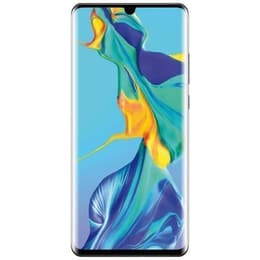
Huawei P30 Pro
Huawei P30 Pro
Starting at

Refurbished price:186.00

Versus €849.00 new

See options
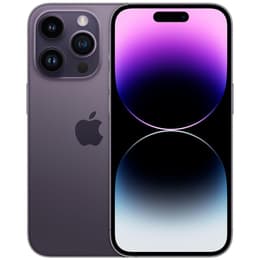
iPhone 14 Pro
iPhone 14 Pro
Starting at

Refurbished price:424.00

Versus €1,339.00 new

See options

Ratings

The Huawei P30 Pro, released in March 2019, and the iPhone 14 Pro, launched in September 2022, represent different eras in smartphone technology. While both were flagship devices at their respective introductions, a significant three-year gap separates their development. This difference is evident in their core operating systems, with the P30 Pro running Android and the iPhone 14 Pro operating on iOS, and extends to their performance capabilities and advanced camera features.

Scores

Durability

The practical lifespan and ongoing usability of these two devices are notably influenced by their release dates and subsequent software support.

  • Release Timeline and Age: The Huawei P30 Pro, introduced in March 2019, is a considerably older device compared to the iPhone 14 Pro, which arrived in September 2022. This age difference impacts how long each device can reliably perform with current applications and security standards.
  • OS Support and Longevity: The iPhone 14 Pro benefits from Apple's extended software support, ensuring several more years of iOS updates, security patches, and compatibility with new features. In contrast, the Huawei P30 Pro's official Android software updates have largely concluded by 2026, meaning it will not receive the latest operating system versions or security enhancements.
  • Repairability: The Huawei P30 Pro received an iFixit repairability score of 4 out of 10, indicating it is challenging to repair due to extensive use of adhesive and tightly packed internal components. The iPhone 14 Pro, while still requiring specialized tools for repair, generally offers a more modular internal design compared to some earlier iPhone models, potentially simplifying certain repairs.

Year of Release

2019

2022

Compatible with latest Update

No

Yes

OS

Android

iOS

Foldable

No

No

Performance

The performance capabilities of the Huawei P30 Pro and the iPhone 14 Pro reflect the technological advancements made over several years, impacting everything from app responsiveness to battery endurance.

  • Processor Capabilities: The iPhone 14 Pro features a significantly more advanced processor, enabling it to handle demanding applications, complex multitasking, and graphics-intensive games with greater speed and efficiency. The Huawei P30 Pro, while powerful at its release, offers performance suitable for everyday tasks and less intensive applications by current standards.
  • System Responsiveness: Users will experience a smoother and more immediate response across the system on the iPhone 14 Pro, from launching apps to navigating interfaces, due to its newer hardware and optimized software. The P30 Pro provides a generally fluid experience for its age, but may show signs of slowdown with newer, more resource-intensive software.
  • Battery Behavior: The Huawei P30 Pro was known for its excellent battery life at launch, often capable of lasting more than a full day of heavy use. The iPhone 14 Pro typically provides a full day of use for most users, with some reports describing its battery performance as good or adequate, though not always a significant leap over its direct predecessor.

Memory (GB)

8 GB

6 GB

Screen quality

Both devices offer vibrant displays, but the iPhone 14 Pro incorporates newer display technologies that enhance the visual experience.

  • Display Technology and Clarity: Both smartphones utilize OLED display technology, providing deep blacks and high contrast. The iPhone 14 Pro features a Super Retina XDR OLED display with a higher resolution of 2556 x 1179 pixels and a pixel density of approximately 460 ppi. The Huawei P30 Pro has an OLED display with a resolution of 1080 x 2340 pixels and around 398 ppi.
  • Brightness and Outdoor Visibility: The iPhone 14 Pro offers significantly higher peak brightness, reaching up to 2000 nits for outdoor viewing, which greatly improves legibility in direct sunlight. The P30 Pro's display provides good brightness for its time, but will not match the outdoor performance of the iPhone 14 Pro.
  • Refresh Rate and Features: The iPhone 14 Pro includes ProMotion technology, offering an adaptive refresh rate that can scale from 1Hz to 120Hz for smoother scrolling and more responsive interactions, alongside an Always-On display feature. The Huawei P30 Pro features a standard 60Hz refresh rate. The iPhone 14 Pro also introduces the Dynamic Island, an interactive area around the front camera cutout.

Resolution

1080 x 2340

1179 x 2556

Screen type

OLED

LTPO Super Retina XDR OLED

Audiovisual

Both devices were celebrated for their camera capabilities at launch, but the iPhone 14 Pro benefits from more recent advancements in sensor technology and computational photography.

  • Camera System Configuration: The Huawei P30 Pro features a quad-camera system with a 40MP main sensor, a 20MP ultra-wide lens, an 8MP periscope telephoto lens offering 5x optical zoom, and a Time-of-Flight (ToF) sensor for depth sensing. The iPhone 14 Pro includes a triple-camera setup with a 48MP main sensor utilizing a quad-pixel design, a 12MP ultra-wide lens, and a 12MP telephoto lens with 3x optical zoom, complemented by a LiDAR scanner.
  • Photography Performance: The P30 Pro was renowned for its exceptional low-light performance and impressive optical zoom capabilities. The iPhone 14 Pro, with its larger main sensor and Photonic Engine, delivers enhanced detail, improved low-light performance, and advanced computational photography for a more refined image output.
  • Video Recording and Features: The iPhone 14 Pro offers advanced video features such as Cinematic mode for depth-of-field effects and Action mode for stabilized handheld footage, supporting higher resolution and frame rate options. The P30 Pro supports 4K video recording at 30fps.

Main camera

40 megapixels

48 megapixels

Front camera

32 megapixels

12 megapixels

Miscellaneous

Beyond core features, several practical elements differentiate the user experience between these two smartphones.

  • Connectivity: The iPhone 14 Pro supports 5G cellular networks, Wi-Fi 6, and Bluetooth 5.3, offering faster data speeds and more robust wireless connections. The Huawei P30 Pro supports 4G LTE, Wi-Fi 5 (802.11ac), and Bluetooth 5.0. The iPhone 14 Pro also includes Emergency SOS via satellite for communication in areas without cellular or Wi-Fi coverage.
  • Ports and Biometrics: The Huawei P30 Pro features a USB-C port and an in-display fingerprint sensor for secure unlocking. The iPhone 14 Pro uses a Lightning port for charging and data transfer and relies on Face ID for biometric authentication.
  • Design and Handling: The Huawei P30 Pro measures 158 x 73.4 x 8.4 mm and weighs 192g. The iPhone 14 Pro is slightly more compact at 147.5 x 71.5 x 7.9 mm and weighs 206g, featuring a surgical-grade stainless steel frame and Ceramic Shield front cover for enhanced durability.

Weight

192 g

206 g

Screen size (in)

6.47

6.1

Network

4G

5G

SIM card

Dual Physical SIM

Physical SIM + eSIM

Carrier compatibility

Unlocked

Unlocked

The Huawei P30 Pro and iPhone 14 Pro cater to different user needs, largely due to the significant time difference in their release and the evolution of smartphone technology. The P30 Pro was widely praised for its groundbreaking camera system, particularly its impressive optical zoom and strong low-light performance, which set a high bar for mobile photography at its launch. Users also frequently lauded its extended battery life, often lasting well over a day on a single charge. However, common concerns for the P30 Pro in the current landscape revolve around its aging software, limited ongoing updates, and the absence of 5G connectivity.

Conversely, the iPhone 14 Pro is recognized for its powerful performance, capable of handling the most demanding applications and multitasking with ease. Its advanced camera system, featuring a high-resolution main sensor and sophisticated computational photography, delivers excellent image and video quality, complemented by innovative features like the Dynamic Island and an Always-On display. While its battery life is generally considered good for a full day of use, some users have noted it as adequate rather than exceptional compared to its predecessors. The continued use of the Lightning port instead of USB-C is also a point of discussion for some.

Users prioritizing a unique Android experience with a historically strong camera, especially those who value optical zoom and are comfortable with an older device's software limitations, may find the Huawei P30 Pro suitable. Those who require cutting-edge performance, long-term software support, advanced camera capabilities, and seamless integration within the iOS ecosystem will likely find the iPhone 14 Pro better aligned with their needs. For consumers considering either device, exploring quality-assured refurbished options can provide an eco-friendly alternative to extend the life cycle of these technologies.


See all articles

Our recent comparisons