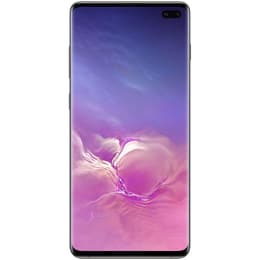
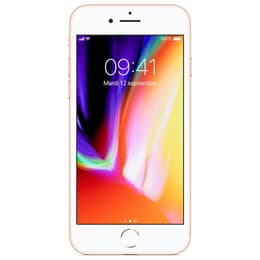


Galaxy S10+ Vs iPhone 8

Galaxy S10+
Galaxy S10+
Starting at

Refurbished price:135.00

Versus €1,009.00 new

See options
iPhone 8
iPhone 8
Starting at

Refurbished price:88.00

Versus €299.00 new

See options

Ratings

The Samsung Galaxy S10 Plus, released in March 2019, and the Apple iPhone 8, launched in September 2017, represent different eras and operating systems in the smartphone landscape. While the Galaxy S10 Plus runs on Android with Samsung's One UI, the iPhone 8 operates on Apple's iOS. These devices offer distinct user experiences, primarily differing in their display technology, camera capabilities, and overall design philosophy.

Scores

Durability

The expected practical lifespan of a smartphone is influenced by its release timeline, software support, and ease of repair. These two models, released about a year and a half apart, show notable differences in these areas.

  • Release Timeline: The iPhone 8, released in September 2017, is an older device compared to the Galaxy S10 Plus, which launched in March 2019. This age difference impacts their respective software support cycles and hardware longevity.
  • Software Longevity: The iPhone 8 no longer receives major iOS updates, with iOS 16 being its final major version, though it continues to receive security patches. The Galaxy S10 Plus, having launched with Android 9.0 Pie, received major Android updates up to Android 12, with security support ending in April 2023. This means the iPhone 8 may still receive security updates longer than the S10 Plus did for its major OS.
  • Repairability: The iPhone 8 generally has a moderate repairability score of 6 out of 10, with the screen and battery being relatively accessible for replacement. However, its glass back is difficult to replace due to strong adhesive. In contrast, the Galaxy S10 Plus received a lower repairability score of 3 out of 10 from iFixit, largely due to extensive use of adhesive, a soldered charging port, and a glued in-display fingerprint sensor, making common repairs more challenging.

Year of Release

2019

2017

Compatible with latest Update

No

No

OS

Android

iOS

Foldable

No

No

Performance

Performance in daily use is a key differentiator, with both devices offering capabilities suited to their respective generations, but with varying levels of responsiveness for demanding tasks.

  • Storage Options: The iPhone 8 was available with 64GB, 128GB, or 256GB of internal storage, though the 256GB option was later discontinued. The Galaxy S10 Plus offered more generous storage configurations, including 128GB, 512GB, and 1TB, with the added flexibility of expandable storage via a microSD card.
  • Battery Behavior: The Galaxy S10 Plus features a larger 4100 mAh battery, supporting both wireless and reverse wireless charging. Some users reported average battery life and occasional overheating during fast wireless charging or heavy use. The iPhone 8 has a smaller 1821 mAh battery, also supporting wireless and fast charging, with software optimizations designed to maximize its endurance. However, some users experienced abnormal battery drain and overheating issues.
  • System Responsiveness: The Galaxy S10 Plus, powered by a current-generation processor at its release, handles demanding applications and multitasking smoothly, supported by its 8GB or 12GB of RAM. The iPhone 8, with its A11 Bionic chip and 2GB of RAM, provides a responsive experience for everyday tasks and many games, though it may show its age with the most intensive modern applications.

Memory (GB)

8 GB

2 GB

Screen quality

The visual experience on these devices is shaped by their display technology, size, and clarity, catering to different preferences for media consumption and daily interaction.

  • Display Technology: The Galaxy S10 Plus features a 6.4-inch Dynamic AMOLED display, known for its deep blacks, vibrant colors, and high contrast. The iPhone 8 uses a 4.7-inch Retina HD LED-backlit IPS LCD, which provides accurate color reproduction and good viewing angles.
  • Resolution and Clarity: The S10 Plus offers a sharper QHD+ resolution of 3040 x 1440 pixels, resulting in a pixel density of 522 ppi, which delivers very crisp images and text. The iPhone 8 has a resolution of 1334 x 750 pixels, with a pixel density of 326 ppi, which is clear for its size but less dense than the S10 Plus.
  • Brightness and Features: The Galaxy S10 Plus's Dynamic AMOLED display supports HDR content, offering excellent brightness and contrast for media. The iPhone 8's display includes True Tone technology, which adjusts the screen's white balance to match ambient light, and offers a typical maximum brightness of 625 nits.

Resolution

1440 x 3040

750 x 1334

Screen type

Dynamic AMOLED

Retina IPS LCD

Audiovisual

Both smartphones offer capable camera systems for their respective generations, but they differ in their versatility and advanced features.

  • Camera System Capabilities: The Galaxy S10 Plus boasts a versatile triple-rear camera setup, including a 12 MP main sensor with variable aperture, a 12 MP telephoto lens for 2x optical zoom, and a 16 MP ultra-wide lens, providing a range of photographic options. It also features dual front cameras. The iPhone 8 has a single 12 MP wide-angle rear camera with optical image stabilization and a 7 MP front camera.
  • Photography Performance: The S10 Plus's multiple lenses allow for greater flexibility in capturing different scenes, from expansive landscapes to detailed close-ups. Users generally praised its camera quality. The iPhone 8's single rear camera is well-regarded for its consistent performance in good lighting and its ability to record 4K video.
  • Video Recording Quality: Both devices are capable of recording 4K video. The Galaxy S10 Plus offers advanced video features, while the iPhone 8 provides stable 4K video recording at various frame rates.

Main camera

12 megapixels

12 megapixels

Front camera

10 megapixels

7 megapixels

Miscellaneous

Beyond core specifications, several practical elements contribute to the overall user experience, from connectivity to physical design.

  • Connectivity Options: The Galaxy S10 Plus supports 4G LTE, Wi-Fi 6 (802.11ax), and Bluetooth 5.0, offering modern wireless connectivity. The iPhone 8 also supports 4G LTE, Wi-Fi (802.11ac), and Bluetooth 5.0. Some iPhone 8 users reported Wi-Fi and Bluetooth connectivity issues.
  • Port Types and Sensors: The S10 Plus features a USB-C port for charging and data transfer, along with a traditional 3.5mm headphone jack. It includes an ultrasonic in-display fingerprint sensor and 2D face unlock for security. The iPhone 8 uses a Lightning connector and relies on Touch ID, an integrated fingerprint sensor in its home button, for biometric authentication.
  • Physical Design and Handling: The Galaxy S10 Plus has a larger 6.4-inch display and dimensions of 157.6 x 74.1 x 7.8 mm, weighing 175g (or 198g for ceramic models), offering a more expansive viewing experience. It features a glass front (Gorilla Glass 6) and back (Gorilla Glass 5) with an aluminum frame, and is IP68 rated for water and dust resistance. The iPhone 8 is more compact with a 4.7-inch display, measuring 138.4 x 67.3 x 7.3 mm and weighing 148g, making it easier for one-handed use. It also has a glass front and back with an aluminum frame, and is IP67 rated for water and dust resistance.

Weight

175 g

148 g

Width

7,41 cm

6,73 cm

Height

15.76 cm

13,84 cm

Depth

0,78 cm

0,73 cm

Screen size (in)

6.4

4.7

Network

4G

4G

SIM card

Physical SIM

Physical SIM

Carrier compatibility

Unlocked

Unlocked

Connector

USB-C + Jack 3.5mm

Lightning

The Samsung Galaxy S10 Plus and iPhone 8 cater to different user priorities, reflecting their respective release periods and ecosystem strengths. Users often praise the Galaxy S10 Plus for its expansive and vibrant AMOLED display, versatile triple-camera system, and the flexibility of expandable storage. However, some common criticisms included initial issues with the in-display fingerprint sensor, occasional battery drain concerns, and a lower repairability score.

The iPhone 8 is frequently lauded for its compact form factor, consistent performance for everyday tasks, and the reliability of its iOS ecosystem. Its Touch ID sensor is also a point of preference for many users. Criticisms sometimes focused on its smaller screen size, single rear camera, and reports of battery drain or connectivity issues for some users.

Users prioritizing a larger, more immersive display, a highly versatile camera system, and the option for expandable storage might find the Galaxy S10 Plus better suited to their needs. Its Android operating system also offers greater customization. Conversely, users who prefer a more compact device, a streamlined user experience, and a strong emphasis on long-term security updates within the Apple ecosystem may lean towards the iPhone 8. Both devices, available as quality-assured refurbished options, present an eco-friendly alternative for consumers seeking reliable technology without contributing to new electronic waste.


See all articles

Our recent comparisons