

iPhone 12 Vs iPhone 14 Pro

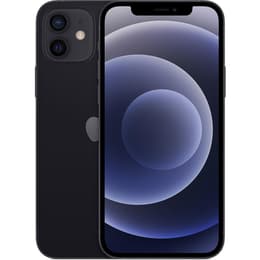
iPhone 12
iPhone 12
Starting at

Refurbished price:174.00

Versus €829.00 new

See options
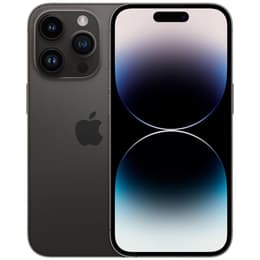
iPhone 14 Pro
iPhone 14 Pro
Starting at

Refurbished price:418.00

Versus €1,339.00 new

See options

Ratings

The iPhone 12, released in October 2020, and the iPhone 14 Pro, launched in September 2022, represent different generations within Apple's smartphone lineup. While both devices operate on the iOS platform, the iPhone 14 Pro introduces significant advancements in its camera system, display technology, and overall processing capabilities. This comparison will explore the practical differences between these two models to help users make an informed decision based on their individual needs.

Scores

Durability

When considering the longevity of a device, several factors come into play, including software support and physical resilience.

  • Release Timeline: The iPhone 12 was introduced in October 2020, making it an older model compared to the iPhone 14 Pro, which debuted in September 2022. This difference in release date directly impacts the expected duration of software updates.
  • Software Longevity: The iPhone 12 is anticipated to receive major iOS updates until approximately 2025 or 2026, aligning with iOS 19 or 20. In contrast, the iPhone 14 Pro, being newer, is expected to support iOS updates for a longer period, likely until 2027 or 2028, corresponding to iOS 21 or 22.
  • Physical Durability: Both models feature a Ceramic Shield front cover, designed to enhance drop performance. They also share an IP68 rating for water and dust resistance, allowing submersion up to 6 meters for 30 minutes. The iPhone 14 Pro, however, incorporates a stainless steel frame, offering a different feel and potentially greater rigidity compared to the aluminum frame of the iPhone 12.

Year of Release

2020

2022

Compatible with latest Update

Yes

Yes

OS

iOS

iOS

Foldable

No

No

Performance

The performance of a smartphone is crucial for daily tasks, from app usage to demanding multimedia applications.

  • Processing Power: The iPhone 12 handles everyday applications and multitasking smoothly, providing a responsive user experience for general use. The iPhone 14 Pro, with its more advanced internal components, offers enhanced capabilities for demanding applications, graphic-intensive games, and complex video editing, resulting in quicker app loading times and smoother transitions.
  • Multitasking and Storage: The iPhone 12 typically comes with 4GB of RAM and storage options up to 256GB, which is suitable for most users' app and data needs. The iPhone 14 Pro features 6GB of RAM and offers higher storage capacities, extending up to 1TB, which benefits users who frequently switch between many applications or store large files and high-resolution media.
  • Battery Behavior: The iPhone 12 generally provides sufficient battery life for a full day of moderate use, with up to 17 hours of video playback. The iPhone 14 Pro offers extended battery endurance, rated for up to 23 hours of video playback, which can translate to longer usage times for heavy users. However, real-world usage reports indicate that while the iPhone 14 Pro's battery life is robust, the difference might not be as pronounced in very intensive scenarios compared to its immediate predecessor.

Memory (GB)

4 GB

6 GB

Screen quality

The display is a primary interface for user interaction, and both devices offer high-quality viewing experiences with notable distinctions.

  • Display Technology and Clarity: Both the iPhone 12 and iPhone 14 Pro feature 6.1-inch Super Retina XDR OLED displays, delivering deep blacks and vibrant colors with a resolution of approximately 460 pixels per inch. This ensures sharp text and detailed images.
  • Brightness and Outdoor Visibility: The iPhone 12 offers a typical maximum brightness of 625 nits and a peak HDR brightness of 1200 nits. The iPhone 14 Pro significantly enhances this with a typical brightness of 1000 nits, a peak HDR brightness of 1600 nits, and an impressive 2000 nits peak brightness for outdoor viewing, making it more legible in bright sunlight.
  • Refresh Rate and Features: The iPhone 12 has a standard 60Hz refresh rate. The iPhone 14 Pro introduces ProMotion technology, offering an adaptive refresh rate that can scale from 1Hz to 120Hz. This results in smoother scrolling and more fluid animations. Additionally, the iPhone 14 Pro features the Dynamic Island, an interactive area around the front camera cutout, and an Always-On display, which keeps essential information visible without fully waking the screen.

Resolution

1170 x 2532

1179 x 2556

Screen type

Super Retina XDR OLED

LTPO Super Retina XDR OLED

Audiovisual

Camera capabilities are a key differentiator, especially for users who prioritize photography and videography.

  • Rear Camera System: The iPhone 12 features a dual 12MP camera system, including a wide and an ultra-wide lens, capable of capturing detailed photos in various conditions. The iPhone 14 Pro elevates this with a triple camera setup, introducing a 48MP main sensor, a 12MP ultra-wide lens, and a 12MP telephoto lens for optical zoom.
  • Low-Light Performance and Features: Both models offer Night mode for improved low-light photography. The iPhone 14 Pro benefits from a larger main sensor and the Photonic Engine, which significantly enhances low-light performance across all cameras, producing brighter and more detailed images in challenging lighting. It also includes features like Action mode for stabilized video and ProRes video recording for professional-grade footage.
  • Front Camera and Video: The iPhone 12 has a 12MP front camera with a f/2.2 aperture. The iPhone 14 Pro upgrades the front camera to a 12MP sensor with a f/1.9 aperture and autofocus, leading to sharper selfies and improved video calls. Both devices support 4K HDR video recording, with the iPhone 14 Pro offering higher frame rates for Dolby Vision HDR.

Main camera

12 megapixels

48 megapixels

Front camera

12 megapixels

12 megapixels

Miscellaneous

Beyond core features, several practical elements contribute to the overall user experience and device utility.

  • Connectivity Standards: Both the iPhone 12 and iPhone 14 Pro support 5G cellular connectivity and Wi-Fi 6 for fast wireless internet. The iPhone 14 Pro includes Bluetooth 5.3, an upgrade from the iPhone 12's Bluetooth 5.0, offering improved efficiency and range for wireless accessories.
  • Physical Design and Handling: The iPhone 12 has dimensions of 146.7 x 71.5 x 7.4 mm and weighs 164g, featuring an aluminum frame. The iPhone 14 Pro is slightly thicker and heavier at 147.5 x 71.5 x 7.85 mm and 206g, due to its stainless steel frame and more advanced internal components. Both maintain the Lightning port for charging and data transfer.
  • Additional Features: Both devices utilize Face ID for secure authentication. The iPhone 14 Pro introduces several advanced safety features, including Crash Detection and Emergency SOS via Satellite, which can connect users to emergency services in areas without cellular or Wi-Fi coverage. It also incorporates a LiDAR Scanner, which enhances augmented reality experiences and improves autofocus in low-light conditions.

Weight

164 g

206 g

Screen size (in)

6.1

6.1

Network

5G

5G

SIM card

Physical SIM + eSIM

Physical SIM + eSIM

Carrier compatibility

Unlocked

Unlocked

Connector

Lightning

Lightning

The iPhone 12 and iPhone 14 Pro cater to different user expectations, reflecting the technological advancements over two generations. Users often praise the iPhone 12 for its balanced performance, introduction of 5G, and vibrant OLED display, noting it remains a capable device for everyday tasks. However, some users have expressed a desire for longer battery life, particularly when utilizing 5G connectivity.

The iPhone 14 Pro, on the other hand, frequently receives acclaim for its significantly upgraded camera system, the innovative Dynamic Island interface, and its exceptionally bright and fluid ProMotion display. While its battery life is generally strong, some user feedback suggests that the real-world improvement over previous Pro models might not always be as substantial as anticipated in heavy usage scenarios.

Users prioritizing a device with a robust camera system, a highly responsive and bright display, and the latest safety features will find the iPhone 14 Pro well-suited to their needs. Its extended software support timeline also offers a longer period of access to new iOS features. Conversely, users seeking a reliable smartphone for general use, who value a lighter build and do not require the most advanced camera or display technologies, may find the iPhone 12 to be a practical choice. Both models are available as quality-assured refurbished options, providing an eco-friendly alternative for consumers.


See all articles

Our recent comparisons