

Galaxy S10e Vs iPhone SE (2020)

Galaxy S10e
Galaxy S10e
Starting at

Refurbished price:121.00

Versus €759.00 new

See options
iPhone SE (2020)
iPhone SE (2020)
Starting at

Refurbished price:102.00

Versus €319.00 new

See options

Ratings

The Samsung Galaxy S10e, released in March 2019, and the iPhone SE (2020), launched in April 2020, are both compact smartphones that offer distinct experiences based on their respective operating systems. While the Galaxy S10e runs on Android, providing a customizable interface, the iPhone SE (2020) operates on iOS, known for its streamlined ecosystem. Key differentiators between these two devices include their display technology, camera configurations, and overall design philosophy.

Scores

Durability

When considering the long-term usability of these devices, their release timelines and software support play a significant role.

  • Release Timeline: The Samsung Galaxy S10e was introduced in March 2019, making it an earlier release compared to the iPhone SE (2020), which debuted in April 2020. This difference in launch dates means the iPhone SE (2020) generally benefits from a longer period of ongoing software support.
  • Software Longevity: The Galaxy S10e initially ran on Android 9.0 Pie and received several major Android updates, with some models reaching Android 11. The iPhone SE (2020) launched with iOS 13.4 and is known for Apple's extended software support, typically receiving updates for many years, which can contribute to a longer practical lifespan.
  • Repairability: The iPhone SE (2020) has a repairability score of 6 out of 10 from iFixit, indicating that common components like the display and battery are relatively straightforward to replace, though the glass back is more challenging. Information regarding the specific repairability score for the Galaxy S10e is less readily available, but generally, Samsung devices can present varying levels of repair complexity.

Year of Release

2019

2020

Compatible with latest Update

No

Yes

OS

Android

iOS

Foldable

No

No

Performance

The performance of a smartphone is crucial for daily tasks, from app usage to multitasking and gaming. Both devices offer capable performance for their respective ecosystems.

  • Processing Capabilities: The Samsung Galaxy S10e is powered by an octa-core processor, either the Exynos 9820 or Snapdragon 855, depending on the region. This hardware enables smooth handling of everyday applications and provides a responsive experience for most users. The iPhone SE (2020) features the A13 Bionic chip, which delivers robust performance, allowing for fluid navigation, efficient multitasking, and capable handling of demanding applications and games.
  • Memory and Storage: The Galaxy S10e typically comes with 6GB or 8GB of RAM and offers internal storage options of 128GB or 256GB, with the added flexibility of expandable storage via a microSD card up to 512GB. The iPhone SE (2020) includes 3GB of RAM and is available with 64GB, 128GB, or 256GB of internal storage, which is not expandable.
  • Battery Behavior: The Galaxy S10e is equipped with a 3100mAh battery. The iPhone SE (2020) has an 1821mAh battery. While the iPhone SE's processor is highly efficient, some users may find its battery capacity requires more frequent charging, especially with heavy use.

Memory (GB)

6 GB

3 GB

Screen quality

The display is a primary interface for smartphone interaction, and both devices offer different visual experiences.

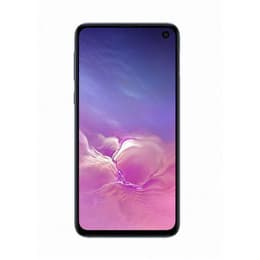
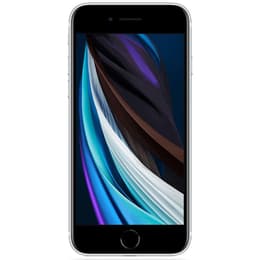
  • Display Technology and Size: The Samsung Galaxy S10e features a 5.8-inch Dynamic AMOLED display, known for its vibrant colors, deep blacks, and high contrast. The iPhone SE (2020) utilizes a 4.7-inch Retina HD IPS LCD display, which provides accurate color reproduction and good viewing angles. The Galaxy S10e offers a larger screen in a relatively compact body due to its edge-to-edge design.
  • Resolution and Clarity: The S10e has a resolution of 2280 x 1080 pixels, resulting in a pixel density of 438 pixels per inch (ppi), offering sharp and detailed visuals. The iPhone SE (2020) has a resolution of 1334 x 750 pixels, with a pixel density of 326 ppi, which provides clear text and images for its screen size.
  • Brightness and Protection: The Galaxy S10e can reach a maximum brightness of around 603 nits in manual mode or up to 1200 cd/m² peak brightness, making it suitable for outdoor visibility, and is protected by Corning Gorilla Glass 5. The iPhone SE (2020) offers a typical maximum brightness of 625 nits and features ion-strengthened glass for durability.

Resolution

1080 x 2280

750 x 1334

Screen type

Dynamic AMOLED

Retina IPS LCD

Audiovisual

Both smartphones provide capable camera systems, though they approach mobile photography with different hardware and software philosophies.

  • Rear Camera System: The Samsung Galaxy S10e features a dual-camera setup on the rear, consisting of a 12-megapixel wide-angle lens with a variable aperture (f/1.5-f/2.4) and a 16-megapixel ultra-wide-angle lens (f/2.2) with a 123-degree field of view. This configuration allows for versatile shot composition, including expansive landscape photos. The iPhone SE (2020) is equipped with a single 12-megapixel wide-angle rear camera (f/1.8) that includes optical image stabilization.
  • Photography Performance: The S10e captures good daylight photos with a wide dynamic range and supports HDR10+ video recording up to 4K at 60 frames per second. Its low-light performance can sometimes exhibit aggressive noise reduction. The iPhone SE (2020) leverages its advanced processor for computational photography, resulting in detailed images with accurate colors, particularly in good lighting. It also supports 4K video recording at 60 frames per second with strong stabilization. However, its low-light performance is not its primary strength, and its portrait mode is limited to detecting human faces.
  • Front Camera and Audio: The Galaxy S10e has a 10-megapixel front camera (f/1.9). The iPhone SE (2020) features a 7-megapixel front camera (f/2.2). Both devices offer stereo speakers for media consumption.

Main camera

12 megapixels

12 megapixels

Front camera

10 megapixels

7 megapixels

Miscellaneous

Beyond core performance and camera, several practical features contribute to the overall user experience.

  • Connectivity and Ports: The Samsung Galaxy S10e supports Wi-Fi 6, Bluetooth 5.0, and NFC. It features a USB-C port for charging and data transfer, and notably, retains a 3.5mm headphone jack. The iPhone SE (2020) also supports Wi-Fi 6, Bluetooth 5.0, and NFC. It uses a Lightning port for charging and data, but does not include a 3.5mm headphone jack.
  • Biometrics and Durability: The Galaxy S10e incorporates a side-mounted fingerprint sensor for secure unlocking. It carries an IP68 rating for water and dust resistance, offering protection against immersion in water. The iPhone SE (2020) features a front-mounted fingerprint sensor (Touch ID) integrated into its home button. It has an IP67 rating for water and dust resistance, providing protection against splashes and brief immersion.
  • Physical Design: The Galaxy S10e measures 142.2 x 69.9 x 7.9 mm and weighs 150g. It features an aluminum body with glass on the front and back. The iPhone SE (2020) is slightly smaller and lighter at 138.4 x 67.3 x 7.3 mm and 148g. It also has a glass front and back with an aluminum frame.

Weight

150 g

148 g

Screen size (in)

5.8

4.7

Network

4G

4G

SIM card

Physical SIM

Physical SIM + eSIM

Carrier compatibility

Unlocked

Unlocked

Connector

USB-C + Jack 3.5mm

Lightning

Both the Samsung Galaxy S10e and the iPhone SE (2020) offer compelling features within their compact designs, catering to different user preferences and operating system loyalties.

Users often praise the Galaxy S10e for its vibrant Dynamic AMOLED display, versatile dual-camera system with an ultra-wide lens, and the inclusion of a 3.5mm headphone jack. Its expandable storage is also a frequently appreciated feature. Some common criticisms include its battery life, which some users find to be less robust for heavy usage, and the absence of a telephoto lens found in its larger S10 siblings.

The iPhone SE (2020) is frequently lauded for its powerful processing capabilities, which ensure smooth performance across applications and games, and its strong video recording quality. Its compact form factor and the familiarity of the iOS ecosystem are also significant drawcards for many. However, users sometimes note its smaller LCD display compared to modern OLED screens, the limitations of its single rear camera (lacking ultra-wide or telephoto options, and portrait mode being restricted to people), and battery life that may not consistently last a full day for intensive users.

Users prioritizing a vibrant, edge-to-edge AMOLED display, a versatile camera with an ultra-wide lens, and expandable storage may find the Samsung Galaxy S10e well-suited to their needs. Conversely, individuals who value a highly powerful processor for sustained performance, a streamlined iOS experience, and a very compact design might lean towards the iPhone SE (2020). Both devices represent solid choices, and considering a quality-assured refurbished option for either model can be an eco-friendly alternative for those seeking a reliable smartphone.


See all articles

Our recent comparisons







