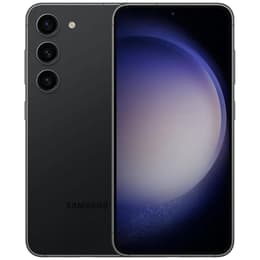
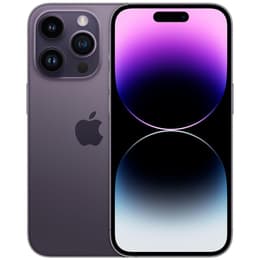

Galaxy S23 Vs iPhone 14 Pro

Galaxy S23
Galaxy S23
Starting at

Refurbished price:245.00

Versus €959.00 new

See options
iPhone 14 Pro
iPhone 14 Pro
Starting at

Refurbished price:424.00

Versus €1,339.00 new

See options

Ratings

The Samsung Galaxy S23, an Android-based smartphone, was introduced in February 2023, while Apple's iPhone 14 Pro, running on iOS, made its debut in September 2022. Both devices represent flagship offerings from their respective manufacturers, designed to deliver high-end mobile experiences. Key differentiators between these two models include their operating systems, display technologies, and camera system approaches, catering to distinct user preferences.

Scores

Durability

When considering the long-term usability of these devices, several factors contribute to their expected practical lifespan, including software support and physical resilience.

  • Release Timeline: The iPhone 14 Pro was released in September 2022, preceding the Galaxy S23, which launched in February 2023. This difference in release dates means the iPhone 14 Pro will likely reach its end-of-software-support period slightly sooner than the Galaxy S23.
  • Software Longevity: Both devices receive regular operating system updates, which are crucial for security and access to new features. Apple typically provides iOS updates for its devices for approximately 5-6 years from their release, while Samsung generally offers four years of Android OS updates and five years of security updates for its flagship Galaxy S series.
  • Repairability: The Galaxy S23 has demonstrated a good repairability score, with some assessments noting helpful internal legends and easier battery replacement due to pull tabs. The iPhone 14 Pro, while designed with durability in mind, generally presents a more complex repair process.

Year of Release

2023

2022

Compatible with latest Update

Yes

Yes

OS

Android

iOS

Foldable

No

No

Performance

Both the Galaxy S23 and iPhone 14 Pro are equipped with powerful internal components designed for demanding tasks, though they approach performance from different architectural standpoints.

  • System Responsiveness: The iPhone 14 Pro delivers a fluid user experience, handling graphically intensive applications and multitasking with ease. The Galaxy S23 also offers robust performance, ensuring smooth navigation and efficient handling of various applications.
  • Application Handling: The Galaxy S23 is powered by a processor optimized for its ecosystem, allowing for efficient execution of demanding apps and seamless transitions between tasks. The iPhone 14 Pro features a chip known for its strong single-core and multi-core performance, contributing to quick app launches and consistent performance across a wide range of uses.
  • Storage and Multitasking: The Galaxy S23 offers storage options up to 512GB, with higher capacities utilizing a faster storage format, and comes with 8GB of RAM. The iPhone 14 Pro is available with storage up to 1TB and features 6GB of RAM. Both configurations are ample for storing numerous files and maintaining multiple applications in memory without significant slowdowns.
  • Battery Behavior: The Galaxy S23 houses a 3900 mAh battery, providing up to 22 hours of video playback according to official figures, with real-world web browsing tests showing around 10 hours and 27 minutes. The iPhone 14 Pro has a 3200 mAh battery, offering up to 23 hours of video playback. Real-world usage indicates that both devices can comfortably last a full day for many users, with the iPhone often showing strong power efficiency.

Memory (GB)

8 GB

6 GB

Screen quality

The visual experience on both smartphones is a highlight, with each featuring advanced display technologies that offer vibrant and clear imagery.

  • Display Technology and Clarity: The Galaxy S23 features a 6.1-inch Dynamic AMOLED 2X display, providing deep blacks and rich colors with a resolution of 2340 x 1080 pixels. The iPhone 14 Pro also has a 6.1-inch Super Retina XDR OLED display, offering excellent contrast and color accuracy with a resolution of 2556 x 1179 pixels.
  • Brightness and Outdoor Visibility: The Galaxy S23 can reach a peak brightness of 1750 nits, ensuring good visibility in bright conditions. The iPhone 14 Pro excels in brightness, with a typical maximum of 1000 nits, 1600 nits for HDR content, and an impressive 2000 nits peak for outdoor use, making it highly readable under direct sunlight.
  • Refresh Rate and Smoothness: Both devices feature adaptive refresh rates for smooth scrolling and responsive interactions. The Galaxy S23 offers a 120Hz adaptive refresh rate. The iPhone 14 Pro includes ProMotion technology, which can dynamically adjust its refresh rate from 1Hz up to 120Hz, optimizing for both fluidity and power efficiency.
  • Unique Display Features: The iPhone 14 Pro introduces the Dynamic Island, an interactive area around the front camera cutout that displays alerts and background activities. It also features an Always-On display. The Galaxy S23 offers an Always-On display as well, providing glanceable information without fully waking the screen.

Resolution

1080 x 2340

1179 x 2556

Screen type

Dynamic AMOLED 2X

LTPO Super Retina XDR OLED

Audiovisual

Both smartphones offer sophisticated camera systems, capable of capturing high-quality photos and videos, though they employ different sensor configurations and processing techniques.

  • Main Camera Capabilities: The Galaxy S23 features a 50MP main wide-angle camera, a 10MP telephoto lens with 3x optical zoom, and a 12MP ultrawide lens. The iPhone 14 Pro boasts a 48MP main camera with a larger sensor, a 12MP ultrawide camera, and a 12MP telephoto lens with 3x optical zoom. The iPhone's main sensor utilizes pixel binning to produce detailed 12MP images by default, with the option for full 48MP ProRAW capture.
  • Low-Light Performance: Both devices excel in low-light conditions. The Galaxy S23 benefits from enhanced night mode processing. The iPhone 14 Pro's larger main sensor and Photonic Engine contribute to significantly improved low-light photography across all lenses, with faster Night mode exposures.
  • Video Recording: The Galaxy S23 supports 8K video recording at 24 or 30 frames per second. The iPhone 14 Pro offers 4K video recording at various frame rates, including Cinematic mode for shallow depth-of-field effects and Action mode for stabilized handheld footage, along with ProRes video recording for professional workflows.
  • Front Camera: Both phones feature 12MP front-facing cameras. The iPhone 14 Pro's TrueDepth front camera includes autofocus and improved low-light performance.

Main camera

50 megapixels

48 megapixels

Front camera

12 megapixels

12 megapixels

Miscellaneous

Beyond core performance and camera features, several practical elements differentiate the user experience of the Galaxy S23 and iPhone 14 Pro.

  • Connectivity Standards: The Galaxy S23 supports 5G, Wi-Fi 6E, and Bluetooth 5.3. The iPhone 14 Pro also offers 5G and Bluetooth 5.3, but features Wi-Fi 6. Both provide fast and reliable wireless connections.
  • Ports and Biometrics: The Galaxy S23 uses a USB-C 3.2 port for charging and data transfer and features an under-display fingerprint sensor. The iPhone 14 Pro utilizes a Lightning port (USB 2.0) and relies on Face ID for secure authentication.
  • Build Materials and Dimensions: The Galaxy S23 has a glass front protected by Gorilla Glass Victus 2, a glass back, and an aluminum frame, weighing 168g. The iPhone 14 Pro features a Ceramic Shield front, a glass back, and a stainless steel frame, weighing 206g. The iPhone 14 Pro is slightly thicker and heavier than the Galaxy S23.
  • Additional Features: The iPhone 14 Pro includes Emergency SOS via Satellite and Crash Detection for enhanced safety. The Galaxy S23 series, while not featuring satellite connectivity, offers a robust Android experience with Samsung's One UI.

Weight

167 g

206 g

Screen size (in)

6.1

6.1

Network

5G

5G

SIM card

Physical SIM + eSIM

Physical SIM + eSIM

Carrier compatibility

Unlocked

Unlocked

The Samsung Galaxy S23 and iPhone 14 Pro are both highly capable smartphones, each offering a distinct ecosystem and set of features. User sentiment often highlights the Galaxy S23's vibrant display and versatile camera system, particularly its telephoto capabilities and the flexibility of the Android operating system. Some users appreciate the customization options and open nature of Android. Criticisms sometimes point to the consistency of camera processing compared to its competitor, or the battery life of the base S23 model for heavy users.

Conversely, the iPhone 14 Pro is frequently praised for its exceptional overall performance, the seamless integration of iOS, and its advanced camera system, especially its low-light performance and video capabilities. The Dynamic Island is also a notable feature that users find innovative. Common concerns might include the closed nature of iOS for some users or the continued use of the Lightning port.

Users prioritizing a highly customizable Android experience, a slightly lighter device, and a versatile camera setup with strong zoom capabilities may find the Galaxy S23 well-suited to their needs. Those who value a streamlined user experience, industry-leading performance, advanced video features, and superior outdoor screen visibility might lean towards the iPhone 14 Pro. Both devices offer a premium smartphone experience, and choosing between them often comes down to personal preference for operating system and specific feature priorities. For those seeking an eco-friendly alternative, quality-assured refurbished options for both models are available, providing a sustainable choice without compromising on performance.


See all articles

Our recent comparisons








