

Huawei P30 Pro Vs iPhone 12 Pro Max

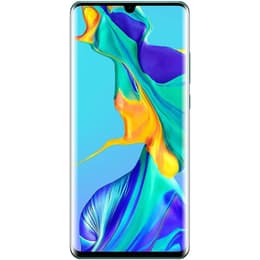
Huawei P30 Pro
Huawei P30 Pro
Starting at

Refurbished price:186.00

Versus €849.00 new

See options
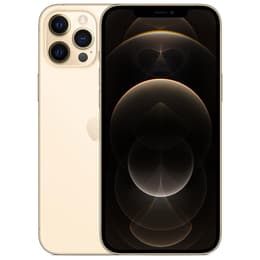
iPhone 12 Pro Max
iPhone 12 Pro Max
Starting at

Refurbished price:244.00

Versus €1,139.00 new

See options

Ratings

The Huawei P30 Pro, released in March 2019, and the iPhone 12 Pro Max, launched in November 2020, represent different approaches to high-end smartphone design and functionality. While both devices offer advanced camera systems and premium builds, they diverge significantly in their operating systems, overall performance, and specific feature sets. The P30 Pro operates on Android with Huawei's EMUI, focusing heavily on camera innovation, particularly in zoom capabilities. In contrast, the iPhone 12 Pro Max runs on iOS, emphasizing a powerful processing platform and a refined user experience, alongside its own advanced camera array.

Scores

Durability

When considering the long-term usability of these devices, several factors contribute to their expected practical lifespan.

  • Release Timeline and Software Support: The Huawei P30 Pro, released in March 2019, is an older device compared to the iPhone 12 Pro Max, which launched in November 2020. This age difference directly impacts software longevity. The P30 Pro likely concluded its major Android OS updates around Android 10 or EMUI 12, meaning it receives fewer new features and security patches in 2026. The iPhone 12 Pro Max, on the other hand, benefits from Apple's longer software support cycle, with updates expected to continue for several more years, potentially until 2027 or 2028.
  • Physical Durability: Both devices feature robust builds with IP68 ratings for dust and water resistance, indicating they can withstand immersion in water up to a certain depth for a limited time. The iPhone 12 Pro Max introduces a Ceramic Shield front cover, designed to offer enhanced drop performance compared to previous iPhone models.
  • Expected Practical Lifespan: Users prioritizing extended software support and the latest security updates will find the iPhone 12 Pro Max offers a longer practical lifespan. For those less reliant on the newest software features and more focused on hardware capabilities, the P30 Pro remains a functional device, though its software experience will be more static.

Year of Release

2019

2020

Compatible with latest Update

No

Yes

OS

Android

iOS

Foldable

No

No

Performance

The performance of these two smartphones is influenced by their respective hardware and software optimizations.

  • Processing Power: The iPhone 12 Pro Max is equipped with a newer generation processor, which translates to smoother operation for demanding applications, faster app loading times, and more fluid multitasking. This allows it to handle complex tasks like high-fidelity gaming and intensive video editing with greater ease. The Huawei P30 Pro, while still capable for everyday tasks, may exhibit slower performance in comparison, especially with newer, more resource-intensive applications.
  • Storage and Multitasking: Both devices offer various internal storage configurations to suit different user needs. The Huawei P30 Pro provides an option for expandable storage via Huawei's proprietary Nano Memory Card, offering flexibility for users who require additional space for media and files. The iPhone 12 Pro Max does not support expandable storage, relying solely on its internal capacity. In terms of multitasking, both devices come with ample RAM (8GB for P30 Pro, 6GB for iPhone 12 Pro Max), allowing them to keep multiple applications open and switch between them efficiently.
  • Battery Endurance: The Huawei P30 Pro features a 4200 mAh battery, which was notable for its exceptional endurance at the time of its release, often providing up to 1.5 days of moderate use. The iPhone 12 Pro Max has a 3687 mAh battery, offering good battery life for a full day of typical usage, though the P30 Pro was often praised for its superior longevity between charges.

Memory (GB)

8 GB

6 GB

Screen quality

The visual experience on both devices is delivered through high-quality OLED displays, though with some key distinctions.

  • Display Technology and Resolution: Both the Huawei P30 Pro and the iPhone 12 Pro Max feature vibrant OLED displays, known for their deep blacks and excellent contrast. The iPhone 12 Pro Max offers a higher resolution of 2778 x 1284 pixels, resulting in a sharper image with a pixel density of 458 pixels per inch (ppi). The P30 Pro has a resolution of 1080 x 2340 pixels, with a pixel density of 398 ppi, which still provides a clear viewing experience.
  • Brightness and Viewing Experience: The iPhone 12 Pro Max's Super Retina XDR display can achieve higher peak brightness levels, reaching up to 1200 nits for HDR content and 800 nits typical, which enhances visibility in bright outdoor conditions. The P30 Pro's display typically reaches around 700 nits. Both screens maintain a standard 60Hz refresh rate, providing a smooth visual experience for most content.
  • Screen Size: The iPhone 12 Pro Max features a slightly larger 6.7-inch display, offering a more expansive viewing area compared to the P30 Pro's 6.47-inch screen.

Resolution

1080 x 2340

1284 x 2778

Screen type

OLED

Super Retina XDR OLED

Audiovisual

Both smartphones are recognized for their advanced camera capabilities, though they excel in different photographic aspects.

  • Rear Camera Systems: The Huawei P30 Pro features a Leica Quad Camera system, including a 40-megapixel main sensor, a 20-megapixel ultra-wide lens, and an 8-megapixel periscope telephoto lens that enables 5x optical zoom. It also incorporates a Time-of-Flight (ToF) sensor for depth perception. This setup was particularly acclaimed for its exceptional zoom capabilities and strong low-light performance. The iPhone 12 Pro Max comes with a triple 12-megapixel camera system, comprising wide, ultra-wide, and telephoto lenses, offering 2.5x optical zoom. It also includes a LiDAR scanner for improved autofocus in low light and enhanced augmented reality experiences, along with sensor-shift optical image stabilization on the wide lens for better stability.
  • Photography Performance: For low-light photography, the P30 Pro was a pioneer, capturing bright and detailed images in challenging conditions. The iPhone 12 Pro Max also delivers strong low-light results, benefiting from its Night mode and LiDAR scanner. In terms of zoom, the P30 Pro's periscope lens provides a significant advantage with its 5x optical zoom. The iPhone 12 Pro Max is known for its consistent image quality across its lenses and excellent color accuracy.
  • Video Recording and Audio: The iPhone 12 Pro Max offers advanced video recording capabilities, including HDR video with Dolby Vision support at up to 60 frames per second, and 4K video recording at up to 60 frames per second. The P30 Pro supports 4K video recording at 30 frames per second. Both devices provide good microphone quality for calls and recordings, and offer a satisfactory media consumption experience through their speakers, with the P30 Pro featuring Dolby Atmos.

Main camera

40 megapixels

12 megapixels

Front camera

32 megapixels

12 megapixels

Miscellaneous

Beyond core features, several practical elements differentiate these two devices in daily use.

  • Connectivity and Ports: The iPhone 12 Pro Max supports 5G connectivity, offering faster cellular data speeds in compatible areas, along with Wi-Fi 6 (802.11ax) for improved wireless network performance. The Huawei P30 Pro supports 4G LTE and Wi-Fi 5 (802.11ac), but lacks 5G capabilities. For physical connections, the P30 Pro uses a USB-C port, while the iPhone 12 Pro Max utilizes Apple's proprietary Lightning port. Neither device includes a traditional 3.5mm headphone jack.
  • Biometric Security and Navigation: The Huawei P30 Pro features an in-display optical fingerprint sensor for secure unlocking and authentication. The iPhone 12 Pro Max relies on Face ID, Apple's facial recognition system, for biometric security. The iPhone also integrates a LiDAR scanner, which enhances depth perception for augmented reality applications and improves autofocus in low-light conditions.
  • Physical Characteristics: The iPhone 12 Pro Max is a larger and heavier device, measuring 160.8 x 78.1 x 7.4 mm and weighing 228 grams. The Huawei P30 Pro is slightly more compact and lighter at 158 x 73.4 x 8.4 mm and 192 grams. These differences can impact one-handed usability and pocketability.

Weight

192 g

226 g

Screen size (in)

6.47

6.7

Network

4G

5G

SIM card

Dual Physical SIM

Physical SIM + eSIM

Carrier compatibility

Unlocked

Unlocked

User feedback for the Huawei P30 Pro often highlights its groundbreaking camera system, particularly its impressive optical zoom and exceptional low-light photography capabilities, which were considered industry-leading at its release. Many users also praised its outstanding battery life, often reporting comfortable multi-day usage. However, common concerns revolve around its older software experience and the absence of 5G connectivity, which became more prevalent in subsequent years.

For the iPhone 12 Pro Max, users frequently commend its powerful and responsive performance, consistent camera quality across various conditions, and robust video recording features, especially with Dolby Vision. Its longer software support and the Face ID security system are also often cited as significant advantages. Some users, however, found its larger size and weight to be a consideration for daily handling, and the continued use of the Lightning port instead of a more universal USB-C port was a point of discussion.

Users prioritizing an advanced and versatile camera, particularly for zoom and low-light scenarios, alongside extended battery life, may find the Huawei P30 Pro well-suited to their needs. Conversely, individuals who value a powerful and consistently updated operating system, superior video capabilities, and a slightly larger, sharper display will likely lean towards the iPhone 12 Pro Max. Both devices offer a premium experience, and choosing between them often comes down to a preference for Android versus iOS, and specific camera or performance priorities. For those seeking a sustainable choice, both models are available as quality-assured refurbished options, providing an eco-friendly alternative to purchasing new devices.


See all articles

Our recent comparisons