
Google Pixel 6A Vs iPhone 16

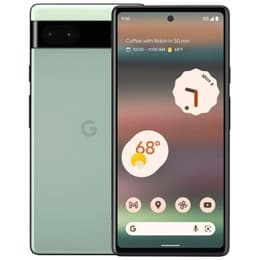
Google Pixel 6A
Google Pixel 6A
Starting at

Refurbished price:143.00

Versus €459.00 new

See options
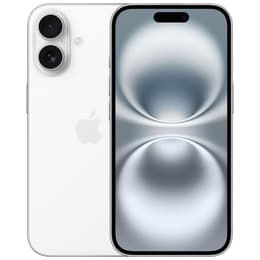
iPhone 16
iPhone 16
Starting at

Refurbished price:548.00

Versus €879.00 new

See options

Ratings

The Google Pixel 6a, released in July 2022, and the iPhone 16, launched in September 2024, represent different generations and approaches to smartphone design. While the Pixel 6a offers a compelling Android experience with Google's computational strengths, the iPhone 16 showcases Apple's latest advancements in hardware and software. The primary differentiators lie in their release timelines, operating systems, and the resulting advancements in processing power and camera technology.

Scores

Durability

When considering the practical lifespan of these devices, several factors come into play, including software support, physical durability, and the pace of technological advancements.

  • Software Longevity: The Google Pixel 6a, launched with Android 12, is guaranteed to receive OS updates until at least July 2025 and security updates until at least July 2027. [7, 9, 39] The iPhone 16, having launched with iOS 18, is expected to receive major iOS updates for a longer period, typically 5-7 years from its release. This extended software support means the iPhone 16 will remain compatible with the latest applications and features for a longer duration.
  • Physical Durability: The Pixel 6a features a plastic back, an aluminum frame, and Gorilla Glass 3 on the front, along with an IP67 rating for water and dust resistance. [2] The iPhone 16 incorporates a Ceramic Shield front, an aluminum frame, and glass back, offering IP68 water and dust resistance. [19] The Ceramic Shield is designed for enhanced drop performance.
  • Expected Practical Lifespan: Due to its more recent release and Apple's longer software support policy, the iPhone 16 generally offers a longer practical lifespan in terms of receiving new features and security updates. However, the Pixel 6a remains a functional device for users who do not require the absolute latest software.

Year of Release

2022

2024

Compatible with latest Update

Yes

Yes

Foldable

No

No

Performance

The performance of a smartphone is largely dictated by its internal processing unit and memory, influencing how smoothly applications run and how efficiently tasks are handled.

  • Processing Capabilities: The Google Pixel 6a is powered by the first-generation Google Tensor chip, which provides capable performance for everyday tasks, app navigation, and moderate gaming. [2, 8, 10] The iPhone 16 features the Apple A18 chip, which is designed to be more efficient and faster, offering smoother performance for demanding applications, advanced gaming, and complex multitasking. [5, 6, 19, 23]
  • Multitasking and Responsiveness: With 6GB of RAM, the Pixel 6a handles multiple applications and transitions between them effectively. [2, 10] The iPhone 16 comes with 8GB of RAM, providing more headroom for intensive multitasking and ensuring a highly responsive user experience, especially with more complex applications and generative AI features. [6, 23, 38]
  • Storage Options: The Pixel 6a is available with 128GB of internal storage. [2, 10] The iPhone 16 offers more flexibility with storage options, including 128GB, 256GB, and 512GB, catering to users with varying storage needs for apps, photos, and videos. [6, 23]

Memory (GB)

6 GB

8 GB

Screen quality

The display is a primary interface for smartphone interaction, and differences in technology, resolution, and brightness can significantly impact the viewing experience.

  • Display Technology and Clarity: Both devices feature OLED displays, which are known for deep blacks and vibrant colors. The Pixel 6a has a 6.1-inch OLED screen with a 1080 x 2400 pixel resolution. [2, 10, 15] The iPhone 16 also features a 6.1-inch OLED display, likely with a similar or slightly improved resolution, offering clear and detailed visuals. [6, 19, 23, 38]
  • Refresh Rate and Smoothness: The Pixel 6a's display operates at a 60Hz refresh rate, providing a standard smooth scrolling experience. [10, 27] The iPhone 16's display is expected to offer a 60Hz refresh rate for the base model, though Pro models may feature higher refresh rates. [23]
  • Brightness and Outdoor Visibility: The iPhone 16's display is generally expected to offer higher peak brightness levels compared to the Pixel 6a, which can improve visibility in bright outdoor conditions. [22, 29] Both displays provide good clarity for typical indoor and outdoor use.

Resolution

1080 x 2400

1179 x 2556

Screen type

OLED

Super Retina XDR OLED

Audiovisual

Both the Google Pixel 6a and the iPhone 16 are equipped with capable camera systems, though they approach photography with different hardware and software philosophies.

  • Rear Camera System: The Pixel 6a features a dual-camera setup with a 12.2 MP main sensor (f/1.7) with optical image stabilization and a 12 MP ultrawide sensor (f/2.2). [2, 4, 14] It is recognized for its strong computational photography, producing accurate colors and good detail, especially in everyday and low-light conditions, despite lacking a dedicated telephoto lens. [4, 21, 31, 33] The iPhone 16 also has a dual-camera system, including a 48MP main sensor (f/1.6) with optical image stabilization and a 12MP ultrawide sensor (f/2.2) that supports macro photography. [19, 36, 41] The iPhone 16's main camera offers 2x optical quality zoom. [36]
  • Low-Light and Video Performance: The Pixel 6a delivers good low-light performance thanks to Google's software processing, and records 4K video at 30 or 60 frames per second. [4, 21] The iPhone 16's larger main sensor and improved aperture on the ultrawide lens contribute to enhanced low-light photography and video quality. [36, 41] It supports 4K video recording at various frame rates, including features like Spatial Video capture. [19, 36]
  • Front Camera and Features: The Pixel 6a has an 8 MP front camera. [2] The iPhone 16 features a 12 MP front-facing camera with advanced features for selfies and video calls. [19] Both devices offer various photographic modes and features to enhance image capture.

Main camera

12.2 megapixels

48 megapixels

Front camera

8 megapixels

12 megapixels

Miscellaneous

Beyond core performance and display, several practical elements contribute to the overall user experience and daily convenience of a smartphone.

  • Connectivity and Ports: The Pixel 6a supports 5G, Wi-Fi 6/6E, and Bluetooth 5.2, and features a USB-C port for charging and data transfer. [10, 17] The iPhone 16 also offers 5G connectivity, Wi-Fi 6E, and Bluetooth, and has transitioned to a USB-C port. [6, 19, 23, 38]
  • Biometric Security and Interaction: The Pixel 6a utilizes an under-display fingerprint sensor for secure unlocking. [18] The iPhone 16 relies on Face ID for biometric authentication and introduces an Action Button, which is customizable for various functions, and a dedicated Capture Button for camera controls. [1, 5, 22, 23, 38, 44]
  • Design and Handling: The Pixel 6a has dimensions of 152.2 x 71.8 x 8.9 mm and weighs 178g, offering a comfortable in-hand feel. [2, 10] The iPhone 16 measures 147.6 mm tall and 71.6 mm wide, with a similar weight, maintaining a compact form factor. [19] Both devices feature a modern aesthetic with durable build materials.

Weight

178 g

170 g

Screen size (in)

6.1

6.1

Network

5G

5G

SIM card

Physical SIM + eSIM

eSIM

Carrier compatibility

Unlocked

Unlocked

Connector

USB-C

USB-C (USB 2)

The Google Pixel 6a and iPhone 16 cater to different user expectations, largely due to their release timelines and operating system ecosystems. Users often praise the Pixel 6a for its exceptional camera performance, particularly its computational photography capabilities that deliver consistent and pleasing results across various lighting conditions. [4, 21, 31] Its battery life is also frequently noted as being robust enough for a full day of use. [11, 12, 13, 25] However, some users might find its 60Hz display and the eventual end of major OS updates as limitations compared to newer devices. [10, 27]

The iPhone 16, being a more recent release, generally receives acclaim for its advanced processing power, which ensures smooth operation for demanding applications and future-proofs the device for upcoming software innovations. [5, 6, 19] Its enhanced camera system, including improved low-light performance and new features like Spatial Video, is also a significant draw. [19, 36, 41] The longer software support and robust build quality contribute to its perceived longevity. [19]

Users prioritizing a highly capable camera experience and a clean Android interface, and who are comfortable with a device that has a shorter remaining software update window, may find the Pixel 6a suitable. Conversely, those who value the latest performance, extended software support, advanced camera features, and the iOS ecosystem will likely find the iPhone 16 to be a more aligned choice. Both devices, when considered as quality-assured refurbished options, offer an eco-friendly alternative for consumers seeking reliable technology.


See all articles

Our recent comparisons







