

Compare models

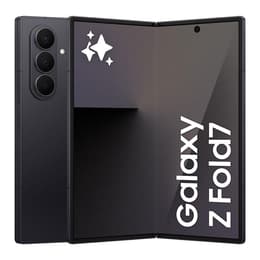
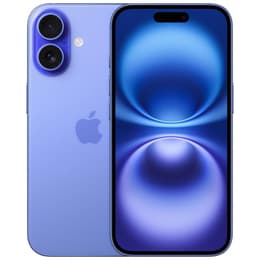
Galaxy Z Fold7 Vs iPhone 16

  • 1-year minimum warranty
  • Free delivery on all orders
  • Free 30-day returns
Galaxy Z Fold7
Starting at

Refurbished price:€907.00

Versus €2,236.37 new

See options
iPhone 16
Starting at

Refurbished price:€605.00

Versus €1,029.00 new

See options

Differences at a glance

The Samsung Galaxy Z Fold7 (2025) and the Apple iPhone 16 (2024) represent entirely different approaches to modern smartphone design, contrasting a book-style foldable device with a traditional candy-bar form factor. While both feature current-generation hardware and run on distinct operating systems, their primary differentiator lies in display versatility versus streamlined daily portability.

Available Models

Colour

Storage

Scores

Durability

Both devices are built for long-term daily use, though their hardware designs and software update models create distinct pathways for longevity.

    Software and updates: The Galaxy Z Fold7 runs on Android with multi-year support commitments, while the iPhone 16 relies on Apple's iOS ecosystem known for extended system updates.
      Build resilience: The iPhone 16 utilizes a rigid glass-and-aluminum slab construction, whereas the Galaxy Z Fold7 features a complex folding display structure that requires careful handling over years of frequent opening and closing.
        Practical lifespan: Users can expect both devices to remain functionally relevant for many years, though traditional slab phones generally encounter fewer mechanical wear points than foldable alternatives.

Year of Release

2025

2024

Compatible with latest Update

Yes

Yes

Foldable

Yes

No

Performance

System responsiveness and everyday utility remain fast across both options, though their internal memory and thermal layouts handle demanding applications differently.

    Multitasking capacity: The Galaxy Z Fold7 features high RAM configurations suited for running multiple split-screen apps simultaneously, whereas the iPhone 16 manages background tasks efficiently within a streamlined memory framework.
      Battery behavior: The iPhone 16 relies on a compact cell optimized for single-screen efficiency, while the Galaxy Z Fold7 distributes power across two separate displays, resulting in distinct charging habits for heavy users.
        App execution: Both handsets handle intensive mobile games and resource-heavy software smoothly, maintaining steady frame rates and responsive navigation during daily workflows.

Screen quality

Visual output varies drastically based on form factor, offering choices between an expansive tablet-sized workspace and a pocket-friendly single screen.

    Display architecture: The Galaxy Z Fold7 deploys a flexible interior screen that unfolds into a large canvas alongside a standard cover display, while the iPhone 16 provides a single, fixed-size OLED panel.
      Outdoor visibility: Both models achieve high peak brightness levels, ensuring sharp text and clear images even under direct sunlight.
        Refresh rates: Smooth scrolling and fluid motion graphics are standard across both displays, enhancing overall visual fluidity during web browsing and media playback.

Resolution

1968x2184

1179 x 2556

Audiovisual

Media capture and audio playback cater to different creative workflows through specialized lens arrays and speaker setups.

    Camera versatility: The Galaxy Z Fold7 incorporates a high-resolution triple-lens rear arrangement including dedicated optical zoom capabilities, while the iPhone 16 uses a streamlined dual-lens setup paired with dedicated capture shortcuts.
      Video and low-light: Both devices deliver clear video stabilization and reliable nighttime photography modes, processing shadows and highlights effectively.
        Audio output: Built-in stereo speakers on both models offer balanced sound clarity for hands-free calls and casual media streaming.

Miscellaneous

Physical dimensions, accessory compatibility, and connectivity options define how each phone integrates into daily routines.

    Portability and weight: The iPhone 16 provides a lightweight, narrow profile that fits easily into pockets, whereas the Galaxy Z Fold7 is substantially wider when opened and heavier to carry.
      Connectivity standards: Both models support modern 5G networks, fast Wi-Fi protocols, and Bluetooth standards for reliable peripheral pairing.
        Biometrics and charging: The Galaxy Z Fold7 utilizes a side-mounted fingerprint scanner alongside facial recognition, while the iPhone 16 depends exclusively on facial mapping security.

Weight

215 g

170 g

Screen size (in)

8.0

6.1

Network

5G

5G

SIM card

Dual Physical SIM + eSIM

eSIM

Carrier compatibility

Unlocked

Unlocked

Connector

USB-C (USB 3)

USB-C (USB 2)

What the community thinks

Community discussions and user feedback indicate that consumer satisfaction largely depends on form-factor preference. Owners of the Galaxy Z Fold7 frequently praise the multitasking utility of the expansive inner screen and the convenience of the cover display. Conversely, common criticisms for foldable devices focus on physical thickness when closed and the visible crease along the folding panel. iPhone 16 users regularly highlight the dependable battery performance, comfortable one-handed ergonomics, and intuitive camera controls, while noting limitations in screen workspace compared to larger folding alternatives.

Users prioritizing multi-app workflows, reading documents on a larger screen, and advanced multitasking will find the Galaxy Z Fold7 well-suited to their needs. Meanwhile, users prioritizing a lightweight build, traditional pocketability, and a straightforward operating system will lean toward the iPhone 16. For buyers seeking a sustainable choice, a quality-assured refurbished option from Back Market provides a reliable way to acquire these devices while reducing electronic waste.








