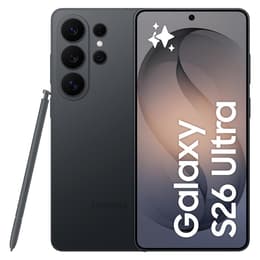



Compare models

Galaxy S26 Ultra Vs iPhone Air

  • 1-year minimum warranty
  • Free delivery on all orders
  • Free 30-day returns
Galaxy S26 Ultra
Starting at

Refurbished price:€879.00

Versus €1,449.00 new

See options
iPhone Air
Starting at

Refurbished price:€693.00

Versus €1,339.00 new

See options

Differences at a glance

The Samsung Galaxy S26 Ultra (2026) and the Apple iPhone Air (2025) represent two distinct approaches to high-end mobile engineering, balancing maximum productivity tools against ultra-slim minimalism. While the Galaxy S26 Ultra functions as a feature-dense powerhouse running Android, the iPhone Air focuses on a lightweight form factor running iOS. Choosing between these devices depends largely on whether daily priorities lean toward expansive utility or sleek physical comfort.

Available Models

Colour

Storage

Scores

Durability

Both models benefit from long-term manufacturer commitment, though their hardware durability and maintenance profiles differ significantly for everyday users.

  • Software Longevity: The Galaxy S26 Ultra provides extended major operating system updates spanning multiple years, matching the long support windows standard for Apple's iOS ecosystem on the iPhone Air.
  • Build and Repairability: The Galaxy S26 Ultra uses a robust titanium-and-glass construction designed to withstand demanding environments, while the iPhone Air achieves its ultra-thin profile with specialized structural reinforcement. Both models offer reliable long-term service lives under normal handling conditions.

Year of Release

2026

2025

Compatible with latest Update

Yes

Yes

OS

Android

iOS

Foldable

No

No

Performance

Underneath their outer shells, both devices manage demanding applications, heavy multitasking, and immersive gaming with notable system responsiveness.

  • Multitasking and Memory: Generous random access memory allocations in both the Galaxy S26 Ultra and the iPhone Air allow dozens of apps to remain active in the background without stuttering or forced reloads.
  • Everyday Speed: Current-generation internal processors ensure rapid app launching, smooth page rendering, and consistent frame rates during intensive tasks, supported by effective thermal management systems.

Screen quality

Viewing experiences differ through display dimensions and panel tuning, though both handsets deliver crisp, highly legible visuals in diverse lighting environments.

  • Display Technology: The Galaxy S26 Ultra features a large, expansive OLED panel suited for immersive media and note-taking, while the iPhone Air utilizes a vibrant Super Retina XDR OLED display optimized for color accuracy and high contrast.
  • Outdoor Usability: High peak brightness levels on both devices ensure clear readability under direct sunlight, and adaptive refresh rates scale smoothly from low idle speeds up to high thresholds for fluid scrolling.

Resolution

1440 x 3120

2736x1260

Audiovisual

Imaging hardware and software processing cater to varied multimedia preferences, ranging from versatile multi-lens arrays to streamlined single-sensor efficiency.

  • Photography and Video: The Galaxy S26 Ultra incorporates a versatile multi-lens camera setup providing extensive optical zoom ranges and detailed low-light captures, whereas the iPhone Air relies on a streamlined single high-resolution fusion camera system backed by advanced computational photography.
  • Audio and Media: Built-in speaker arrays on both smartphones produce clear audio output suitable for hands-free calls, casual video viewing, and podcast playback.

Front camera

12.0

18 megapixels

Miscellaneous

Physical dimensions and connectivity standards shape how each device fits into travel routines, pockets, and accessory ecosystems.

  • Design and Handling: The iPhone Air emphasizes a remarkably thin and light chassis that minimizes pocket bulk, while the Galaxy S26 Ultra adopts a larger, heavier footprint to accommodate a built-in stylus and extensive internal hardware.
  • Connectivity and Ports: Both handsets support rapid fifth-generation cellular networks, modern wireless communication standards, and universal USB-C physical connection ports for charging and data transfer.

Weight

214 g

165 g

Screen size (in)

6.9

6.5

Network

5G

5G

SIM card

Physical SIM + eSIM

eSIM

Carrier compatibility

Unlocked

Unlocked

Connector

USB-C

USB-C

What the community thinks

User feedback from public forums highlights distinct preferences for each device. Owners of the Galaxy S26 Ultra frequently praise its extensive versatility, responsive stylus functionality, and comprehensive zoom capabilities, though some note its heavier weight during prolonged one-handed use. Conversely, users favor the iPhone Air for its exceptionally lightweight, slim profile and smooth software integration, while noting trade-offs in lens variety compared to traditional bulkier flagships. For those exploring sustainable purchasing routes, a quality-assured refurbished option provides a practical and eco-friendly alternative.

Users prioritizing maximum productivity, extensive screen workspace, and versatile camera zoom will find the Galaxy S26 Ultra well-suited to their needs, while users prioritizing physical portability, minimal weight, and streamlined daily handling may lean toward the iPhone Air.









