

Compare models

iPhone 17 Vs iPhone Air

  • 1-year minimum warranty
  • Free delivery on all orders
  • Free 30-day returns
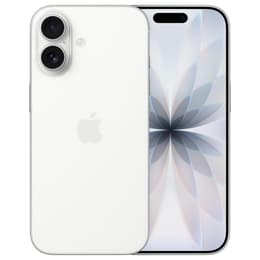
iPhone 17
Starting at

Refurbished price:751.00

Versus €1,129.00 new

See options
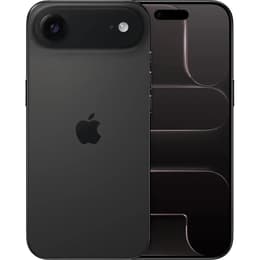
iPhone Air
Starting at

Refurbished price:739.00

Versus €1,339.00 new

See options

Differences at a glance

The iPhone 17 and the iPhone Air represent two distinct approaches to smartphone design within Apple's lineup, both launched in September 2025 running iOS. While the standard iPhone 17 prioritizes traditional all-around utility and balanced ergonomics, the iPhone Air focuses on an ultra-slim profile and lightweight form factor. Choosing between these two devices depends largely on whether everyday handling preferences lean toward a traditional build or an exceptionally thin chassis.

Available Models

Colour

Storage (GB)

Scores

Durability

Both devices launched simultaneously in late 2025 and run on modern operating systems, ensuring identical long-term software support cycles. Users can expect extended official software updates and security patches spanning multiple years, though physical repairability and hardware resilience differ slightly due to structural designs.

  • Software longevity: Both smartphones receive concurrent operating system upgrades, ensuring identical access to new platform features throughout their lifecycle.
  • Repairability and build: The traditional aluminum frame of the iPhone 17 and the titanium-reinforced architecture of the iPhone Air both offer robust daily durability, paired with high-grade front glass protection.
  • Expected lifespan: Robust internal components and multi-year software backing allow both models to maintain reliable day-to-day functionality over extended periods of use.

Year of Release

2025

2025

Performance

Powered by current-generation processors and generous memory configurations, both models handle demanding mobile applications, rapid multitasking, and graphics-heavy gaming smoothly. However, thermal distribution and battery capacity differ noticeably between the standard chassis and the slim profile.

  • System responsiveness: Both devices load apps instantly, switch between background tasks seamlessly, and execute complex workflows without noticeable hesitation.
  • Battery behavior: The standard iPhone 17 houses a larger battery capacity that comfortably accommodates extended daily use, whereas the slim profile of the iPhone Air requires more frequent charging during heavy work sessions.
  • Multitasking capacity: Plentiful internal memory enables smooth handling of multiple open web pages, streaming tools, and productivity applications simultaneously.

Screen quality

Both smartphones feature vibrant OLED panels equipped with high refresh rates for smooth scrolling and responsive touch interactions. Display sizes and peak outdoor brightness levels offer clear differentiation for media viewing and outdoor legibility.

  • Display technology: Both models utilize advanced OLED panels that deliver deep black levels, high contrast ratios, and sharp text rendering.
  • Smoothness and motion: High refresh rate support ensures fluid transitions when navigating menus, scrolling through feeds, and playing supported games.
  • Viewing area: The iPhone Air offers a slightly broader screen canvas for media consumption, while the iPhone 17 provides a compact viewing area that remains easy to navigate with one hand.

Audiovisual

Photography and media capture capabilities vary significantly between the two models, reflecting their respective hardware layouts and lens configurations. Users will find distinct advantages depending on whether they prioritize versatile multi-lens shooting or single-lens minimalism.

  • Camera systems: The iPhone 17 features a dual-lens rear camera setup offering flexible framing options, while the iPhone Air utilizes a streamlined single-lens configuration housed within a distinctive raised camera plateau.
  • Everyday photography: Both devices capture crisp details and natural colors in well-lit environments, though the multi-lens setup on the standard model provides greater versatility for varied focal lengths.
  • Media and audio output: Stereo speaker configurations on the standard model deliver robust sound staging for casual listening, whereas the ultra-slim design of the iPhone Air incorporates a specialized speaker layout.

Miscellaneous

Practical daily usability is shaped by physical dimensions, weight distribution, and connectivity features. Each phone implements modern wireless standards while offering distinct physical handling characteristics.

  • Handling and dimensions: The iPhone Air stands out for its remarkably thin profile and light weight, making it comfortable to pocket and hold, while the iPhone 17 offers a slightly thicker, traditional feel.
  • Connectivity standards: Both models support rapid 5G cellular networks, modern Wi-Fi frequencies, and short-range wireless communication protocols for accessory pairing.
  • Security and sensors: Secure facial recognition hardware is integrated neatly into the display area on both devices for fast authentication and secure payments.

Screen size (in)

6.3

6.5

Network

5G

5G

SIM card

eSIM

eSIM

Carrier compatibility

Unlocked

Unlocked

Connector

USB-C

USB-C

What the community thinks

Community discussions and user feedback indicate that buyers appreciate both devices for distinct reasons. Users frequently praise the iPhone 17 for its reliable battery endurance, versatile camera array, and comfortable proportions, while owners of the iPhone Air highlight its striking lightness and pocket-friendly slimness. At the same time, some community members note that the ultra-thin build of the iPhone Air requires trade-offs in battery stamina and speaker output.

Users prioritizing maximum battery longevity and flexible camera framing will find the iPhone 17 well-suited to their daily routines. Conversely, individuals who value a lightweight device that minimizes pocket bulk may prefer the design of the iPhone Air. For those exploring sustainable purchasing routes, a quality-assured refurbished option provides an eco-friendly alternative to acquire these devices while reducing electronic waste.