

Galaxy S20 Vs Galaxy S21 Ultra 5G

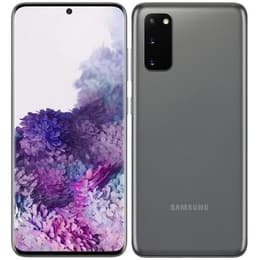
Galaxy S20
Galaxy S20
Starting at

Refurbished price:196.00

Versus €879.00 new

See options
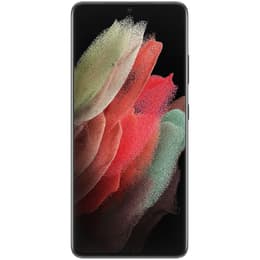
Galaxy S21 Ultra 5G
Galaxy S21 Ultra 5G
Starting at

Refurbished price:228.00

Versus €1,297.00 new

See options

Ratings

The Samsung Galaxy S20, released in March 2020, and the Samsung Galaxy S21 Ultra 5G, launched in January 2021, are both flagship Android smartphones from Samsung. While they share the same operating system, the S21 Ultra 5G represents a generational leap, offering a larger display, a more advanced camera system, and enhanced performance compared to its predecessor. This comparison will explore the practical differences between these two devices to help users make an informed decision.

Scores

Durability

When considering the long-term usability of these devices, their release timelines and software support are key factors.

  • Software Updates: The Galaxy S20 typically received three major Android OS updates, concluding around Android 13, with security updates extending for approximately four years from its release. The Galaxy S21 Ultra 5G, being newer, benefits from a longer support window, generally receiving four major OS updates (up to Android 15) and five years of security updates, offering extended software longevity.
  • Physical Durability: Both devices feature an IP68 rating for dust and water resistance, indicating protection against immersion. The Galaxy S20 utilizes Corning Gorilla Glass 6 for screen protection, while the S21 Ultra 5G upgrades to Gorilla Glass Victus, which offers improved drop and scratch resistance.
  • Expected Lifespan: Users prioritizing the longest possible software support and enhanced physical resilience may find the S21 Ultra 5G to be a more future-proof option. The S20, while still a capable device, will reach its end-of-software-support sooner.

Year of Release

2020

2021

Compatible with latest Update

No

Yes

OS

Android

Android

Foldable

No

No

Performance

The performance of a smartphone impacts daily tasks, from app responsiveness to demanding applications and gaming.

  • Processing Power: The Galaxy S20 handles everyday applications and multitasking smoothly, providing a responsive user experience for most tasks. The Galaxy S21 Ultra 5G, equipped with a newer generation processor, offers more substantial performance gains, resulting in faster app loading, smoother transitions, and a more fluid experience with graphically intensive games and demanding applications.
  • Multitasking and Storage: The Galaxy S20 typically comes with 8GB or 12GB of RAM and 128GB of internal storage. The S21 Ultra 5G offers 12GB or 16GB of RAM and more varied storage options, including 128GB, 256GB, and 512GB, providing greater flexibility for users with extensive app libraries or large media collections.
  • Battery Behavior: The Galaxy S20 features a 4000 mAh battery, generally providing sufficient power for a full day of moderate use. The Galaxy S21 Ultra 5G includes a larger 5000 mAh battery, which, combined with its more efficient adaptive display, often translates to longer usage times between charges, particularly for heavy users.

Memory (GB)

8 GB

12 GB

Screen quality

The display is a primary interface for any smartphone, influencing everything from media consumption to daily interactions.

  • Display Technology and Clarity: Both devices feature a Dynamic AMOLED 2X display with a Quad HD+ resolution (3200 x 1440 pixels), delivering sharp images, vibrant colors, and deep blacks.
  • Size and Refresh Rate: The Galaxy S20 has a 6.2-inch display with a 120Hz refresh rate, offering smooth scrolling and animations. The Galaxy S21 Ultra 5G boasts a larger 6.8-inch display with an adaptive refresh rate that can scale from 10Hz to 120Hz, optimizing power consumption while providing a consistently fluid visual experience.
  • Brightness and Viewing Experience: The S21 Ultra 5G offers higher peak brightness, which can improve visibility in bright outdoor conditions and enhance HDR content viewing. The larger screen of the S21 Ultra 5G also provides a more expansive canvas for media consumption and productivity tasks.

Resolution

1440 x 3200

1440 x 3200

Screen type

Dynamic AMOLED 2X

Dynamic AMOLED 2X

Audiovisual

The camera systems on both devices offer versatile photography and videography capabilities, though with notable differences in their configurations and performance.

  • Rear Camera System: The Galaxy S20 features a triple-camera setup with a 12MP main sensor, a 64MP telephoto lens offering 3x hybrid optical zoom, and a 12MP ultrawide lens. The Galaxy S21 Ultra 5G significantly upgrades this with a quad-camera array, including a 108MP main sensor, two 10MP telephoto lenses (one for 3x optical zoom and another for 10x optical zoom), and a 12MP ultrawide lens. This provides the S21 Ultra 5G with greater zoom flexibility and detail capture.
  • Photography Performance: Both phones excel in good lighting conditions, producing detailed and color-accurate images. The S21 Ultra 5G generally offers improved low-light performance and enhanced detail, particularly when utilizing its higher-resolution main sensor and advanced zoom capabilities. Its autofocus system is also more refined.
  • Video and Front Camera: Both devices support 8K video recording. The S20 has a 10MP front camera, while the S21 Ultra 5G features a 40MP front camera, capable of capturing more detailed selfies and offering improved video call quality.

Main camera

12 megapixels

108 megapixels

Front camera

10 megapixels

40 megapixels

Miscellaneous

Beyond core features, several practical elements contribute to the overall user experience and device utility.

  • Connectivity and Ports: Both devices support 5G connectivity. The Galaxy S20 includes Wi-Fi 6 and Bluetooth 5.0. The S21 Ultra 5G steps up to Wi-Fi 6E and Bluetooth 5.2, offering potentially faster and more stable wireless connections. Both phones utilize a USB-C port for charging and data transfer and lack a traditional 3.5mm headphone jack.
  • Biometrics and Sensors: Both devices incorporate an ultrasonic in-display fingerprint sensor for secure unlocking. A notable addition to the S21 Ultra 5G is its support for the S Pen, allowing for note-taking and drawing, though the stylus is sold separately.
  • Physical Characteristics: The Galaxy S20 is a more compact device, weighing approximately 163 grams with dimensions of 151.7 x 69.1 x 7.9 mm. The S21 Ultra 5G is larger and heavier, at around 227-229 grams and measuring 165.1 x 75.6 x 8.9 mm, reflecting its bigger screen and battery. The S21 Ultra 5G also features Gorilla Glass Victus on both the front and back, enhancing its resistance to drops and scratches compared to the S20's Gorilla Glass 6.

Weight

163 g

227 g

Screen size (in)

6.2

6.8

Network

4G

5G

SIM card

Dual Physical SIM

Physical SIM + eSIM

Carrier compatibility

Unlocked

Unlocked

The Samsung Galaxy S20 and Galaxy S21 Ultra 5G cater to slightly different user priorities, reflecting their respective positions in Samsung's flagship lineup. The Galaxy S20 is often praised for its relatively compact size and still-capable performance for everyday tasks, making it a solid choice for users who prefer a smaller device that handles general smartphone functions efficiently. Some users have noted its battery life as adequate for moderate use, though heavy users might find themselves needing to recharge more frequently.

The Galaxy S21 Ultra 5G, on the other hand, is frequently lauded for its expansive and vibrant display, its highly versatile and powerful camera system, and its extended software support. Users often highlight its superior zoom capabilities and overall photographic flexibility as key advantages. Its larger battery capacity is also a common point of praise, providing extended usage for those who demand more from their device throughout the day. Criticisms for the S21 Ultra 5G sometimes revolve around its larger size and weight, which might not appeal to users seeking a more pocketable device. The absence of a microSD card slot, a feature present in the S20, was also a point of discussion for some users who prefer expandable storage.

Users prioritizing a more compact form factor, sufficient performance for daily use, and a still-competent camera system may find the Galaxy S20 well-suited to their needs. Conversely, users who place a premium on a large, immersive display, a highly advanced and versatile camera setup, longer software longevity, and the added functionality of S Pen support will likely lean towards the Galaxy S21 Ultra 5G. Both models are available as quality-assured refurbished options, providing an eco-friendly alternative for consumers.


See all articles

Our recent comparisons